News Broadcasting
BBC World Service plays ‘Diplomatic Jigsaw’ as 9/11 anniversary draws near

MUMBAI: With the anniversary of the most significant news event of last year nearly upon us, BBC World Service will launch a four-part series exploring international relations in the wake of 9/11.
An official release informs that from 6 September The Diplomatic Jigsaw presented by Edward Stourton will have contributions from those closely involved. US Deputy Secretary of State Richard Armitage speaks about his meeting in Moscow, Minister of International Co-operation at the Palestinian Authority Nabil Sha’ath describes his reaction to 9/11.
In addition, one can listen to Pakistani president Pervez Musharraf talk abour his telephone call with Colin Powell. The Diplomatic Jigsaw charts the behind-the-scenes negotiations that radically altered international relations, creating unlikely alliances and unexpected diplomatic concessions.

The series revisits 11 September and its aftermath, and as the developments that unfolded are chronicled, the jigsaw of relations and events fall into place. It deals with issues such as what went on during the negotiations to bring such countries as Russia, Syria, Pakistan and China on side and how America went about building the coalition. It also examines the role part Britain’s Prime Minister Tony Blair played in the coalition.
The four programmes are –
Friends and Enemies – This is the story of how the world recovered from shock and Americans preparing for action. Insiders tell of the ultimatum the US delivered to Pakistan and President Musharraf describes his reaction. George Robertson reveals what went on at NATO headquarters. Kofi Annan talks about the reaction at the UN.
Gathering Force – Washington and London joined forces as the coalition is built. The doubts and fears of the Muslim world are addressed while attention focuses on the Middle East. British envoy Charles Powell describes his mission to Syria. Insiders tell of the deals done to open up the air bases bordering Afghanistan.
Into Action – The bombing begins. The coalition’s propaganda machine is put to the test against riots in Pakistan and concerns in the Middle East. China and America discover common ground while Pakistan begins to see the benefits of taking a stand against the Taliban. However the fall of Kabul, when it finally comes, takes many people unawares.
The Problems of Success – This examines how the fall-out of 9/11 created new challenges. At the UN, nations work together to fight terrorism, but when American attention turned to Iraq most of the world recoiled. The Middle East was allowed to fester – then turned so violent that America had to re-engage. America’s relationship with Russia flourished, but in Asia the latest members of the nuclear club squared up for a fight.





News Broadcasting
CNN-News18 to host Fury in the Gulf conclave on West Asia crisis
Three-hour summit to unpack geopolitical fallout and impact on India
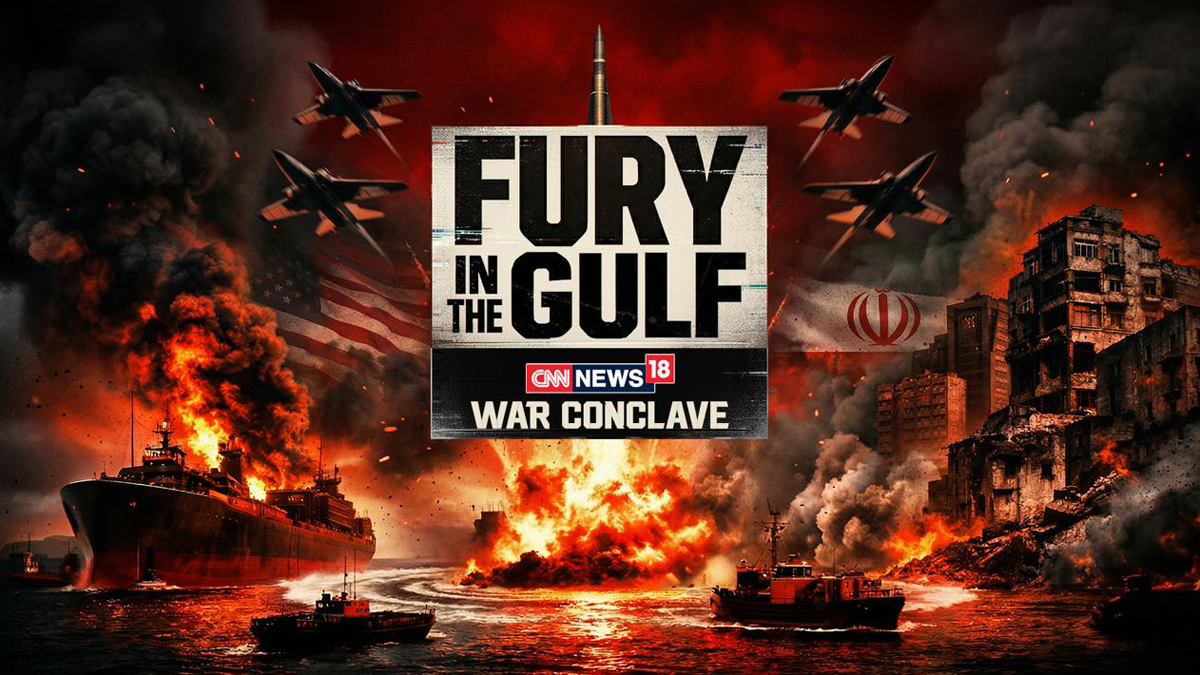
MUMBAI: CNN-News18 is set to host a special three-hour broadcast, Fury in the Gulf – War Conclave, on April 7, aiming to decode the escalating West Asia crisis and its far-reaching implications for India.
Scheduled from 4:00 PM to 7:00 PM, the conclave comes at a time when tensions between Iran and the United States are reshaping global geopolitics and triggering economic uncertainty. With India’s deep energy ties, trade links and large diaspora in the Gulf, the developments carry significant domestic relevance.
Built around the theme ‘Conflict, Consequences, and The Future,’ the programme will feature six curated sessions combining one-on-one interviews and panel discussions. The focus is to cut through the clutter and offer viewers a clearer understanding of the fast-evolving situation.
Key sessions include ‘Diplomacy in Times of War’ featuring Shashi Tharoor, and ‘World After the Iran Conflict’ with voices such as Ram Madhav, Reuven Azar, representatives from the European Union and the Iranian Deputy Envoy. Another session titled ‘Another Dunkirk?’ will bring together K. J. S. Dhillon and Jitin Prasada among others.
CNN-News18 editorial affairs director Rahul Shivshankar said, “In times of war, clarity becomes the most powerful tool. Fury in the Gulf – War Conclave brings together credible voices to address the questions and confusion that arise amid an overwhelming influx of information.”
He added that the initiative is aimed at delivering “facts, perspective, and insight” at a time when misinformation can easily cloud public understanding.
Echoing the sentiment, CNN-News18 CEO– English and business news Smriti Mehra said the conflict marks a defining global moment, with consequences that extend well beyond the region. She noted that the conclave seeks to present the crisis with “depth, nuance and responsibility” so audiences can better grasp its real-world impact.
As geopolitical tensions continue to dominate headlines, the conclave positions itself as an attempt to bring order to the noise, offering viewers a structured, insight-led look at a complex and rapidly shifting global situation.






