News Broadcasting
BBC World Service gets interactive in Bihar


MUMBAI: The BBC World Service is revisiting India’s heartland,Bihar, to talk to its listeners and encourage even more people to participate in its programmes.
The BBC Hindi service’s interactive campaign My world, my voice is visiting 60 locations across the state of Bihar, from Sugauli to Kishanganj, asking people what they think about the BBC Hindi output and inviting them to engage with its programmes.It aims to reach thousands of residents, as it covers hundreds of kilometres in Bihar, visiting two locations across the state each day.
Local residents will be encouraged to test their knowledge of both current affairs and BBC Hindi programmes, presenters and guest speakers – and win prizes. My world, my voice has been timed to coincide with General Election’s to India’s Legislative Assemblies to highlight the relevance of the BBC Hindi output to those in Bihar who are interested in the global perspective of the daily news.Quizzes conducted from the BBC stand will generate more interest in the BBC Hindi output, especially its flagship morning and evening news and current affairs programmes, Aaj Ke Din and Aajkal.

BBC Hindi head ,Achala Sharma, sees the campaign as a way to connect with the BBC’s core audiences in India. She says, “Listening to audiences is central to BBC Hindi programming, and to reach out for our most remote audiences and to engage with them face to face, we have had several road-shows in India over the past two years. We have covered thousands of kilometres, talking directly to thousands of listeners, discussing issues important to them, encouraging their direct participation and, most of all, listening to them.”
“My world, my voice is in the same spirit as it will tour Bihar to remind our audience – those in small towns and village haats – about our vibrant programmes, and to engage them in dialogue about the programmes which are for them and about them.”adds,Sharma.
For the first time, the BBC has teamed up with India’s Post Office whose branches across Bihar will sell special My world, my voice meghdoots – postcards.Feedback forms addressed to the BBC will be distributed at the events, inviting residents of Bihar to share their views of the BBC Hindi programmes. Alongside main, interactive activity, the My world, my voice campaign incorporates an outdoor communications element, with hoardings and wall-paintings featuring people and images from rural India.
BBC World Service Marketing Communications & Audiences controller, Alan Booth, says, “The Bihar campaign will show the BBC Hindi service as contemporary, relevant and inspiring. Our previous campaigns in northern India have demonstrated the effectiveness of this form of interaction as they helped increase our Hindi listenership by 4.3 million. We want to keep the momentum of this success and continue to encourage active listening among potential audiences in India’s ‘Hindi belt’.” t was not in the perview of the contract.



News Broadcasting
News18 India launches Command Centre war explainer with Arya
New show shifts from debates to decoding global conflicts and impacts
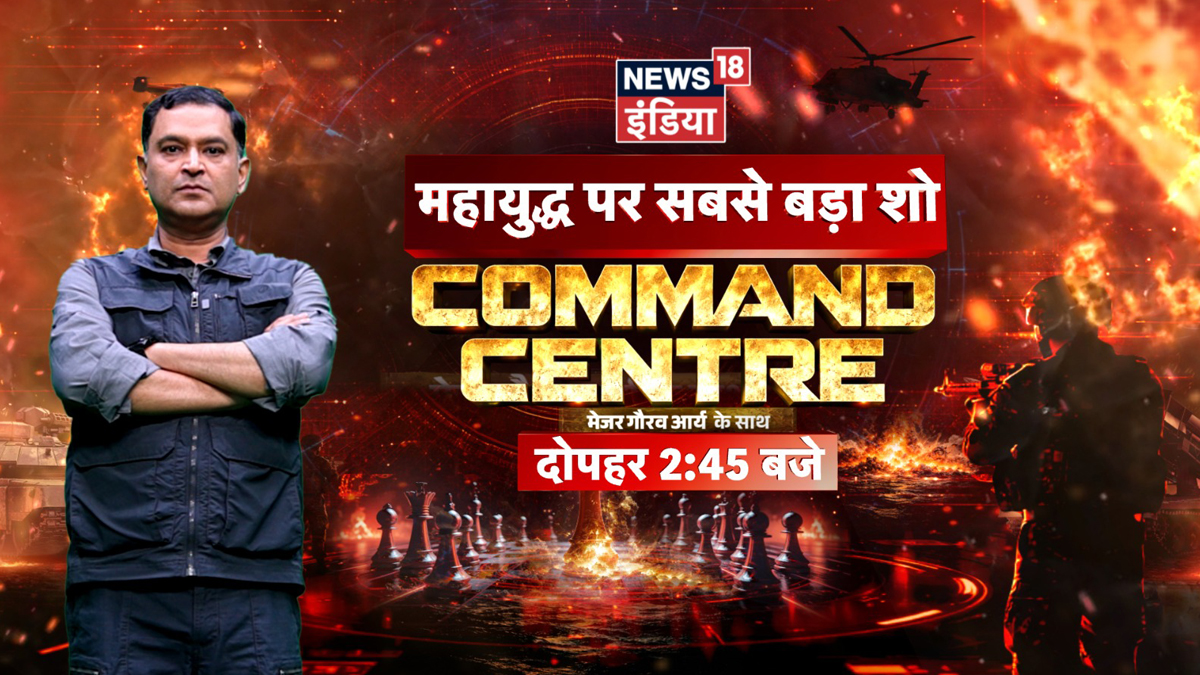
MUMBAI: News18 India has rolled out a new war-focused programme, Command Centre, featuring Gaurav Arya, as it looks to offer viewers a sharper, more grounded take on global conflicts amid rising tensions in West Asia.
Positioned as an “insider war room”, the show moves away from conventional panel debates and instead focuses on explaining military developments, decoding strategy and connecting global events to their everyday impact, from fuel prices to economic shifts.
The format leans heavily on visuals and data. The studio has been designed like a command hub, complete with large LED war maps, real-time graphics and an alert system to track developments as they unfold.
At the centre of it all is Arya, who brings his military background to simplify complex war strategies for viewers. His signature line, “Seedhi baat samjhiye”, anchors the show’s promise of clarity over noise.
News18 India managing editor Jyoti Kamal said, “Command Centre, featuring Major Gaurav Arya is designed to deliver accurate insights and a clear perspective on how evolving conflicts impact everyday life, from household budgets to national security. With expert voices analysing every development in real time, the show goes beyond headlines to decode what’s happening now, what it means, and what could come next.”
Echoing the intent, Gaurav Arya added, “In times of war, confusion is the biggest threat. With News18 India’s Command Centre, we are bringing viewers inside the war room, decoding strategies, tracking every escalation, and explaining, in the simplest terms, what it means for India and for every household. Seedhi baat samjhiye, this is where you understand not just what is happening, but what happens next.”
The weekday show will air in the afternoon slot and will also feature Gaurav Shukla, adding to its editorial depth.
With its mix of analysis, visuals and a clear focus on impact, the show reflects a broader shift in news consumption. Viewers are no longer just watching events unfold, they are looking to understand what those events mean for them.






