News Broadcasting
BBC World Service explores Asian Diasporas


MUMBAI:BBC World Service is launching a new three-part series examining the impact of Asian people on 21st century life. Asian Diasporas starts on Friday, 16 August on the English service and will explore aspects of Asian life and influence, from business and politics to family life.
Presented by Jatinder Verma, himself a child of the diaspora, Asian Diasporas looks at the contributions of recent and established immigrant communities and analyses their changing loyalties and identities, according to an official release. “When I arrived in Britain in 1968 from Kenya, ‘Asian’ was a minority concern,” explains Verma. “Over 30 years later, Asian food and culture are very much a part of the UK mainstream. Today, every fourth person one is ever likely to meet in the world will be an Asian. This is not just a reflection of global population but also of migration. There is hardly a country in the world without an Asian migrant population, so Asians are contributing to the changing face of the 21st century.”

Asian Diasporas goes to the United States, Malaysia, Brazil, United Arab Emirates and Britain to examine how the Chinese, Indian, Japanese and Korean Diasporas are shaping the world in the 21st century. Each programme compares and contrasts two case studies within one theme: Family, Business and Political Influence.
ENGLISH LANGUAGE TEACHING AWARD: BBC World Service has won the Commonwealth of Learning Award of Excellence for Institutional Achievement for the quality of its English teaching on radio and online.
BBC World Service’s Learning English output connects with audiences around the world, often through developing local partnerships.
Presenting the award, Andrea Hope, the Commonwealth of Learning’s Higher Education Specialist, praised the accessible, learner-centred approach of BBC World Service’s English language teaching provision and its use of computer and Internet technology.
Andrea said: “To avoid the loneliness of the long-distance learner, opportunities are provided to use English with other learners via an online message board and email-based discussion group, which now has nearly 3,000 members in 85 countries. We were impressed by the way the organisation makes partnerships with local educational bodies and broadcasters around the world to produce materials which achieve a balance between global content, global content adapted for local use and highly targeted local content produced in association with other partners.”
BBC English makes teaching materials on radio and online for BBC World Service.







News Broadcasting
News18 India launches Command Centre war explainer with Arya
New show shifts from debates to decoding global conflicts and impacts
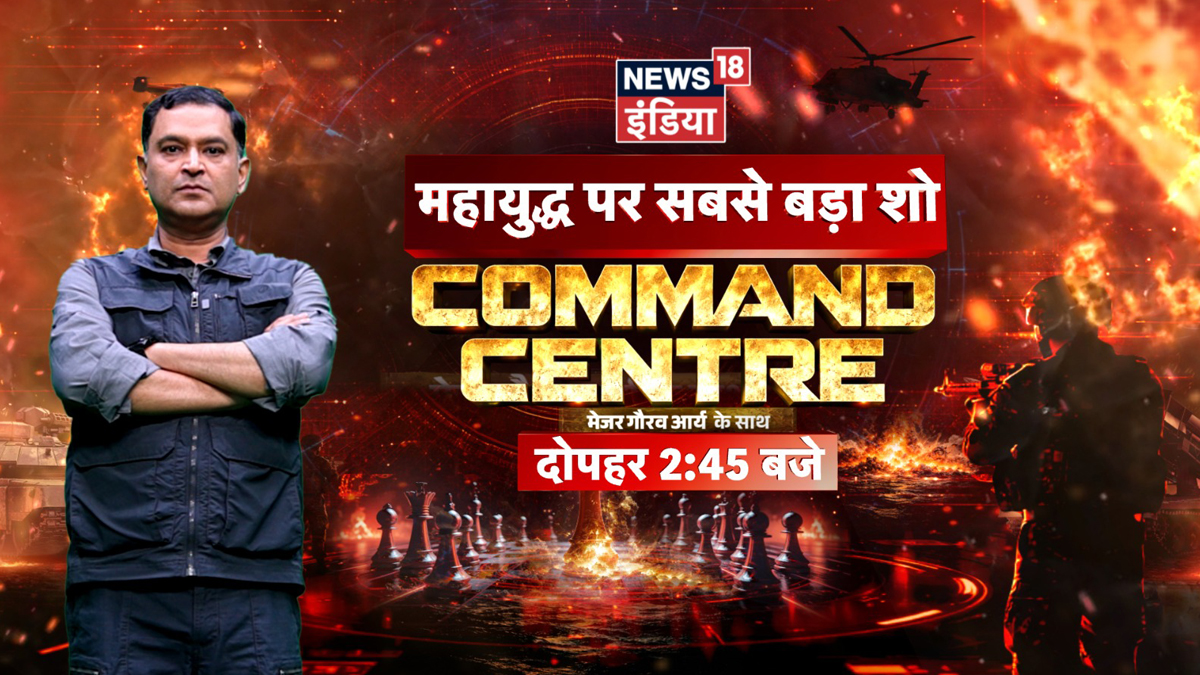
MUMBAI: News18 India has rolled out a new war-focused programme, Command Centre, featuring Gaurav Arya, as it looks to offer viewers a sharper, more grounded take on global conflicts amid rising tensions in West Asia.
Positioned as an “insider war room”, the show moves away from conventional panel debates and instead focuses on explaining military developments, decoding strategy and connecting global events to their everyday impact, from fuel prices to economic shifts.
The format leans heavily on visuals and data. The studio has been designed like a command hub, complete with large LED war maps, real-time graphics and an alert system to track developments as they unfold.
At the centre of it all is Arya, who brings his military background to simplify complex war strategies for viewers. His signature line, “Seedhi baat samjhiye”, anchors the show’s promise of clarity over noise.
News18 India managing editor Jyoti Kamal said, “Command Centre, featuring Major Gaurav Arya is designed to deliver accurate insights and a clear perspective on how evolving conflicts impact everyday life, from household budgets to national security. With expert voices analysing every development in real time, the show goes beyond headlines to decode what’s happening now, what it means, and what could come next.”
Echoing the intent, Gaurav Arya added, “In times of war, confusion is the biggest threat. With News18 India’s Command Centre, we are bringing viewers inside the war room, decoding strategies, tracking every escalation, and explaining, in the simplest terms, what it means for India and for every household. Seedhi baat samjhiye, this is where you understand not just what is happening, but what happens next.”
The weekday show will air in the afternoon slot and will also feature Gaurav Shukla, adding to its editorial depth.
With its mix of analysis, visuals and a clear focus on impact, the show reflects a broader shift in news consumption. Viewers are no longer just watching events unfold, they are looking to understand what those events mean for them.






