News Broadcasting
BBC World Service announces four senior appointments


LONDON: BBC World Service has announced the appointment of new regional heads for Africa, Eurasia, the Americas and Asia and Pacific region.
The current head of Africa and Middle East region, Barry Langridge, will become head of the Asia and Pacific region. He was previously a diplomat in Africa. He has lived in India, working in a village health project, and as Christian Aid’s project officer for Pakistan, Northern India and Bangladesh. During his BBC career Barry has also worked as a television current affairs producer. He was appointed Head of Africa and Middle East region in 1997.
Behrouz Afagh-Tabrizi has been appointed Head of Eurasia region. The region encompasses Russia, Turkey, Iran, Afghanistan, Ukraine, Central Asia and the Caucasus. Behrouz was born and brought up in Iran and has lived in Britain since 1978. He joined the BBC Persian Service in 1983 and later became editor. In 1994 he set up the BBC Central Asian Service and was its head until 1999, when he was appointed news and current affairs editor for the Eurasia region.

Lucio Mesquita has been appointed Head of the Americas region. He has been acting head of the region since October. Born in Brazil, Lucio joined the Brazilian Service as a producer in 1991. He worked on Newshour and The World Today and became editor of the Brazilian Service in 2000. As Head of the Americas, he is responsible for BBC World Service broadcasts in North, South and Central America, as well as the Caribbean.
Jerry Timmins, the former Head of the Americas, who for the past three months has led the Make It Happen project at BBC World Service, will shortly take up his new post as Head of Africa and Middle East region. Jerry joined the BBC in 1979 as a journalist. In 1988 he was appointed head of a newly re-established Caribbean Service and later joined BBC Television’s current affairs programme Newsnight before he returned to BBC World Service in 1992.
All five Heads of Region at BBC World Service are members of the World Service Management Board.






News Broadcasting
News18 India launches Command Centre war explainer with Arya
New show shifts from debates to decoding global conflicts and impacts
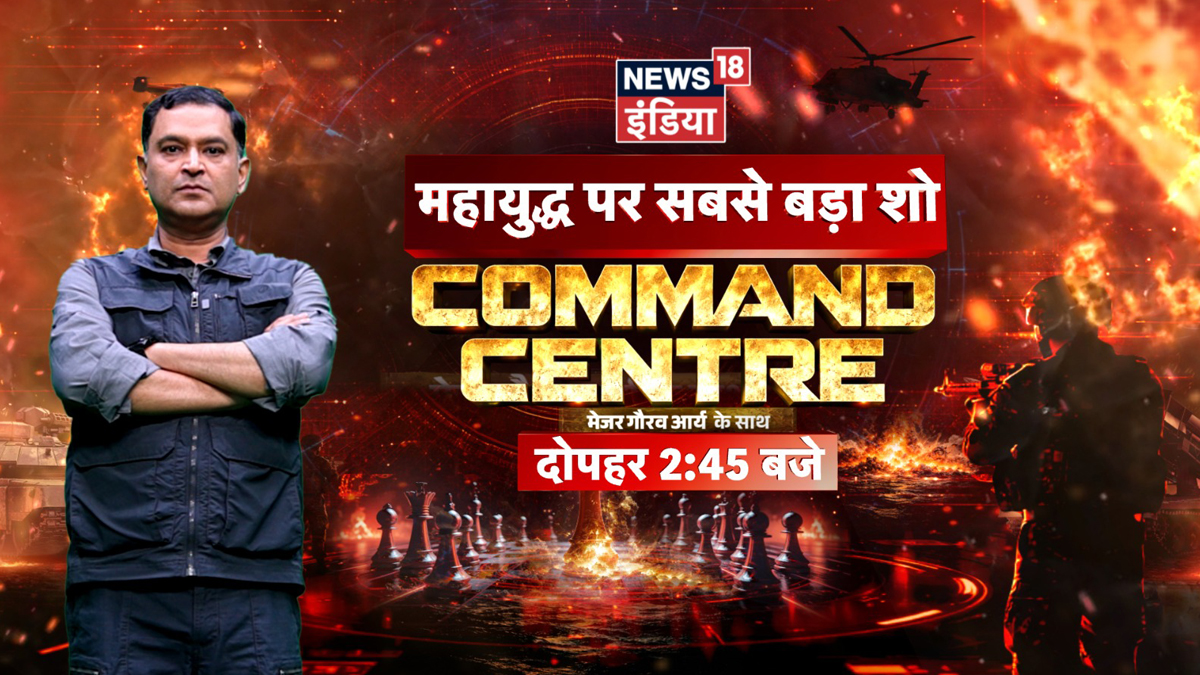
MUMBAI: News18 India has rolled out a new war-focused programme, Command Centre, featuring Gaurav Arya, as it looks to offer viewers a sharper, more grounded take on global conflicts amid rising tensions in West Asia.
Positioned as an “insider war room”, the show moves away from conventional panel debates and instead focuses on explaining military developments, decoding strategy and connecting global events to their everyday impact, from fuel prices to economic shifts.
The format leans heavily on visuals and data. The studio has been designed like a command hub, complete with large LED war maps, real-time graphics and an alert system to track developments as they unfold.
At the centre of it all is Arya, who brings his military background to simplify complex war strategies for viewers. His signature line, “Seedhi baat samjhiye”, anchors the show’s promise of clarity over noise.
News18 India managing editor Jyoti Kamal said, “Command Centre, featuring Major Gaurav Arya is designed to deliver accurate insights and a clear perspective on how evolving conflicts impact everyday life, from household budgets to national security. With expert voices analysing every development in real time, the show goes beyond headlines to decode what’s happening now, what it means, and what could come next.”
Echoing the intent, Gaurav Arya added, “In times of war, confusion is the biggest threat. With News18 India’s Command Centre, we are bringing viewers inside the war room, decoding strategies, tracking every escalation, and explaining, in the simplest terms, what it means for India and for every household. Seedhi baat samjhiye, this is where you understand not just what is happening, but what happens next.”
The weekday show will air in the afternoon slot and will also feature Gaurav Shukla, adding to its editorial depth.
With its mix of analysis, visuals and a clear focus on impact, the show reflects a broader shift in news consumption. Viewers are no longer just watching events unfold, they are looking to understand what those events mean for them.







