News Broadcasting
BBC World readies news, analysis specials


MUMBAI:BBC World, the 24-hour international news and information channel is gearing up for the grand finale of 2002 with an eclectic mix of news, business, analysis, sport and lifestyle programmes.
Most of the global and India-specific programmes on the channel will spearhead the year-end programmes by airing special episodes.
World Review 2002 will give a global perspective on a wide range of issues that affected the world last year with in-depth reports from every continent and an analysis of how things are likely to change. The programme airs at 3:00 pm on weekdays and 8:00 PM on weekends.

The World Business Report has lined up three specials – Holding On The Line which takes a look at 3G phones and how the big promise of new markets and future profits has evaporated, On The Brink which will look ahead at the global economy in 2003, and Accounting For Greed which will take the viewer to what lies behind the scandal and corruption in the corporate world. The programme airs at 6:00 am and 10:45 pm on weekdays.
Question Time India which airs on Fridays at 10:00 pm will feature two specials – the first will look at some of the major events of the year with a panel comprising leading academics and journalists, while the second will look ahead to the issues facing India in 2003 with a panel of leading politicians from the Congress and the ruling party BJP.
India Business Report will feature a special that will take a look at the overall performance of the Indian economy in 2002 with analysis and interviews with players and pundits, focussing on four important segments – stocks and shares, major industries, financial institutions and exports.The show airs Sundays at 11:00 am and Mondays at 10:00 pm .
Wheels, will telecast a unique episode on New Year’s eve featuring a spectacular show of the best cars and bikes launched this year and will announce the Wheels Awards for the year 2002.
Mastermind India will air the culminating episode of the programme recorded at the grand Falaknuma Palace in Hyderabad . The show which forms the backdrop for the battle of intellects will finally reveal the Mastermind India winner for the year 2002. The show airs on Thursdays at 10:00 pm and on Sunday at 10:00 am with a repeat at 10:00 pm.
HARDtalk with Tim Sebastian has an interesting line-up of celebrity guests for its special episode. The guests include David Attenborough, Sinead O’Connor, Youssou N’Dour, Boris Becker and Tom Jones. The channel will also air the best celebrity HARDtalks from 2002 with Marianne Faithful, Pik Botha, John McEnroe and Seve Ballesteros. The programmes airs weekdays at 10:00 am, 5:00 pm and 9:00pm.
Also while Talking Movies will take a look back at some of the highs and lows of the movie world in 2002 and look forward to 2003 with presenter Tom Brook in two specials, Click Online will review the developments that transformed the world of IT in 2002.
Talking Movies airs Thursdays at 11:00pm and Fridays at 1:00pm and 5:00 pm respectively and Click Online on Sundays at 4:00 pm , Mondays at 11:00pm, Tuesdays at 2:00pm and Wednesdays at 5: 00 pm respectively.
Sport Today will bring the best from the last year, including the FIFA World Cup, the Tennis Grand Slams, the ICC Knockout tournament, and Michael Schumacher’s riots of wins in Formula 1 along with and a preview of sport in 2003. The show airs weekdays at 1:15 pm and 6:15 pm respectively.



News Broadcasting
CNN-News18 to host Fury in the Gulf conclave on West Asia crisis
Three-hour summit to unpack geopolitical fallout and impact on India
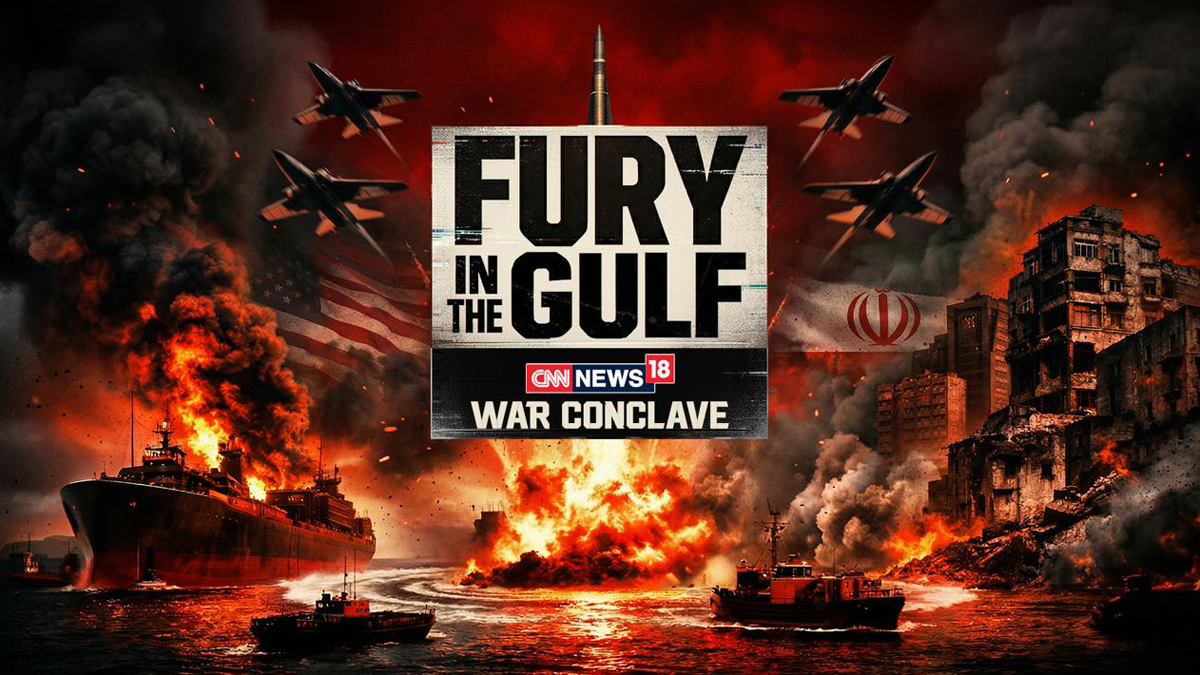
MUMBAI: CNN-News18 is set to host a special three-hour broadcast, Fury in the Gulf – War Conclave, on April 7, aiming to decode the escalating West Asia crisis and its far-reaching implications for India.
Scheduled from 4:00 PM to 7:00 PM, the conclave comes at a time when tensions between Iran and the United States are reshaping global geopolitics and triggering economic uncertainty. With India’s deep energy ties, trade links and large diaspora in the Gulf, the developments carry significant domestic relevance.
Built around the theme ‘Conflict, Consequences, and The Future,’ the programme will feature six curated sessions combining one-on-one interviews and panel discussions. The focus is to cut through the clutter and offer viewers a clearer understanding of the fast-evolving situation.
Key sessions include ‘Diplomacy in Times of War’ featuring Shashi Tharoor, and ‘World After the Iran Conflict’ with voices such as Ram Madhav, Reuven Azar, representatives from the European Union and the Iranian Deputy Envoy. Another session titled ‘Another Dunkirk?’ will bring together K. J. S. Dhillon and Jitin Prasada among others.
CNN-News18 editorial affairs director Rahul Shivshankar said, “In times of war, clarity becomes the most powerful tool. Fury in the Gulf – War Conclave brings together credible voices to address the questions and confusion that arise amid an overwhelming influx of information.”
He added that the initiative is aimed at delivering “facts, perspective, and insight” at a time when misinformation can easily cloud public understanding.
Echoing the sentiment, CNN-News18 CEO– English and business news Smriti Mehra said the conflict marks a defining global moment, with consequences that extend well beyond the region. She noted that the conclave seeks to present the crisis with “depth, nuance and responsibility” so audiences can better grasp its real-world impact.
As geopolitical tensions continue to dominate headlines, the conclave positions itself as an attempt to bring order to the noise, offering viewers a structured, insight-led look at a complex and rapidly shifting global situation.






