News Broadcasting
BBC welcomes 10 year Charter proposal

MUMBAI: UK broadcaster The BBC has welcomed the British Government’s proposal for a new 10 year Charter from 2007 and continued secure funding through the licence fee.
These recommendations were detailed in the Green Paper published by the UK Secretary of State for Culture, Media and Sport.
BBC chairman, Michael Grade, said, “This is a strong endorsement of the BBC as the cornerstone of public service broadcasting in the UK now, and through digital switchover. On behalf of the Board of Governors, I accept the Government’s conclusions for future governance of the corporation. It is regrettable that our own reforms have not had time to prove themselves. But it is important that the issue has now been settled ahead of the new Charter, providing the BBC with the necessary certainty and stability.”
Grade pointed out that in the BBC’s Building Public Value (BPV) manifesto, published last year the broadcaster had set out a series of radical steps to modernise BBC governance. This had included the creation of an independent Governance Unit, the introduction of service licences and a stringent public value test.

“These are being implemented in full and are already having the desired effect.
For the first time in the BBC’s history, there is now a clear distinction and appropriate separation between governance and management, and a greater emphasis on objective, evidence-based scrutiny of BBC activities. I recognise that our changes have been essentially more behavioural than structural. We had hoped that these crucial reforms would be allowed time to prove their worth. However, we recognise that the consensus in the public debate has been to move beyond behavioural changes and to buttress them with a new structure.”
BBC DG Mark Thompson said, “The Green Paper endorses the ambitious public purposes we set out in Building Public Value, adding for the first time an explicit purpose for the BBC to lead the building of digital Britain. A 10 year Charter and secure funding for the BBC will give us the right foundation on which to take on these challenges.
“Audience expectations are rising all the time and it’s hard to predict what platforms, technology and innovations might emerge between now and 2016. But the assurance that original, British content, consistently aiming for excellence, from the BBC will be a guaranteed fixture of any future landscape is good news for the industry and our audiences. Over the coming months, as the Charter debate continues, we intend to show by our actions that we are committed to creating a BBC fit for the future, open to new technologies and new ways of serving our audiences, with fair access to the best ideas from wherever they come, drawing on talent from the whole UK, with transparent and coherent commercial activities and with rigorous plans to deliver the best possible value to licence-payers.”
Thompson conceded that it was equally important that as the Executive Board of a public service broadcaster, funded by the licence fee, they should be properly supervised and held accountable for decisions taken.




News Broadcasting
CNN-News18 to host Fury in the Gulf conclave on West Asia crisis
Three-hour summit to unpack geopolitical fallout and impact on India
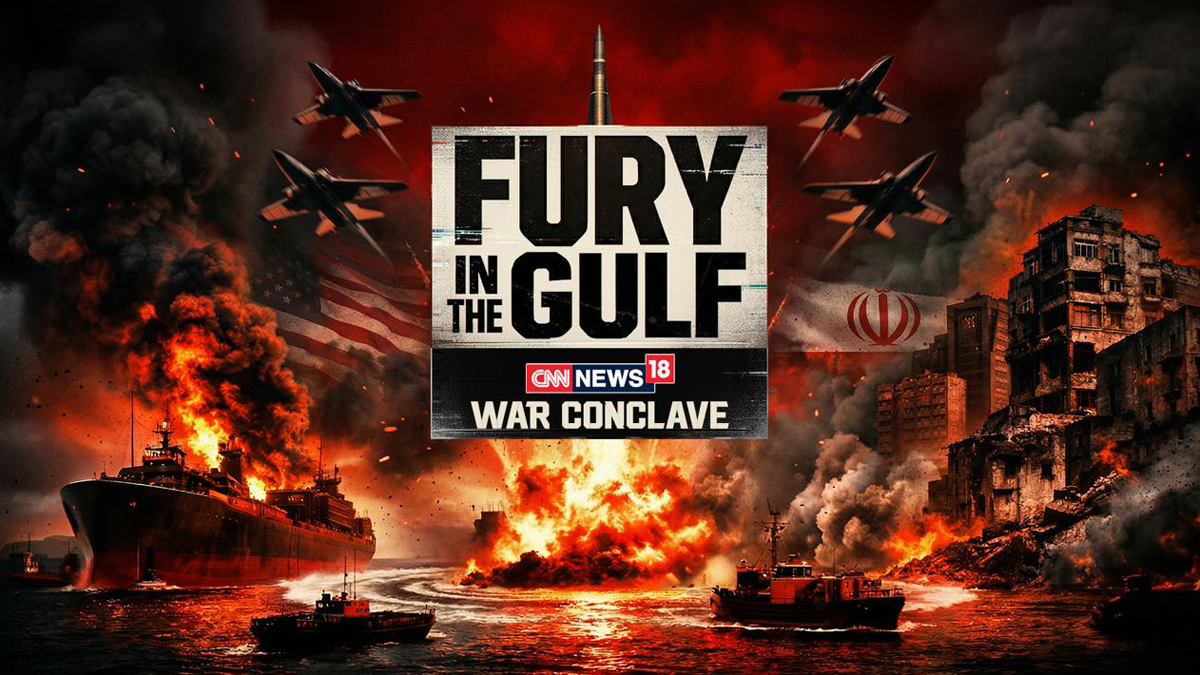
MUMBAI: CNN-News18 is set to host a special three-hour broadcast, Fury in the Gulf – War Conclave, on April 7, aiming to decode the escalating West Asia crisis and its far-reaching implications for India.
Scheduled from 4:00 PM to 7:00 PM, the conclave comes at a time when tensions between Iran and the United States are reshaping global geopolitics and triggering economic uncertainty. With India’s deep energy ties, trade links and large diaspora in the Gulf, the developments carry significant domestic relevance.
Built around the theme ‘Conflict, Consequences, and The Future,’ the programme will feature six curated sessions combining one-on-one interviews and panel discussions. The focus is to cut through the clutter and offer viewers a clearer understanding of the fast-evolving situation.
Key sessions include ‘Diplomacy in Times of War’ featuring Shashi Tharoor, and ‘World After the Iran Conflict’ with voices such as Ram Madhav, Reuven Azar, representatives from the European Union and the Iranian Deputy Envoy. Another session titled ‘Another Dunkirk?’ will bring together K. J. S. Dhillon and Jitin Prasada among others.
CNN-News18 editorial affairs director Rahul Shivshankar said, “In times of war, clarity becomes the most powerful tool. Fury in the Gulf – War Conclave brings together credible voices to address the questions and confusion that arise amid an overwhelming influx of information.”
He added that the initiative is aimed at delivering “facts, perspective, and insight” at a time when misinformation can easily cloud public understanding.
Echoing the sentiment, CNN-News18 CEO– English and business news Smriti Mehra said the conflict marks a defining global moment, with consequences that extend well beyond the region. She noted that the conclave seeks to present the crisis with “depth, nuance and responsibility” so audiences can better grasp its real-world impact.
As geopolitical tensions continue to dominate headlines, the conclave positions itself as an attempt to bring order to the noise, offering viewers a structured, insight-led look at a complex and rapidly shifting global situation.






