News Broadcasting
BBC ups presence with first South Asia editor


NEW DELHI: BBC News has apppointed its first ever South Asia editor. The British broadcaster’s newsgathering division has appointed Paul Danahar to the newly created role of South Asia Editor.
He recently took up his new position and is based in New Delhi. Danahar has now assumed editorial responsibility for the BBC’s entire news operation for India, Pakistan, Sri Lanka, Bangladesh, Nepal, Bhutan, Maldives and Afghanistan. The South Asia appointment completes the BBC worldwide plan to place seven senior news editors in the field to oversee the organisation’s huge newsgathering operation. The others are placed in Washington, Jerusalem, Russia, Singapore, Johannesburg, and Brussels, according to a press statement from BBC.
Danahar has several years experience in the region, having worked as a senior world affairs producer for the BBC, based in Delhi between 1996-2000. During that time he covered all the major news in the region, from the Kargil conflict, the coup in Pakistan to the Orrissa cyclone and the Bangladesh floods. He also travelled extensively in Afghanistan during the Taliban era and returned there last year after 9/11 to work with BBC correspondents – Rageh Omaar and John Simpson, in the run up to the fall of Kabul to American-led forces.

Much of his last two years have been spent in Africa helping run the BBC news operation there. Danahar was quoted in the release as saying about his new appointment: “It’s fantastic to be back in South Asia and I’m thrilled to take on what is a huge job at such an important time for the BBC. This region is now firmly under the international spotlight, not only because of regional tensions but because it has the potential to have such a major impact on the rest of the world both politically and economically. The BBC has huge audiences here and continues to be well ahead of CNN and CNBC in the market place. That’s a strong foundation that I intend to build on.”




News Broadcasting
CNN-News18 to host Fury in the Gulf conclave on West Asia crisis
Three-hour summit to unpack geopolitical fallout and impact on India
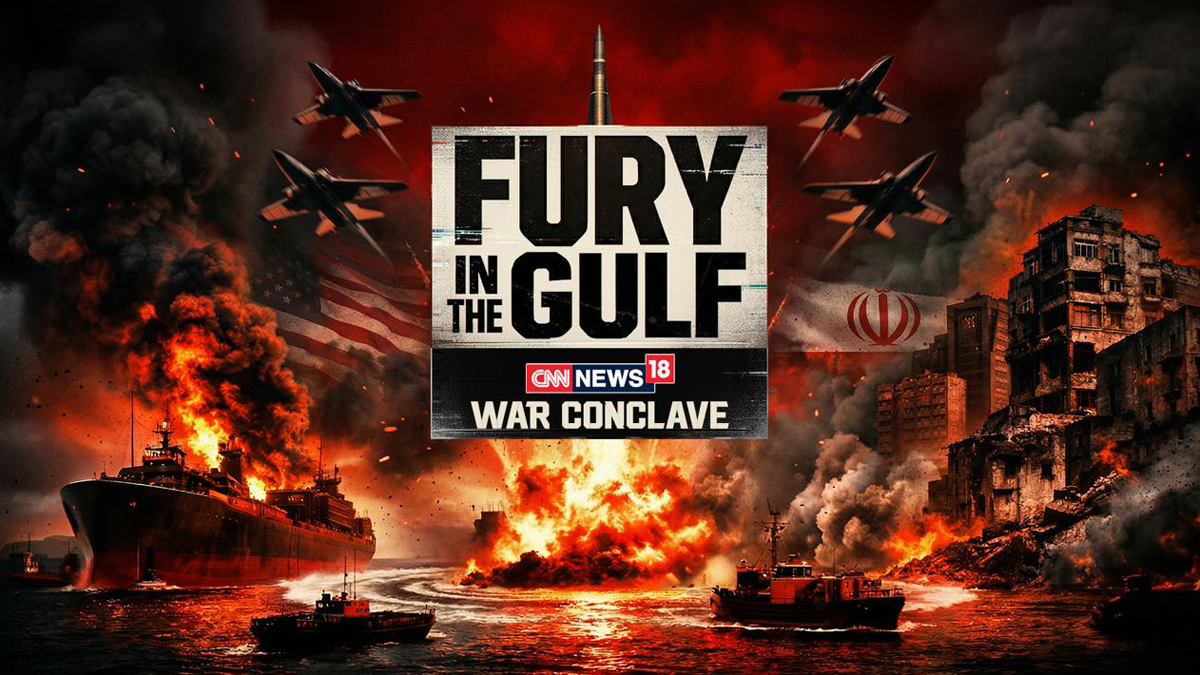
MUMBAI: CNN-News18 is set to host a special three-hour broadcast, Fury in the Gulf – War Conclave, on April 7, aiming to decode the escalating West Asia crisis and its far-reaching implications for India.
Scheduled from 4:00 PM to 7:00 PM, the conclave comes at a time when tensions between Iran and the United States are reshaping global geopolitics and triggering economic uncertainty. With India’s deep energy ties, trade links and large diaspora in the Gulf, the developments carry significant domestic relevance.
Built around the theme ‘Conflict, Consequences, and The Future,’ the programme will feature six curated sessions combining one-on-one interviews and panel discussions. The focus is to cut through the clutter and offer viewers a clearer understanding of the fast-evolving situation.
Key sessions include ‘Diplomacy in Times of War’ featuring Shashi Tharoor, and ‘World After the Iran Conflict’ with voices such as Ram Madhav, Reuven Azar, representatives from the European Union and the Iranian Deputy Envoy. Another session titled ‘Another Dunkirk?’ will bring together K. J. S. Dhillon and Jitin Prasada among others.
CNN-News18 editorial affairs director Rahul Shivshankar said, “In times of war, clarity becomes the most powerful tool. Fury in the Gulf – War Conclave brings together credible voices to address the questions and confusion that arise amid an overwhelming influx of information.”
He added that the initiative is aimed at delivering “facts, perspective, and insight” at a time when misinformation can easily cloud public understanding.
Echoing the sentiment, CNN-News18 CEO– English and business news Smriti Mehra said the conflict marks a defining global moment, with consequences that extend well beyond the region. She noted that the conclave seeks to present the crisis with “depth, nuance and responsibility” so audiences can better grasp its real-world impact.
As geopolitical tensions continue to dominate headlines, the conclave positions itself as an attempt to bring order to the noise, offering viewers a structured, insight-led look at a complex and rapidly shifting global situation.






