News Broadcasting
BBC to launch radio amnesty campaign for Africa


MUMBAI: On 6 July 2005, the BBC launches a radio amnesty in aid of African nations – fronted by presenter Nick Knowles – in which listeners can receive discounts on DAB radios.
The BBC’s digital radio team and BBC Radio Five Live have teamed up with manufacturers and high street retailers across the country to offer listeners a discount of 10 per cent on a new digital radio, when they trade in their portable FM sets.
The old sets will then be reconditioned and sent to Somalia and south Sudan, where they will be distributed by the BBC World Service Trust. The amnesty starts on 6 July and lasts until 26 July, during which time Five Live will support the project on air and around a thousand stores up and down the country will take part. Knowles – already recognised for his work with Comic and Sport Relief – is promoting the campaign on behalf of the BBC and will be raising the project’s profile.

He said, “A disused radio set, gathering dust in a spare room in Tunbridge Wells, could end up making a real difference to a family in Somalia. Every set that is traded in will help the educational projects the World Service Trust runs in Africa.”
BBC Radio and Music Interactive controller Simon Nelson says, “We’re delighted to be working with retailers, manufacturers and the World Service Trust on this project. Everyone involved benefits from this initiative: consumers get a discount, DAB radios sales will increase, and it all helps to support some of the fantastic work the World Service Trust is doing in Africa.”
Retailers will accept battery-powered FM/AM radios (not hi-fi separates or mains only sets), which will be reconditioned, fitted with new batteries and shipped for distribution by the BBC World Service Trust and its partner, the African Educational Trust (AET). The trust and the AET will use the radios to further their work on the Somalia Distance Education for Literacy project – or ‘Radio Teacher’ – which offers education to men and women who have grown up during civil war with no chance of schooling.
There is a shortage of Somali teachers and there are few western volunteers, so the only choice is to use the mass media. The BBC states that radio is by far the most widespread medium in Somalia,.
The project teaches literacy through discussions of issues like human rights, health and environmental protection, and has been a great success, with 10,000 people registering for the first teaching cycle. Given the success of the first phase of literacy training in Somalia, the series is now being run for a second time, with a further 7,000 students signing up. The BBC World Service Trust and AET are also planning to replicate the literacy project for the south Sudanese audience and are also exploring the possibility of training farmers and teachers using similar techniques.
The more radios made available to audiences in Somalia and Sudan, the more students will be able to benefit from these projects.




News Broadcasting
CNN-News18 to host Fury in the Gulf conclave on West Asia crisis
Three-hour summit to unpack geopolitical fallout and impact on India
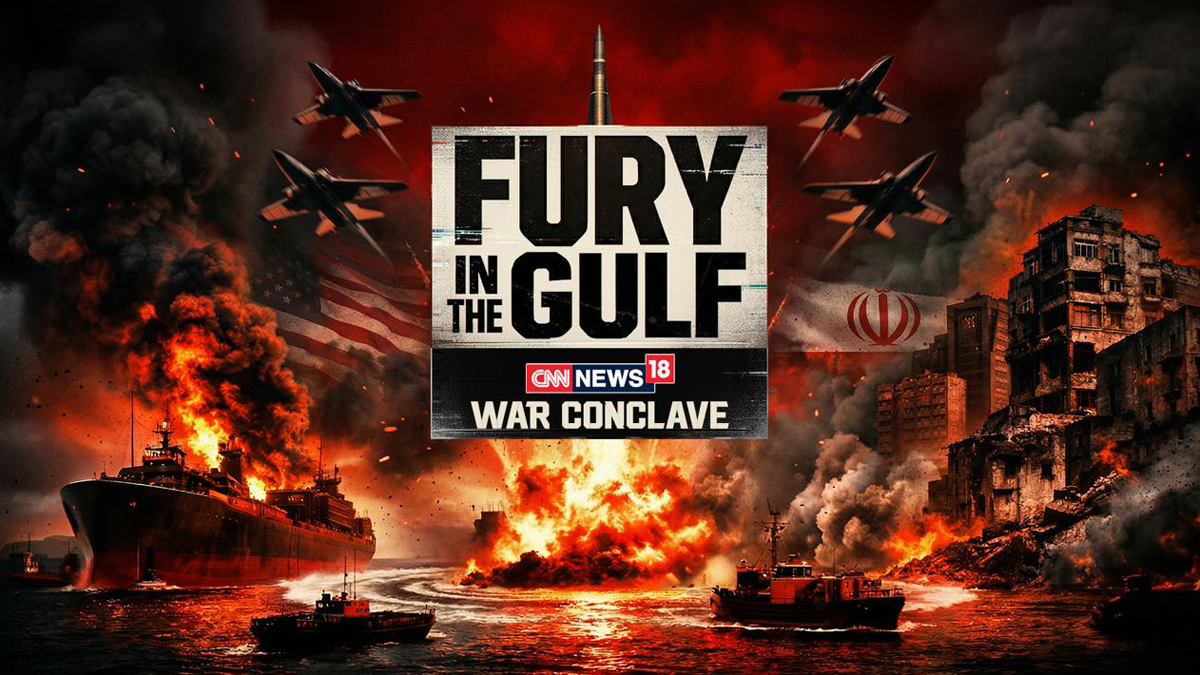
MUMBAI: CNN-News18 is set to host a special three-hour broadcast, Fury in the Gulf – War Conclave, on April 7, aiming to decode the escalating West Asia crisis and its far-reaching implications for India.
Scheduled from 4:00 PM to 7:00 PM, the conclave comes at a time when tensions between Iran and the United States are reshaping global geopolitics and triggering economic uncertainty. With India’s deep energy ties, trade links and large diaspora in the Gulf, the developments carry significant domestic relevance.
Built around the theme ‘Conflict, Consequences, and The Future,’ the programme will feature six curated sessions combining one-on-one interviews and panel discussions. The focus is to cut through the clutter and offer viewers a clearer understanding of the fast-evolving situation.
Key sessions include ‘Diplomacy in Times of War’ featuring Shashi Tharoor, and ‘World After the Iran Conflict’ with voices such as Ram Madhav, Reuven Azar, representatives from the European Union and the Iranian Deputy Envoy. Another session titled ‘Another Dunkirk?’ will bring together K. J. S. Dhillon and Jitin Prasada among others.
CNN-News18 editorial affairs director Rahul Shivshankar said, “In times of war, clarity becomes the most powerful tool. Fury in the Gulf – War Conclave brings together credible voices to address the questions and confusion that arise amid an overwhelming influx of information.”
He added that the initiative is aimed at delivering “facts, perspective, and insight” at a time when misinformation can easily cloud public understanding.
Echoing the sentiment, CNN-News18 CEO– English and business news Smriti Mehra said the conflict marks a defining global moment, with consequences that extend well beyond the region. She noted that the conclave seeks to present the crisis with “depth, nuance and responsibility” so audiences can better grasp its real-world impact.
As geopolitical tensions continue to dominate headlines, the conclave positions itself as an attempt to bring order to the noise, offering viewers a structured, insight-led look at a complex and rapidly shifting global situation.






