News Broadcasting
BBC to increase appeal of current affairs programming in the UK


MUMBAI: UK pubcaster the BBC has announced a package of measures to increase the prominence and appeal of current affairs programming on BBC One. This will include an increased investment and extra hours in peak time. This represents the highest number of hours of peaktime current affairs on BBC ONE on record.
The decision, signalled in Building Public Value, was made jointly by BBC Television management and the BBC’s journalism board. Measures across the portfolio of current affairs on BBC One, to be introduced in 2005/6, will include:
Doubling the number of midweek hours of current affairs and investigations specials to 16 hours per year

In all, an additional 10.5 hours of current affairs in peak time: an increase of 28%. This brings the annual total of current affairs in peak to 48.5 hours
An extra £3 million will be invested across current affairs, including Panorama and Real Story. Panorama will account for at least half of the 16 hours of midweek specials per year. BBC One will continue to commission many hours of peak-time serious factual programmes from outside of the Current Affairs department – recent examples of which include dramas with contemporary significance, for example, Dirty War and documentaries such as The Secret Policeman, Secret Agent and The Protectors – as well as consumer affairs such as Watchdog.
Panorama is the BBC’s flagship current affairs programme and the longest-running public affairs TV programme in the world. The programme, in its current Sunday evening slot, regularly attracts three million viewers. The programme, which celebrated its 50th birthday oa couple of years ago has specialised in scrutinising the use and abuse of power and making hard-hitting television. In 1995 Panorama broadcast the most famous programme in its recent history – Diana, Princess of Wales, interviewed by Martin Bashir talking candidly and for the first time about her life and her marriage, seen by a record 22.8 million people. Panorama’s guiding principles include uncovering and investigating stories about Britain and the world, reporting with authority and context and providing journalism that makes waves and withstands scrutiny.
Real Story meanwhile has generally featured three items per programme. It will now be single subject in format, with a serious agenda of significance focussing on accessible reporting which highlights revelation and engaging story-telling.
BBC News director Helen Boaden, said, ” From our audience research, we know that people consider current affairs programming to be very important to them as citizens and we are fully committed to delivering the BBC’s hallmark of trustworthy and rigorous investigative journalism that is relevant to people’s lives.”
BBC Television director Jana Bennett, said, ” Panorama is one of the most authoritative and respected parts of the BBC One schedule and will remain so. Our decision, after long consideration, to leave it in its regular Sunday night slot is designed to secure its award-winning, hard-hitting journalism and to support the programme makers in pursuing the agenda they believe in. The major increase in midweek peaktime specials will also give the programme the opportunity to create additional impact and to promote the sense of an agenda-setting event in the midweek schedule.”
The BBC board of governors has published a review of current affiars programming saying, “The market for current affairs on television is very challenging – while the audience recognises that it is important to have current affairs programmes, most viewers would rather watch other types of programmes. A mainstream audience can only be reached by having more high-profile output in BBC One peak-time. For viewers who have an active interest in current affairs, the BBC has a good range of programmes, with refreshed output on BBC Two and well-established off-peak programming on BBC One. Panorama requires clarity over its purpose to enable a clear strategy to be developed to ensure that it thrives as the BBC’s flagship current affairs progrmme.






News Broadcasting
CNN-News18 to host Fury in the Gulf conclave on West Asia crisis
Three-hour summit to unpack geopolitical fallout and impact on India
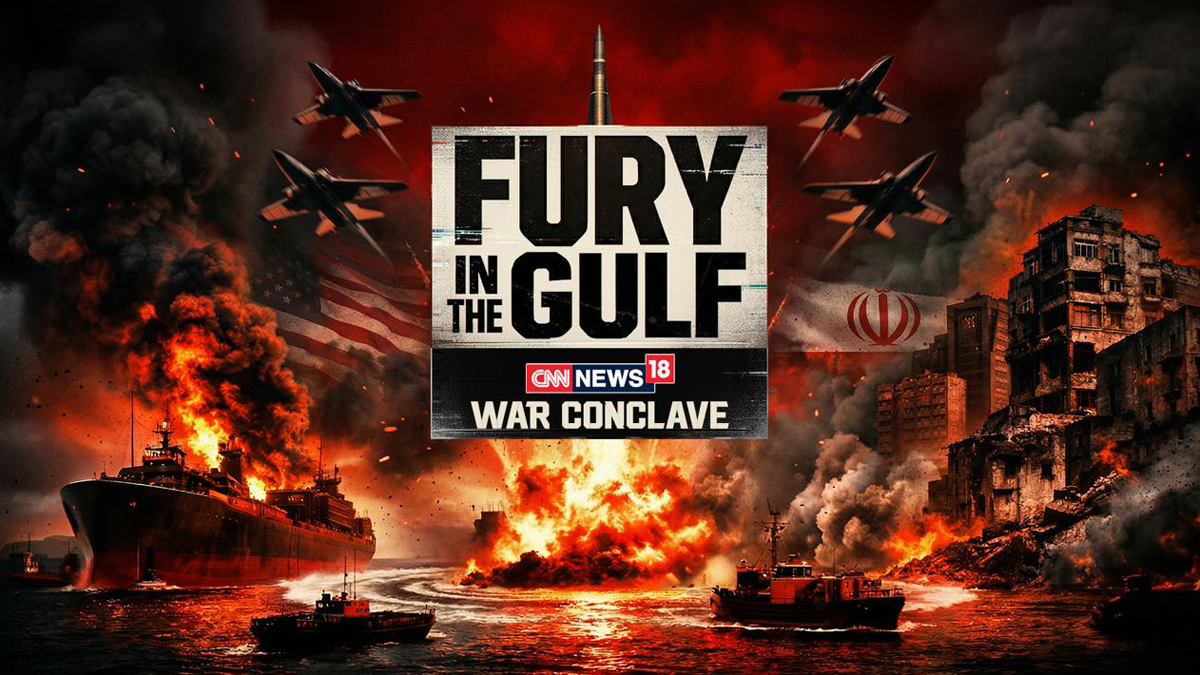
MUMBAI: CNN-News18 is set to host a special three-hour broadcast, Fury in the Gulf – War Conclave, on April 7, aiming to decode the escalating West Asia crisis and its far-reaching implications for India.
Scheduled from 4:00 PM to 7:00 PM, the conclave comes at a time when tensions between Iran and the United States are reshaping global geopolitics and triggering economic uncertainty. With India’s deep energy ties, trade links and large diaspora in the Gulf, the developments carry significant domestic relevance.
Built around the theme ‘Conflict, Consequences, and The Future,’ the programme will feature six curated sessions combining one-on-one interviews and panel discussions. The focus is to cut through the clutter and offer viewers a clearer understanding of the fast-evolving situation.
Key sessions include ‘Diplomacy in Times of War’ featuring Shashi Tharoor, and ‘World After the Iran Conflict’ with voices such as Ram Madhav, Reuven Azar, representatives from the European Union and the Iranian Deputy Envoy. Another session titled ‘Another Dunkirk?’ will bring together K. J. S. Dhillon and Jitin Prasada among others.
CNN-News18 editorial affairs director Rahul Shivshankar said, “In times of war, clarity becomes the most powerful tool. Fury in the Gulf – War Conclave brings together credible voices to address the questions and confusion that arise amid an overwhelming influx of information.”
He added that the initiative is aimed at delivering “facts, perspective, and insight” at a time when misinformation can easily cloud public understanding.
Echoing the sentiment, CNN-News18 CEO– English and business news Smriti Mehra said the conflict marks a defining global moment, with consequences that extend well beyond the region. She noted that the conclave seeks to present the crisis with “depth, nuance and responsibility” so audiences can better grasp its real-world impact.
As geopolitical tensions continue to dominate headlines, the conclave positions itself as an attempt to bring order to the noise, offering viewers a structured, insight-led look at a complex and rapidly shifting global situation.






