News Broadcasting
BBC to conduct debates on public service bradcasting


MUMBAI: UK pubcaster The BBC will launch a debate with the public and the creative communities to garner views on public service broadcasting, ahead of its own submission to Ofcom’s Public Service Broadcasting (PSB) review.
Ofcom is looking at how well PSB is being delivered in the UK, its funding models and how it will be consumed in the future.
The BBC’s programme of debate will include:

The Creative Industry Lecture Series – a series of lectures given by Sir David Attenborough, Stephen Fry and Will Hutton in their personal capacity, addressing various aspects of what public service broadcasting delivers to Britain.
There will also be research with the UK’s creative community and the wider audience on their attitudes to public service broadcasting. BBC chairman Sir Michael Lyons and other Trustees will hold a series of direct conversations with the public across the country via radio phone-ins and public meetings to hear directly their views on the BBC, in addition to the Trust’s annual survey of public opinion about the BBC and its delivery of the public purposes.
There will also be research from the BBC Trust that considers the impact of societal changes in the UK on public service broadcasting.
These activities will inform the BBC’s public submission to Ofcom, which will be delivered in June. The BBC is committed to listening to all constituencies ahead of finalising its response to Ofcom.
Lyons says, “Ofcom’s first-stage report raises some important issues which require serious consideration and open debate. The Trust will listen to a wide range of opinion as we consider our response, and we will place special emphasis on the views of the wider public. Their interests must be at the heart of all debates and the conclusions finally reached.”
BBC DG Mark Thompson said, “I am pleased that the Ofcom report reaffirms the audiences’ view that the BBC is the cornerstone of public service broadcasting in Britain. As part of our engagement with the review, I want to focus on what our audiences want from us in the future.
“The BBC has always innovated, but I am really struck by the early successes of iPlayer. How audiences will want to receive programmes like Doctor Who, Gavin And Stacey or News 24 in the future is something that we’ve done a lot of thinking about. I’m looking forward to hearing from the public and the creative industries what they want from the BBC as we move to a digital society.”
The BBC has launched a website (bbc.co.uk/thefuture) to support Ofcom’s PSB Review and encourage debate, as well as capture lectures, ongoing research, and speeches.
The creative industry lecture series will begin with Sir David Attenborough on 30 April. Stephen Fry will follow on 7 May and Will Hutton on 15 May. The lectures will be published in a book, which will be available online and broadcast on BBC Parliament, as well as being available to stream or download on BBC iPlayer.




News Broadcasting
CNN-News18 to host Fury in the Gulf conclave on West Asia crisis
Three-hour summit to unpack geopolitical fallout and impact on India
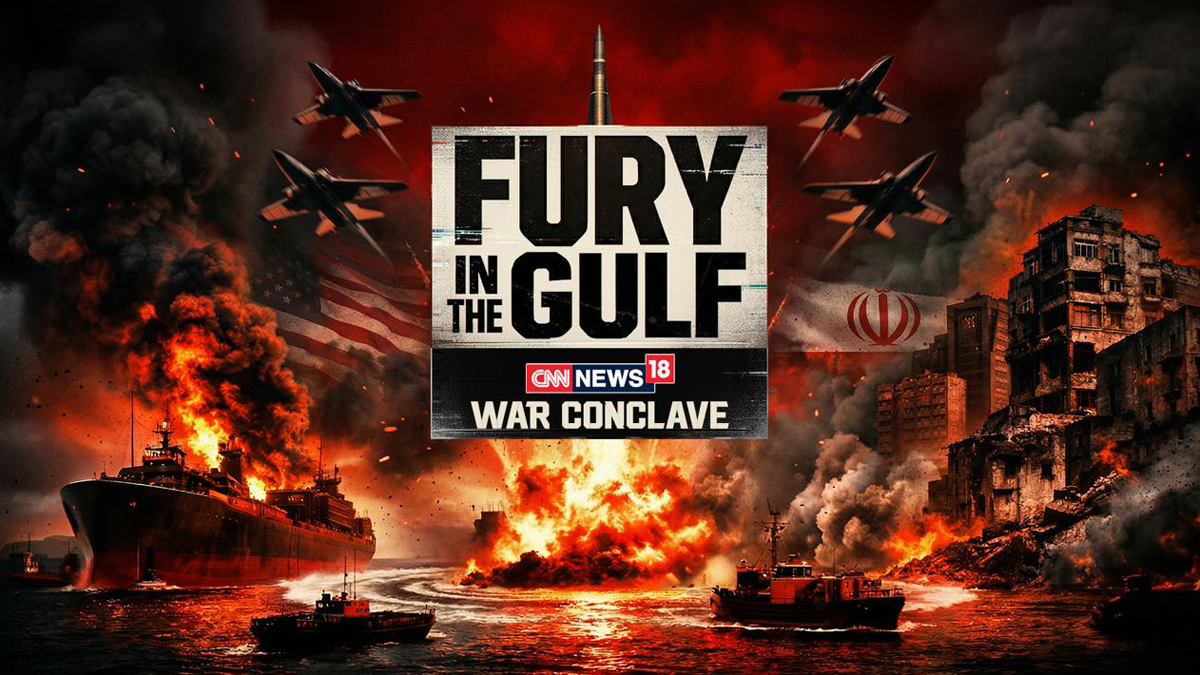
MUMBAI: CNN-News18 is set to host a special three-hour broadcast, Fury in the Gulf – War Conclave, on April 7, aiming to decode the escalating West Asia crisis and its far-reaching implications for India.
Scheduled from 4:00 PM to 7:00 PM, the conclave comes at a time when tensions between Iran and the United States are reshaping global geopolitics and triggering economic uncertainty. With India’s deep energy ties, trade links and large diaspora in the Gulf, the developments carry significant domestic relevance.
Built around the theme ‘Conflict, Consequences, and The Future,’ the programme will feature six curated sessions combining one-on-one interviews and panel discussions. The focus is to cut through the clutter and offer viewers a clearer understanding of the fast-evolving situation.
Key sessions include ‘Diplomacy in Times of War’ featuring Shashi Tharoor, and ‘World After the Iran Conflict’ with voices such as Ram Madhav, Reuven Azar, representatives from the European Union and the Iranian Deputy Envoy. Another session titled ‘Another Dunkirk?’ will bring together K. J. S. Dhillon and Jitin Prasada among others.
CNN-News18 editorial affairs director Rahul Shivshankar said, “In times of war, clarity becomes the most powerful tool. Fury in the Gulf – War Conclave brings together credible voices to address the questions and confusion that arise amid an overwhelming influx of information.”
He added that the initiative is aimed at delivering “facts, perspective, and insight” at a time when misinformation can easily cloud public understanding.
Echoing the sentiment, CNN-News18 CEO– English and business news Smriti Mehra said the conflict marks a defining global moment, with consequences that extend well beyond the region. She noted that the conclave seeks to present the crisis with “depth, nuance and responsibility” so audiences can better grasp its real-world impact.
As geopolitical tensions continue to dominate headlines, the conclave positions itself as an attempt to bring order to the noise, offering viewers a structured, insight-led look at a complex and rapidly shifting global situation.






