News Broadcasting
BBC Tamil launches morning news programme


MUMBAI: To meet the increased flow of news about the situation in Sri Lanka and the general election in India, the BBC’s Tamil service, BBC Tamilosai, has launched a 10-day special morning news programme.
The special 15-minute programme will be broadcast from 7 am every day until 20 May. The programme is broadcast on 19 (15285 kHz) and 16 (17515 kHz) meters on shortwave and is also available via the website bbctamil.com as a special audio folder for diaspora listeners.
BBC Tamil head Thirumalai Manivannan says, “With events unfolding in Sri Lanka as well as the general election in India, the BBC Tamil team feels that it’s important to keep our audiences up to date with latest developments outside our normal daily half-hour broadcasts at 15.45 GMT (21.15 Sri Lankan and Indian Standard Times).

“As we have done in the past, we decided to add this special morning programme to our news output, to ensure our radio and online audiences are kept fully informed about developments which are directly affecting them.”
BBC Tamilosai is one of the 32 language and regional services broadcast by BBC World Service. It offers a daily programme of news, current affairs and features, providing global insight to listeners in Sri Lanka, Tamil Nadu in India and across the world. BBC Tamilosai is broadcast across Sri Lanka and Tamil Nadu in India via shortwave.
The BBC’s special Tamil-language infotainment output for India’s FM market includes sports, business and showbiz bulletins and is available in Chennai via partner station, Radio One.


News Broadcasting
News18 India launches Command Centre war explainer with Arya
New show shifts from debates to decoding global conflicts and impacts
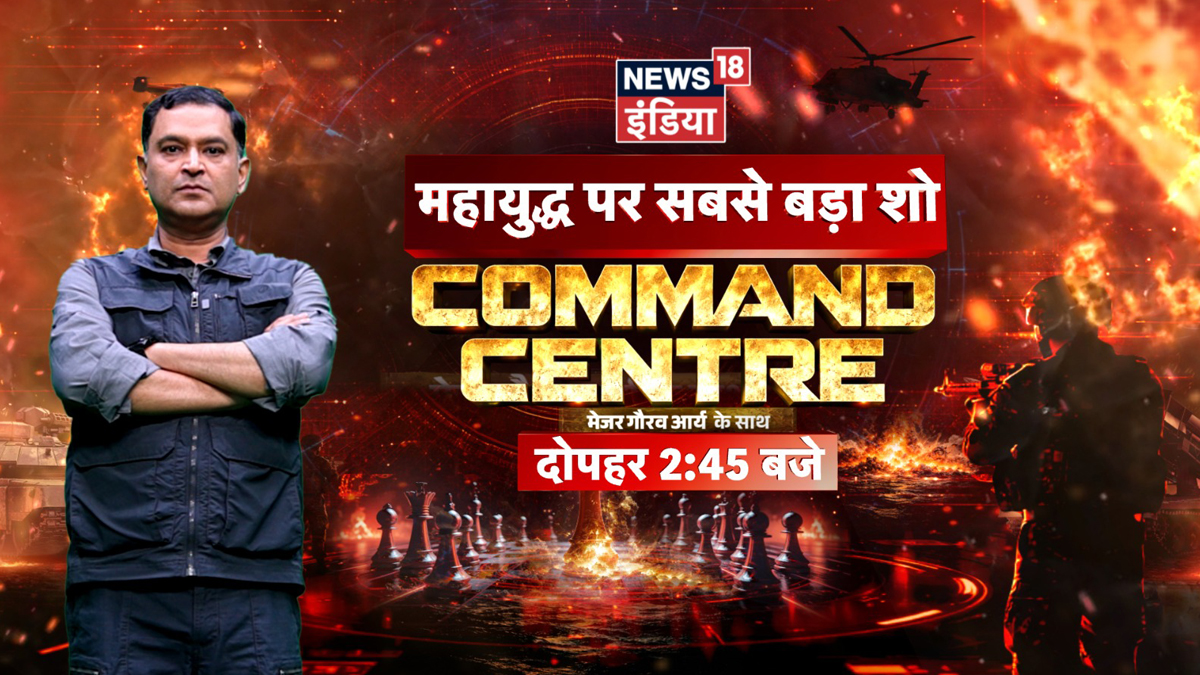
MUMBAI: News18 India has rolled out a new war-focused programme, Command Centre, featuring Gaurav Arya, as it looks to offer viewers a sharper, more grounded take on global conflicts amid rising tensions in West Asia.
Positioned as an “insider war room”, the show moves away from conventional panel debates and instead focuses on explaining military developments, decoding strategy and connecting global events to their everyday impact, from fuel prices to economic shifts.
The format leans heavily on visuals and data. The studio has been designed like a command hub, complete with large LED war maps, real-time graphics and an alert system to track developments as they unfold.
At the centre of it all is Arya, who brings his military background to simplify complex war strategies for viewers. His signature line, “Seedhi baat samjhiye”, anchors the show’s promise of clarity over noise.
News18 India managing editor Jyoti Kamal said, “Command Centre, featuring Major Gaurav Arya is designed to deliver accurate insights and a clear perspective on how evolving conflicts impact everyday life, from household budgets to national security. With expert voices analysing every development in real time, the show goes beyond headlines to decode what’s happening now, what it means, and what could come next.”
Echoing the intent, Gaurav Arya added, “In times of war, confusion is the biggest threat. With News18 India’s Command Centre, we are bringing viewers inside the war room, decoding strategies, tracking every escalation, and explaining, in the simplest terms, what it means for India and for every household. Seedhi baat samjhiye, this is where you understand not just what is happening, but what happens next.”
The weekday show will air in the afternoon slot and will also feature Gaurav Shukla, adding to its editorial depth.
With its mix of analysis, visuals and a clear focus on impact, the show reflects a broader shift in news consumption. Viewers are no longer just watching events unfold, they are looking to understand what those events mean for them.







