English Entertainment
BBC Studios’ Stanley Fernandes on his inspiration and future plans

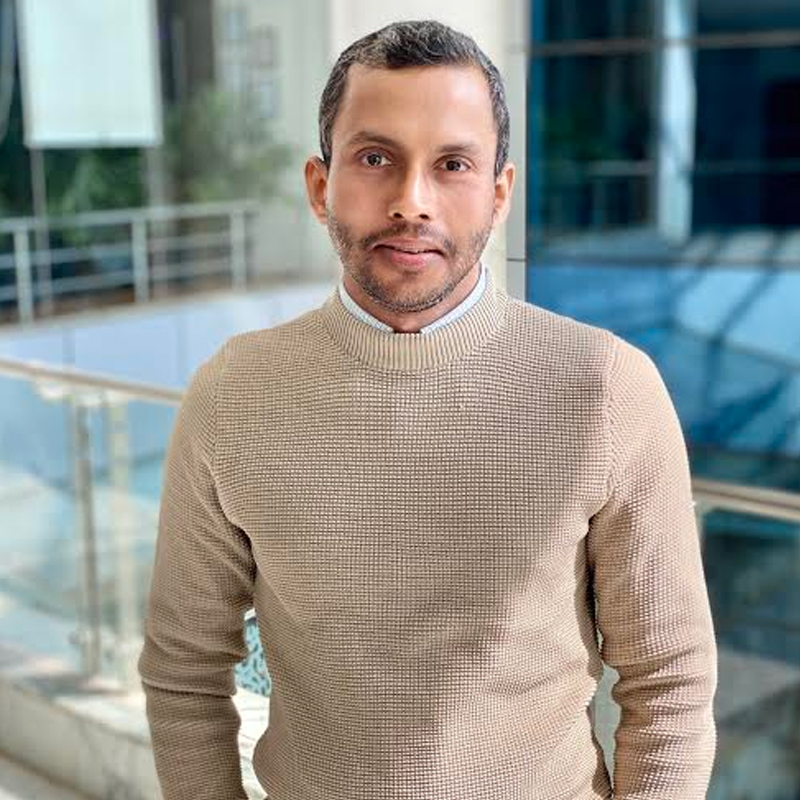
MUMBAI: BBC Studios South Asia distribution VP Stanley Fernandes is currently working across affiliate sales, digital sales, and content sales, in an integrated and geographically focused approach to grow distribution business in these territories. Previously, Stanley led content sales for south and southeast Asia. He now oversees new revenue opportunities for the distribution business in a more holistic offering to the client in south Asia.
Stanley who initially started off as a journalist has over 24 years of experience in the content business. He has produced content for UTV, he has also played an important role in Disney’s distribution team. In a candid conversation with indiantelevision.com Stanley Fernandes spoke at length about his interests, plans going forward for BBC studios and much more.
Edited Excerpts:

What are you reading or listening to right now?
I am currently reading two books, ‘How Not to Diet,’ by Michael Greger, MD which is an evidence-based study on nutrition and ‘I Know Why The Caged Bird Sings,’ by Maya Angelou which is an autobiography (first in a series of seven books) illustrating her narrative in overcoming racism and trauma.
When are you most inspired?
There are moments when you suddenly become mindful of either the simplicity or the complexity of the mind and you learn to separate the cause and effect; new and inspiring thoughts can emerge during this time. It’s about allowing your mind to be at ease. It could happen when you're sipping your morning coffee, reading, driving or meditating.
You have done a diploma in nutrition and dietetics, how are you utilising this expertise in your day to day life?
During pandemic, the importance of building immunity and what we eat is of utmost importance. Understanding food and how it interacts with our body is something we know so little of. Everything we eat is a chemical and wrongly balanced food can lead to its ill effects, while a well-balanced nutritional plan can be curative. My understanding of this science aids me in making the right food choices, and eating right is all about balance and moderation.
You also have a great interest in painting and sketching, in today's busy world do you get time to follow your passion?
It is important to always make time for hobbies and set your priorities right. Creative thinking comes many-a-times from not thinking about issues at hand, and hobbies provide you with that shift in mindset and perspective. We all need a break from our daily momentum and trying to make the best of being indoors.
What is the best thing that has ever happened to you professionally?
I have had great mentors in my career; ones who have been confident leaders and who were not afraid to be their own. A bigger part of growing is learning by example and I have been fortunate to be surrounded by professionals who have been magnanimous in encouraging me to constantly strive to be a better person and professional. Leaders and mentors have a bigger role than just the job at hand and it’s the things they don’t say and do that set an example.
Have you taken your time to reflect what all you have accomplished in the past years and what goals you'll be setting for the coming years?
We have had a great run over the years, from launching branded blocks such as BBC First, showcasing the best of our British drama on Zee Café, or the CBeebies block on Zee Q, to launching branded shows such as Doctor Who on StarFX, HotStar and Amazon. Top Gear and Great British Bake Off across the Sony and Viacom English GECs. Our presence can be seen on digital platforms from Netflix, Amazon, Disney+ Hotstar, Hungama, Tata Sky and soon to launch Discovery Plus. Going forward, our emphasis is definitely going to be on employee welfare, adapting to the new work-from-home goals and being customer-focused, adapting to the dynamic changes in the market.
Any exciting things lined up for BBC Studios in the next year?
We are always looking for opportunities and ways to grow our brands. There is a lot happening in the pipeline and it’s a space to watch out for. We recently re-launched CBeebies – a channel dedicated to pre-schoolers with its emphasis on learning through play, which is currently present in over 30 million homes (and counting), in the country. Sony BBC Earth, our joint venture with Sony continues to showcase the best of our factual entertainment and natural history content, and of course our content can be seen across all leading digital SVOD platforms too.
What is your number one priority for the business right now?
Our focus is on supporting our customers right now. The pandemic has left companies and industries looking at creative ways to reinvent their businesses and we want to be there for them. We have relooked at our sales policies and adapted them to current market realities in alignment with our brands. We are in the creative business and we also want our approach to be creative with our partners and support them in the best way we can.
Describe the BBC Studios culture? What makes it unique?
It’s a creative place that respects individuality and puts its people first. Emotional intelligence and employee wellbeing is of utmost importance as we believe it drives productivity. BBC Studios is very much focused on promoting a diverse and varied workforce, and a workplace that empowers you to be creative in your approach towards work. It also focuses on being impartial and honest at all times, a key attribute that the BBC Group is well known for.
What's the best and worst career advice you have been given?
My best career advice would be, “Don’t be afraid to make a call. Nothing has ever been achieved by being paralysed with indecisiveness. Be honest to yourself and have integrity. People will always see you for who you are and who you are is also a representation of the company you work for.” The worst advice would be “fake it until you make it.”
You can have a dinner party with any four people in the world. Who’s on your invite list?
Vincent Van Gogh – to understand his art and life that’s shrouded by mystery.
Steve Job – for his simplicity in coding.
Michelle Obama – for being a role model and advocate to so many issues that matter.
J. R. D Tata – for modernising India during its formative years and setting the standards till today.
Can you tell me about a tough day you had at work and how you pushed through?
It’s all a matter of perspective; the glass can be half full or half empty. It’s important to be decisive, fair and true to the moment. Create possibilities out of any given situation and the end will take care of itself. Learn to ‘believe!’.





English Entertainment
ZEE5 UK partners Narrative Entertainment to add UK channels
Six FAST channels added as platform sharpens hybrid play in Britain
LONDON: ZEE5 UK struck a first-of-its-kind deal with Narrative Entertainment, bringing mainstream UK television channels onto an Indian streaming platform as it pushes to deepen its footprint in a crowded, mature market.
The partnership adds six of Narrative’s FAST channels to the service, including Great! Movies, Great! Romance, Great! Mystery and kids brands POP, Tiny Pop and POP UP, widening ZEE5 UK’s appeal across genres and age groups.
The move reflects a clear shift in strategy. ZEE5 UK is betting on a hybrid model that blends on-demand content with curated, always-on channels to drive discovery and increase time spent on the platform.
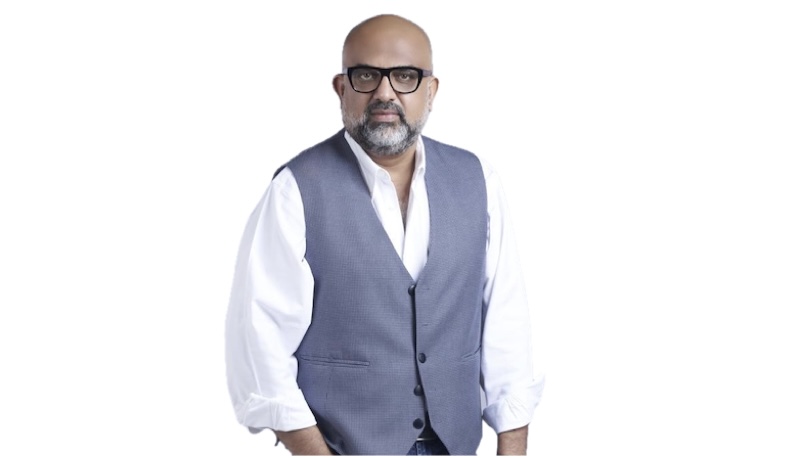
“This partnership represents a meaningful evolution in how we serve audiences in mature markets like the UK, where viewers are defined by habits, convenience and choice rather than geography or language alone,” said Parul Goel, territory head, Europe, Zee Entertainment. “By bringing trusted mainstream UK channels together with our premium originals, movies and kids’ content, we are building a more consumer-centric platform that simplifies viewing while increasing depth and relevance.”
Fateha Begum, commercial director, Narrative Entertainment, said the tie-up would fuel growth for both sides. “Our portfolio of quality programming, with such wide and enduring appeal, is a perfect complement to ZEE5 UK. This is a strong partnership that will support growth for both parties, and we share Zee Entertainment’s vision of an increasingly partnership-led future for the industry.”
ZEE5’s global library spans over 4,000 films and more than 500 originals, with over 130 new titles added annually. The addition of Narrative’s channels strengthens its kids offering and introduces genre-led linear experiences alongside its on-demand catalogue.
The deal also gives Narrative access to ZEE5 UK’s fast-growing user base, extending reach without diluting brand identity, while reinforcing ZEE5 UK’s network of more than 40 live channels.
As streaming wars intensify, ZEE5 UK is widening its playbook, blending content, convenience and partnerships in a bid to win screen time in one of the world’s toughest markets.







