News Broadcasting
BBC outlines online strategy


MUMBAI: Speaking at the MIX06 conference in Las Vegas, the director of the BBC’s new media and technology division Ashley Highfield, outlined the public broadcaster’s online strategy.
At the Microsoft-organized event for web developers, designers and business professionals, Highfield stressed that the BBC has to be technologically innovative, and key to that strategy is working with partners like Microsoft.
Highfield said, “We have a duty of universality. So it’s vital that we innovate through a number of strategic partnerships with technology companies and distributors such as Microsoft, Apple, Sony, Homechoice, NTL and Telewest. Both the BBC and Microsoft are ultimately looking for ways to empower our audiences; to put them in control, and in this we have an alignment of strategic objectives.”

He added, “The challenge is to create an end-to-end infrastructure for all our programming, to deliver content to all our audiences in the most cost-effective, simple and flexible way possible. The last ten yards of railway track-seamless delivery from the PC to the TV-is still to be built within the home.”
Highfield also used the keynote to showcase BBC’s iMP (Integrated Media Player), which just completed a five-month trial. The technology allows users to download programs onto their PCs and is “aimed at putting our audience in the driving seat,” he said.





News Broadcasting
CNN-News18 to host Fury in the Gulf conclave on West Asia crisis
Three-hour summit to unpack geopolitical fallout and impact on India
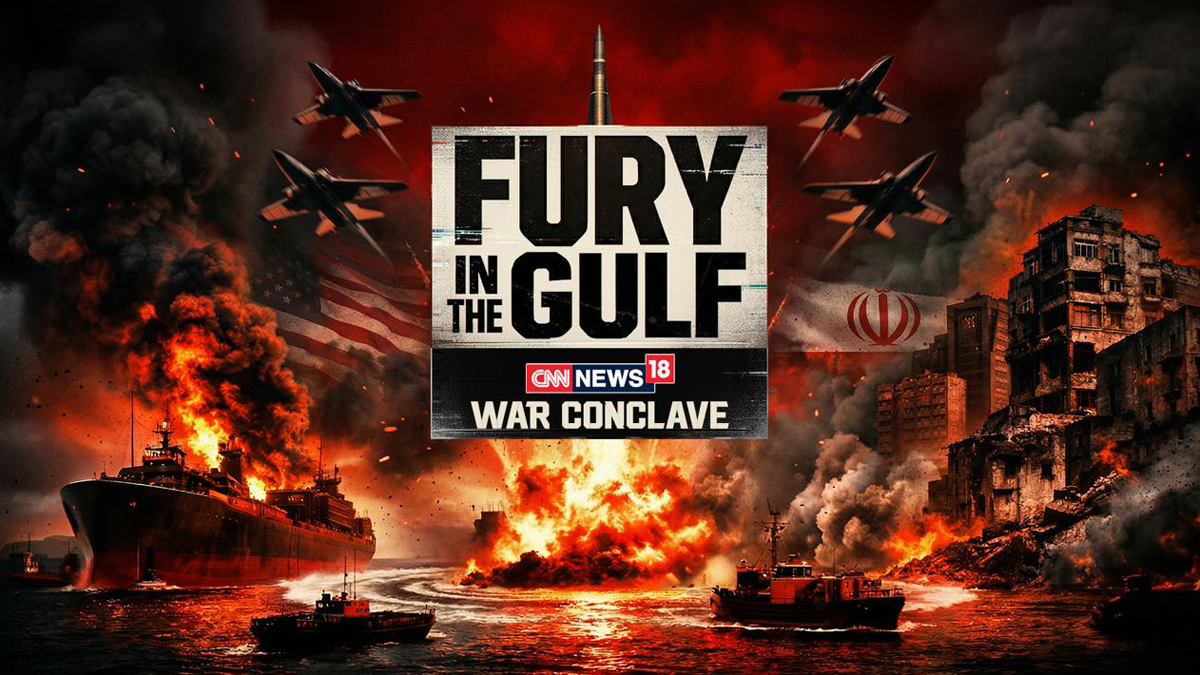
MUMBAI: CNN-News18 is set to host a special three-hour broadcast, Fury in the Gulf – War Conclave, on April 7, aiming to decode the escalating West Asia crisis and its far-reaching implications for India.
Scheduled from 4:00 PM to 7:00 PM, the conclave comes at a time when tensions between Iran and the United States are reshaping global geopolitics and triggering economic uncertainty. With India’s deep energy ties, trade links and large diaspora in the Gulf, the developments carry significant domestic relevance.
Built around the theme ‘Conflict, Consequences, and The Future,’ the programme will feature six curated sessions combining one-on-one interviews and panel discussions. The focus is to cut through the clutter and offer viewers a clearer understanding of the fast-evolving situation.
Key sessions include ‘Diplomacy in Times of War’ featuring Shashi Tharoor, and ‘World After the Iran Conflict’ with voices such as Ram Madhav, Reuven Azar, representatives from the European Union and the Iranian Deputy Envoy. Another session titled ‘Another Dunkirk?’ will bring together K. J. S. Dhillon and Jitin Prasada among others.
CNN-News18 editorial affairs director Rahul Shivshankar said, “In times of war, clarity becomes the most powerful tool. Fury in the Gulf – War Conclave brings together credible voices to address the questions and confusion that arise amid an overwhelming influx of information.”
He added that the initiative is aimed at delivering “facts, perspective, and insight” at a time when misinformation can easily cloud public understanding.
Echoing the sentiment, CNN-News18 CEO– English and business news Smriti Mehra said the conflict marks a defining global moment, with consequences that extend well beyond the region. She noted that the conclave seeks to present the crisis with “depth, nuance and responsibility” so audiences can better grasp its real-world impact.
As geopolitical tensions continue to dominate headlines, the conclave positions itself as an attempt to bring order to the noise, offering viewers a structured, insight-led look at a complex and rapidly shifting global situation.






