News Broadcasting
BBC launches special series focussing on GenNext


NEW DELHI: Can school children in India and Pakistan help in the peace process between the two countries? At least, they can try, if the elders care to listen to them in a daring and highly imaginative upcoming series of programmes on BBC World, titled “Generation Next”.
Class 10 student Waleed from Crescent Modern School, Lahore says: “I feel that by talking to Indian students, on my level, I would be contributing to the ongoing peace process between India and Pakistan.”
His friend Sarin says: “I am interested in Indian culture and would like to know what students of my age read in India.”
The two would be taking to pupils at the Kendriya Vidyalaya (KV), RK Puram, New Delhi, on the special programme called “School Day 24”, which will be telecast throughout December 6 as part of the news bulletins. “School Day 24” will be shown on 6 December.

Meenaxi, a Class 10 student at KV, would be talking to people like Sarin and Waleed, as would be students staying in London with those studying in Baghdad.
Generation Next is the BBC’s “boldest international broadcasting season yet with nine days of special programming devoted to the voices, experiences, ideas and aspirations of young people from around the globe,” says a BBC statement. BBC World will be joining BBC World Service and bbcnews.com, to bring together young people from all over the world.
Calling it “a most intriguing programme”, a spokeswoman from BBC in New Delhi told indiantelevision.com: “It is the biggest ever interactive conversation between young people across the world, which links schools in political ‘hot spots’ with schools located in areas with opposing views on the local tensions, conflicts and divides.”
However, though the School Day 24 is technically and emotionally the strongest of the programmes in the nine-day BBC under-18s series, there will be others like “My Generation Next”, presented by Anita Rani, in which young people will converse with each other using webcams, mobiles and other communication systems on issues confronting their generation.
There will also be special programmes on “World Business Report”, which will feature five young tycoons of the world, and also carry specially commissioned films, with one rare and enraged discussion on rampant use of children in advertising.
Another major draw will be the “The Street and The Ball”, which will present six projects that are part of the ‘streetfootballworld’ network – an international organisation that uses street football to improve the lives of young people living in extreme social conditions.
One series among the entire endeavour, “The Hobart Shakespeareans”, has already been telecast on December 2. It had fifth-graders at Hobart Elementary School Latino and Asian children growing up in an underprivileged area of Los Angeles. It’s a tough start, especially as English is their second language, but they are lucky enough to be taught by Rafe Esquith, whose motto in life is “be nice and work hard”. His drama lessons also produce astonishing results, a statement from BBC said.
Of these, the most endearing would obviously be the “School Day 24”. BBC says “School Day 24” will give a voice to young people allowing them to talk >across social, political and cultural divides about the issues that concern them.
There are link-ups in Albania, Bangladesh, Burma, China, Germany, India, Indonesia, Kenya, Mexico, Nigeria, Pakistan, Poland, the US and more.
“Interestingly, the programme will see students from Pakistan talk to those in India; those from Baghdad share concerns with those in London,” the BBC spokeswoman told indiantelevision.com here.
Using the global resources of the BBC, satellite broadcasting equipment has been installed in schools to enable teenagers to make their voices heard throughout the day both in their regions and worldwide.
Youngsters will use webcams, mobile phones and through specially commissioned films talk about what’s really on their minds in two half-hour specials in My Generation Next. Also across the week, “five exceptional teenagers will demonstrate what they are doing to make a difference in their world”, the BBC statement added.
Among the other programmes will be one titled “Nicola Benedetti – A Winning Story”, the girl who won the BBC’s prestigious Young Musician competition at the age of 16; and “Sierra Leone: The Way I See It”, with Kyle Jones, 15, a visually impaired student who lives in England and sets about to meet his pen pal in Sierra Leon to find out how disabled people are treated in this part of the world.
The season runs from Saturday 2 to Sunday 10 December 2006 across BBC World television and BBC World Service radio.




News Broadcasting
CNN-News18 to host Fury in the Gulf conclave on West Asia crisis
Three-hour summit to unpack geopolitical fallout and impact on India
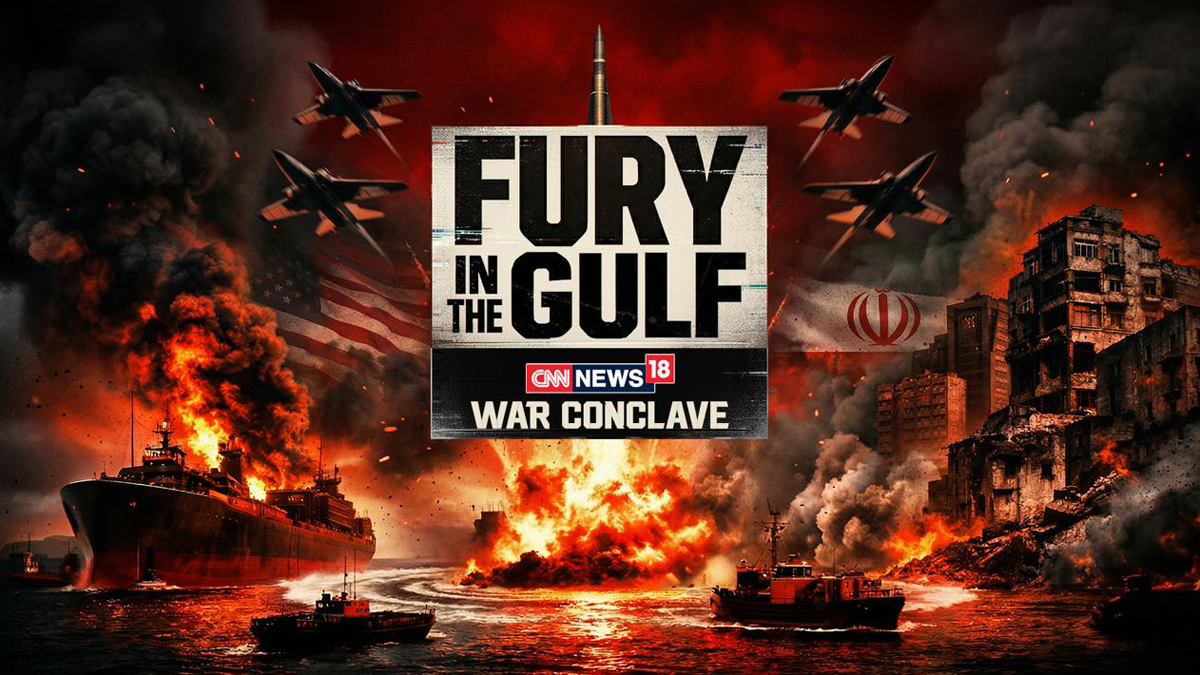
MUMBAI: CNN-News18 is set to host a special three-hour broadcast, Fury in the Gulf – War Conclave, on April 7, aiming to decode the escalating West Asia crisis and its far-reaching implications for India.
Scheduled from 4:00 PM to 7:00 PM, the conclave comes at a time when tensions between Iran and the United States are reshaping global geopolitics and triggering economic uncertainty. With India’s deep energy ties, trade links and large diaspora in the Gulf, the developments carry significant domestic relevance.
Built around the theme ‘Conflict, Consequences, and The Future,’ the programme will feature six curated sessions combining one-on-one interviews and panel discussions. The focus is to cut through the clutter and offer viewers a clearer understanding of the fast-evolving situation.
Key sessions include ‘Diplomacy in Times of War’ featuring Shashi Tharoor, and ‘World After the Iran Conflict’ with voices such as Ram Madhav, Reuven Azar, representatives from the European Union and the Iranian Deputy Envoy. Another session titled ‘Another Dunkirk?’ will bring together K. J. S. Dhillon and Jitin Prasada among others.
CNN-News18 editorial affairs director Rahul Shivshankar said, “In times of war, clarity becomes the most powerful tool. Fury in the Gulf – War Conclave brings together credible voices to address the questions and confusion that arise amid an overwhelming influx of information.”
He added that the initiative is aimed at delivering “facts, perspective, and insight” at a time when misinformation can easily cloud public understanding.
Echoing the sentiment, CNN-News18 CEO– English and business news Smriti Mehra said the conflict marks a defining global moment, with consequences that extend well beyond the region. She noted that the conclave seeks to present the crisis with “depth, nuance and responsibility” so audiences can better grasp its real-world impact.
As geopolitical tensions continue to dominate headlines, the conclave positions itself as an attempt to bring order to the noise, offering viewers a structured, insight-led look at a complex and rapidly shifting global situation.






