News Broadcasting
BBC launches free HD broadcasts


MUMBAI: UK pubcaster The BBC will give the UK’s first high definition viewers a curtain-raising treat of the whole of Planet Earth part one, followed by classic Dickens drama Bleak House over Whitsun Bank Holiday from 27 to 29 May 2006.
The BBC starts the UK’s first free-to-air high definition (HD) consumer broadcasts this week, at the start of a 12 month trial of this new sharper, clearer TV format. Meanwhile research disclosed by the BBC suggests that the majority of people who know about HD expect the BBC to broadcast in HD, and to do so free to air, funded by the licence fee. They also expect high definition broadcasting to be available on all platforms including Freeview.
The BBC’s HD stream starts broadcasting tomorrow 11 May with a promotional preview. The broadcasts will initially be available to viewers on satellite who have the right HD equipment. Sky has announced it will start installing HD set top boxes from 22 May. The BBC’s HD stream will also be carried in some cable areas in time for the World Cup, following a successful carriage agreement with NTL Telewest.

From 9 June, the BBC’s World Cup coverage will be simulcast in HD, as will major Wimbledon matches. From July the stream will show BBC highlights in drama, documentaries, events and music for a few hours each day.
BBC director of television Jana Bennett said, “These are small but exciting first steps in the BBC’s ambition to offer the option of high definition to all in the future. It’s clear that licence fee payers expect high definition broadcasts from the BBC, the same way they have moved to colour television, widescreen, digital radio and online services with us in the past.”
The BBC says that HD provides sharper, clearer pictures and the potential for surround sound. It needs different technology from ‘standard definition television’ at every link in the chain, from the way programmes are shot and broadcast to the equipment in viewers’ homes.
The BBC is conducting an end-to-end trial of HD broadcasting over the next 12 months as a test of the technology and trial of the audience appetite for the format. The findings will inform any ongoing offer. BBC HD broadcasting will start officially at noon on 11 May 2006 when the offer appears for the first time to viewers on the Sky electronic programme guide.
GfK NOP conducted an online survey for the BBC of a representative sample of about 1,500 respondents. They were asked what they knew and thought about high definition television. Seventy three per cent of the sample had heard about high definition television. The figure was much higher for men (83 per cent) than women (62 per cent) and digital homes (77 per cent) rather than analogue homes (62 per cent).
Of those that were aware of high definition:
87 per cent said that they expected the BBC to broadcast in high definition in future;
93 per cent expected those broadcasts to be free to air;
95 per cent expected HD broadcasts to be available on all platforms – satellite, cable and Freeview;
88 per cent disagreed that HD viewers should pay a higher Licence Fee.




News Broadcasting
WITT Summit 2026 concludes in New Delhi
Babar Azam’s comical diving attempt goes viral as league introduces anti-dew measures.
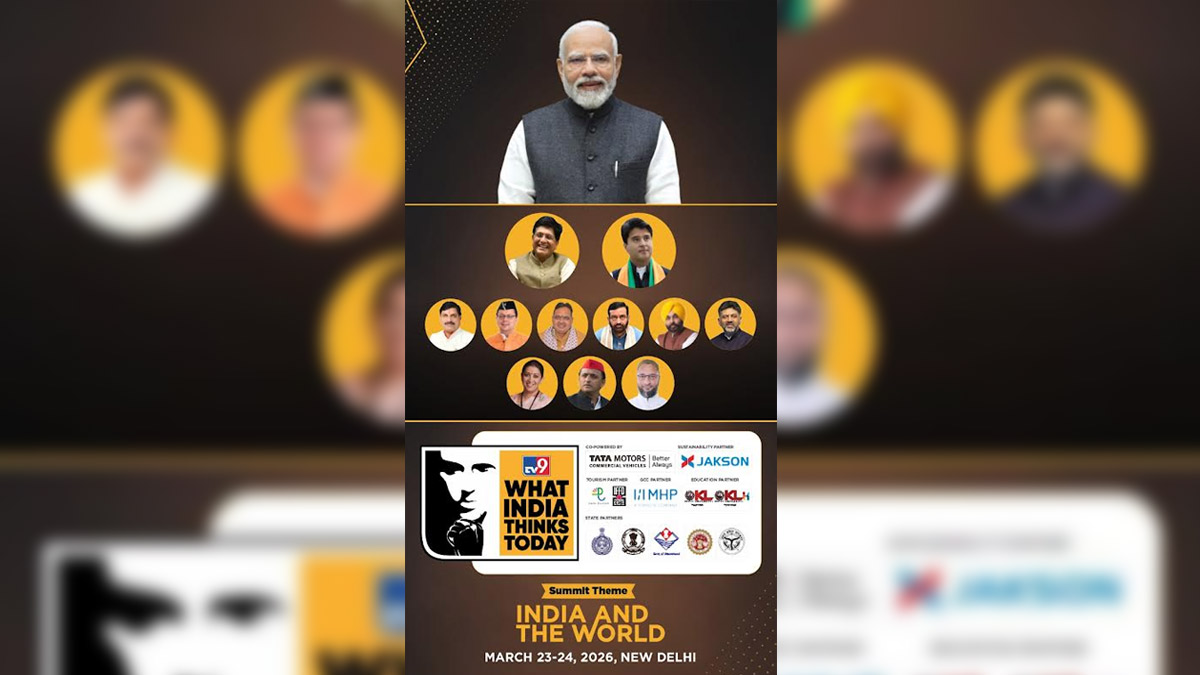
MUMBAI: The WITT Summit just wrapped up with enough big ideas to fill a policy playbook because when India’s leaders, thinkers and icons gather under one roof, even the conversations hit sixes. The eighth edition of TV9 Network’s flagship What India Thinks Today (WITT) Summit 2026 concluded on Saturday after two days of dynamic discussions at its New Delhi venue. India’s largest multi-domain public policy and culture summit brought together political leaders, policymakers, sports icons, artists and technology innovators to examine the forces shaping contemporary India and its global standing.
Prime minister Narendra Modi delivered the keynote address on the theme “India and the World” for the third consecutive year. In a wide-ranging speech, he addressed the ongoing conflict in West Asia, calling for restraint and compassion while highlighting India’s continued development trajectory despite global turmoil.
The summit featured candid conversations with state leaders. Telangana Chief Minister A. Revanth Reddy articulated a people-first governance model and contrasted it with other development approaches. Madhya Pradesh Chief Minister Mohan Yadav declared that Left-wing extremism had been effectively eliminated in his state and highlighted preparations for the upcoming Kumbh Mela. Punjab Chief Minister Bhagwant Mann defended his government’s record, citing the closure of 19 toll plazas and creation of the Sadak Suraksha Force. Karnataka Deputy Chief Minister D.K. Shivakumar expressed confidence in Congress prospects in Assam and addressed recent allegations against him.
On geopolitics and national security, Union Minister Jyotiraditya Scindia outlined India’s ambition to become a builder of trusted digital infrastructure for the world, citing the rapid 5G rollout and village-level 4G connectivity.
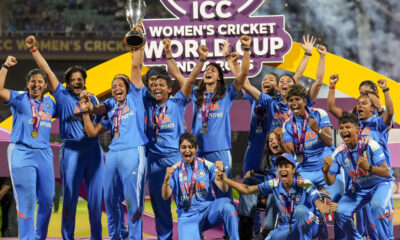
Cricket received significant attention. Former India captain Sourav Ganguly praised player freedom and trust as hallmarks of great leadership and named MS Dhoni as the greatest captain due to his World Cup successes. India women’s team bowling coach Aavishkar Salvi credited the BCCI and Women’s Premier League for building a pipeline of world-class talent behind the team’s recent ODI World Cup triumph.
The summit also hosted the inaugural AI² Awards 2026, celebrating the convergence of human creativity and machine intelligence in storytelling and content creation. Poet and kathavachak Kumar Vishwas delivered a nuanced take on India’s concept of Dharma and criticised the recent arrest of an 80-year-old Shankaracharya. Veteran lyricist Sameer Anjaan and storyteller Neelesh Misra reflected on changing music trends and artistic responsibility in the wake of a recent controversy involving Nora Fatehi.
In a country where conversations often run as deep as the Ganges, the WITT Summit proved once again that when leaders, thinkers and storytellers come together, the real winner is public discourse lively, layered and refreshingly unafraid to tackle the big questions shaping India’s tomorrow.








