News Broadcasting
BBC launches College of Comedy


MUMBAI: Britain’s comedy writers are backing a new “BBC College of Comedy.” The scheme, which launches today (12 March), will take six writers and train them over a year by attaching them to sitcoms and sketch shows, giving each a mentor for original work, and running a series of masterclasses in all aspects of comedy writing.
Among those endorsing the scheme are Dick Clement and Ian la Frenais, Jesse Armstrong and Sam Bain, Bill Dare, Jeremy Dyson, Andy Hamilton, Armando Iannucci, Laurence Marks and Maurice Gran, Paul Mayhew-Archer, David Mitchell and Robert Webb, Susan Nickson, Simon Nye, Ian Brown, James Hendrie and Ian Pattison.
The scheme, which has financial support from BBC Worldwide, is designed for people who have already begun their careers, and can demonstrate some achievement, such as broadcast material, a script commission or performance of their work.

Applicants are being invited to submit the first ten pages of a half-hour script, or six sketches by the closing date of 14 April. Twelve writers will be interviewed, and the successful six announced on 16 May. They will then be matched with productions, and guaranteed a script commission.
They will also be given a mentor for original work, which will be showcased when the scheme ends in March 2009. There will be two residential workshops during the year, with sessions from leading writers, producers and directors.
The scheme is being run by Micheál Jacob, formerly the BBC’s creative head of mainstream comedy and executive producer of My Family, Two Pints of Lager and a Packet of Crisps and The Smoking Room. He will combine running the college with developing and executive producing programmes.
Jacob says, “We hope to find people who are going to make our team-written shows better, and also writers with original voices who can develop their own shows. We also hope that people will like the BBC enough to bring us their work in the future.”
The scheme is the brainchild of BBC’s head of comedy, Mark Freeland.
He added, “I’m really excited about the launch of the scheme. I hope that we can find creative writing talent from many places, unearthing origin and diverse comedy voices.”




News Broadcasting
CNN-News18 to host Fury in the Gulf conclave on West Asia crisis
Three-hour summit to unpack geopolitical fallout and impact on India
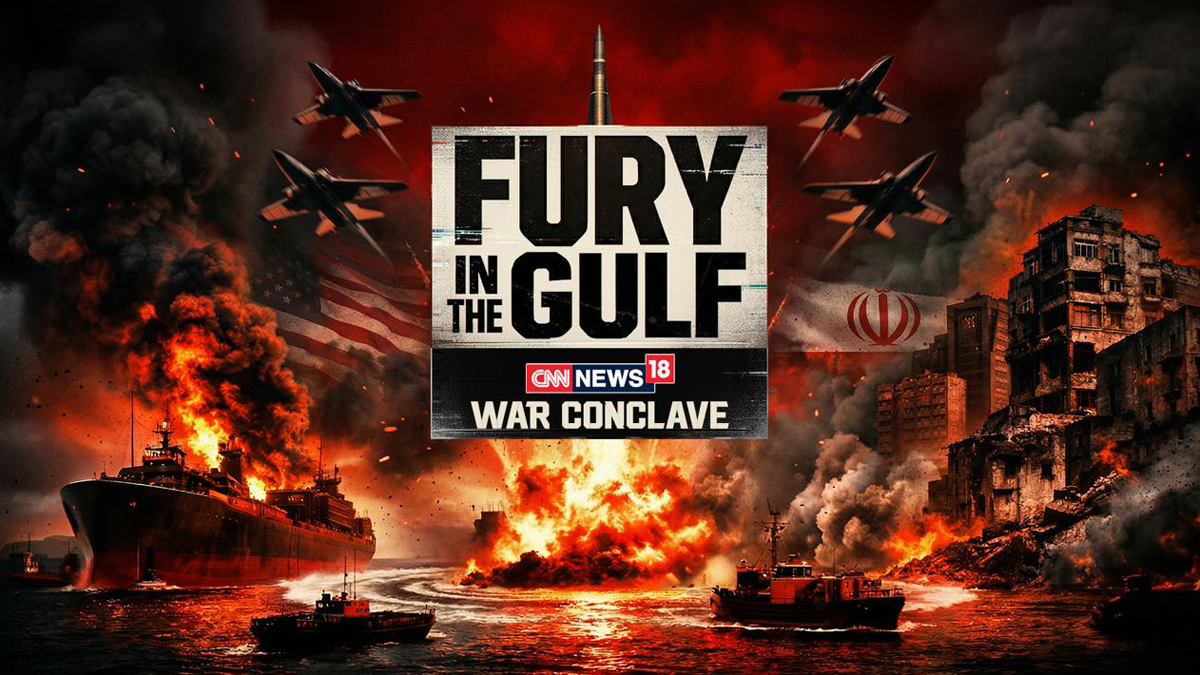
MUMBAI: CNN-News18 is set to host a special three-hour broadcast, Fury in the Gulf – War Conclave, on April 7, aiming to decode the escalating West Asia crisis and its far-reaching implications for India.
Scheduled from 4:00 PM to 7:00 PM, the conclave comes at a time when tensions between Iran and the United States are reshaping global geopolitics and triggering economic uncertainty. With India’s deep energy ties, trade links and large diaspora in the Gulf, the developments carry significant domestic relevance.
Built around the theme ‘Conflict, Consequences, and The Future,’ the programme will feature six curated sessions combining one-on-one interviews and panel discussions. The focus is to cut through the clutter and offer viewers a clearer understanding of the fast-evolving situation.
Key sessions include ‘Diplomacy in Times of War’ featuring Shashi Tharoor, and ‘World After the Iran Conflict’ with voices such as Ram Madhav, Reuven Azar, representatives from the European Union and the Iranian Deputy Envoy. Another session titled ‘Another Dunkirk?’ will bring together K. J. S. Dhillon and Jitin Prasada among others.
CNN-News18 editorial affairs director Rahul Shivshankar said, “In times of war, clarity becomes the most powerful tool. Fury in the Gulf – War Conclave brings together credible voices to address the questions and confusion that arise amid an overwhelming influx of information.”
He added that the initiative is aimed at delivering “facts, perspective, and insight” at a time when misinformation can easily cloud public understanding.
Echoing the sentiment, CNN-News18 CEO– English and business news Smriti Mehra said the conflict marks a defining global moment, with consequences that extend well beyond the region. She noted that the conclave seeks to present the crisis with “depth, nuance and responsibility” so audiences can better grasp its real-world impact.
As geopolitical tensions continue to dominate headlines, the conclave positions itself as an attempt to bring order to the noise, offering viewers a structured, insight-led look at a complex and rapidly shifting global situation.






