News Broadcasting
BBC Hindi stems declining audience flow in India


MUMBAI: BBC World Service has stemmed its declining radio audience in India, according to an independent audience survey. The survey was commissioned by BBC World Service and was conducted by AC Nielsen between December 2004 and January 2005.
BBC Hindi has grown by 4.3 million, taking the BBC’s weekly Hindi audience up to 14.5 million. The survey, conducted in Bihar, UP, Uttaranchal, Jharkhand and Rajasthan, revealed that weekly listenership to the BBC confirms the BBC as India’s number one international radio provider.
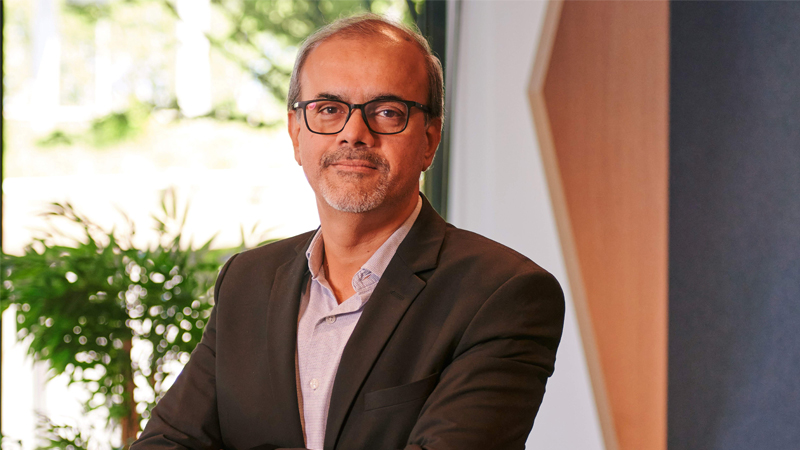
The BBC captures 40 per cent of all those listening to the radio in Bihar, and a third of radio listeners in Jharkhand. In the remaining three states, just under one in five of radio listeners turn to the BBC Hindi Service every week. BBC Hindi head Achala Sharma, says that the increase in audience this year is likely to be the result of a combination of factors, “We have developed our programming so it connects directly with our audiences in the Hindi belt. I am also sure that our roadshow marketing initiative in Bihar and UP last year has contributed to this success.”

According to the survey, which was undertaken almost a year after the BBC Hindi roadshow ended, 16 per cent of weekly listeners said they were aware of the BBC Hindi events. This amounts to over two million people. The Hindi roadshow visited over 40 locations in UP and Bihar, giving local people direct contact with the BBC.
BBC World Service controller marketing communications and audiences, Alan Booth said, “India is a key market for the BBC. The rapid growth of TV viewing across India over the last 10 years, combined with India’s broadcasting legislation which prevents news and current affairs on FM radio stations, has changed the media landscape.




News Broadcasting
News18 India launches Command Centre war explainer with Arya
New show shifts from debates to decoding global conflicts and impacts
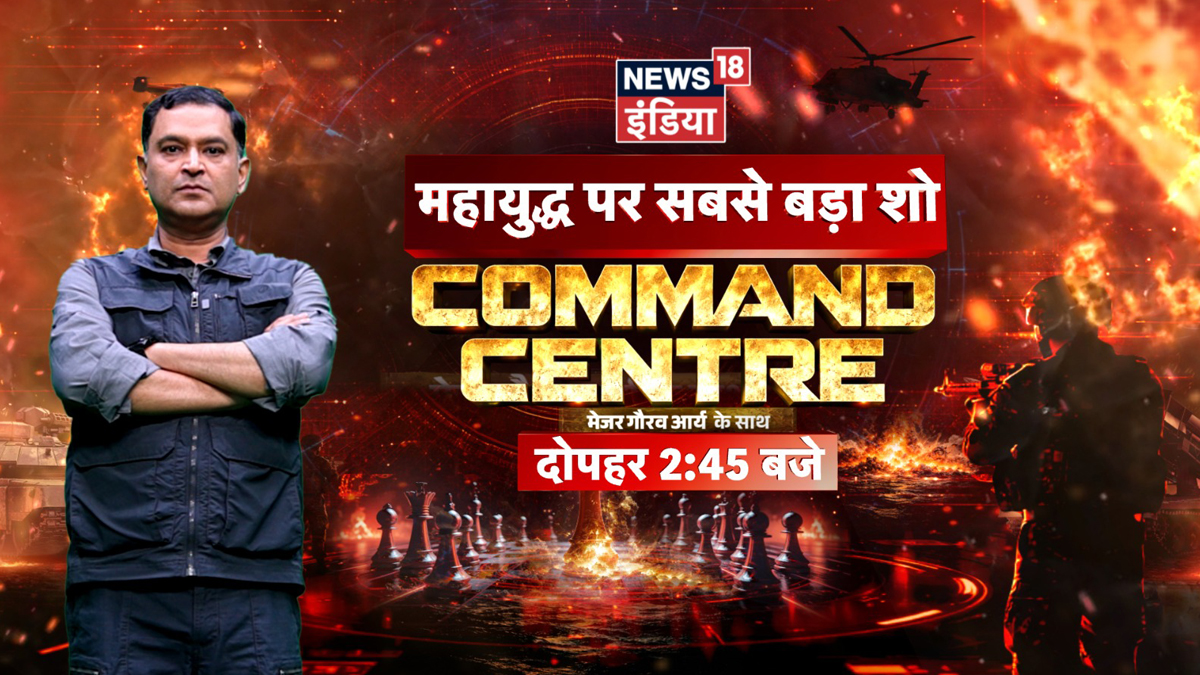
MUMBAI: News18 India has rolled out a new war-focused programme, Command Centre, featuring Gaurav Arya, as it looks to offer viewers a sharper, more grounded take on global conflicts amid rising tensions in West Asia.
Positioned as an “insider war room”, the show moves away from conventional panel debates and instead focuses on explaining military developments, decoding strategy and connecting global events to their everyday impact, from fuel prices to economic shifts.
The format leans heavily on visuals and data. The studio has been designed like a command hub, complete with large LED war maps, real-time graphics and an alert system to track developments as they unfold.
At the centre of it all is Arya, who brings his military background to simplify complex war strategies for viewers. His signature line, “Seedhi baat samjhiye”, anchors the show’s promise of clarity over noise.
News18 India managing editor Jyoti Kamal said, “Command Centre, featuring Major Gaurav Arya is designed to deliver accurate insights and a clear perspective on how evolving conflicts impact everyday life, from household budgets to national security. With expert voices analysing every development in real time, the show goes beyond headlines to decode what’s happening now, what it means, and what could come next.”
Echoing the intent, Gaurav Arya added, “In times of war, confusion is the biggest threat. With News18 India’s Command Centre, we are bringing viewers inside the war room, decoding strategies, tracking every escalation, and explaining, in the simplest terms, what it means for India and for every household. Seedhi baat samjhiye, this is where you understand not just what is happening, but what happens next.”
The weekday show will air in the afternoon slot and will also feature Gaurav Shukla, adding to its editorial depth.
With its mix of analysis, visuals and a clear focus on impact, the show reflects a broader shift in news consumption. Viewers are no longer just watching events unfold, they are looking to understand what those events mean for them.






