News Broadcasting
BBC Governors unveil proposals for Service Licence framework and Public Value Test

MUMBAI: The BBC Governors have unveiled the first detailed thinking for two of the major new instruments that will underpin radical changes in the way the BBC is governed. The new Service Licence framework and Public Value Test were first proposed in the BBC’s Charter Review submission, Building Public Value, and have since been recognised in the Government’s Green Paper as part of its policy to replace the Board of Governors with the BBC Trust.
In his foreword to the consultation document BBC chairman Michael Grade makes clear that it is not for the Board of Governors to determine how the new BBC Trust will operate. However, in order to enable the Trust to establish itself as early as possible as a new and effective governing body, the Governors are seeking views on their proposals from licence-fee payers, commercial broadcasters, media groups, regulators and any organisation with relevant interests.
The evidence gathered will be presented to the Trust to assist its members in determining and implementing its working methods early in the new Charter period. The BBC Governors say that they intend that the Public Value Test and the Service Licences will help ensure a more transparent BBC and hence a more accountable BBC.

The Public Value Test will provide a consistent and evidence-based framework to inform decisions required of the governing body regarding significant service-related investment proposals from BBC management. The Service Licences will provide clarity to BBC management on what is required from each of the BBC’s services, and how their performance will be measured.
They will also provide transparency for licence fee payers and the commercial sector on the remit of BBC services, and on their delivery. Grade said, “Both the Public Value Test and Service Licences will make the BBC more transparent. This is much needed and, if achieved, will be of benefit to licence-fee payers, to the commercial organisations that operate within the same markets, and to the BBC itself. In future the judgements made by the Trust on behalf of licence-fee payers will be informed by evidence which will be published.
“This new system won’t eliminate debate about the BBC’s performance and its activities, but it will allow for public scrutiny of how and why decisions were reached. The test for the new Trust under my chairmanship will be the establishment of a reformed governance structure that is more robust, effective, transparent and consistent in its approach without stifling creativity. That is a challenge I intend to meet.”
Public Value Test – The BBC Governors propose that all major service-related investment proposals will be subject to a Public Value Test to assess the net public value created once measured against market impact. There are two parts to the Public Value Test:
The Public Value Assessment (PVA) which measures the public value which would be created by a service The Market Impact Assessment (MIA) which measures the likely impact on existing or potential value created in the wider market as a result of the change.
The PVT is a structured, evidence-based, decision-making tool which aids, but does not replace, judgement on the part of the governing body. The consultation document describes the process for both parts of the test and the circumstances in which it is proposed that the tests and/or its component parts should be used.
Service Licences – The Government’s Green Paper endorsed the Governors’ proposal that BBC services should be subject to an operating licence. In the consultation document the Governors suggest a draft template outlining the information each licence might include, together with proposals for the processes the Trust could follow in reviewing performance against the licences, requests from management to change the terms of a licence, consequences for poor performance and so on.
The Governors suggest that a Service Licence should contain:
– a description of the scope of the licence: including its geographic scope, how it is delivered and accessed by its users. Also a statement covering prohibited activities;
– the service’s budget in the first year of the licence, together with a parameter of maximum change;
– a remit which can remain constant for several years. This includes the service’s editorial priorities and objectives, its target audience (if the service has one) and its distinctive role within its market;
– details of the service’s contribution to each of the BBC’s public purposes (or as many as are of relevance);
– conditions which would typically set minimum levels of certain types of output on the service (eg minimum hours of Current Affairs programmes in peaktime); and
– a framework for measuring the performance of the service, including Key Performance Indicators for Reach, Quality, Impact and Value for Money and incorporating the Government’s listed characteristics of public service broadcasting. New services would need to be set appropriate targets.
The consultation will be open for eight weeks, closing on 16 December 2005.
The new Charter and Agreement will set out a framework for the future of the BBC. Within that framework, the new BBC Trust will be the final authority in approving the content and application of the Service Licences and Public Value Test.
The work of the Governance Unit to date in developing theses mechanisms is on the instruction of the current Board of Governors. It is expected that the Government will set out a number of key issues for Service Licences and the Public Value Test in its White Paper.



News Broadcasting
News18 India launches Command Centre war explainer with Arya
New show shifts from debates to decoding global conflicts and impacts
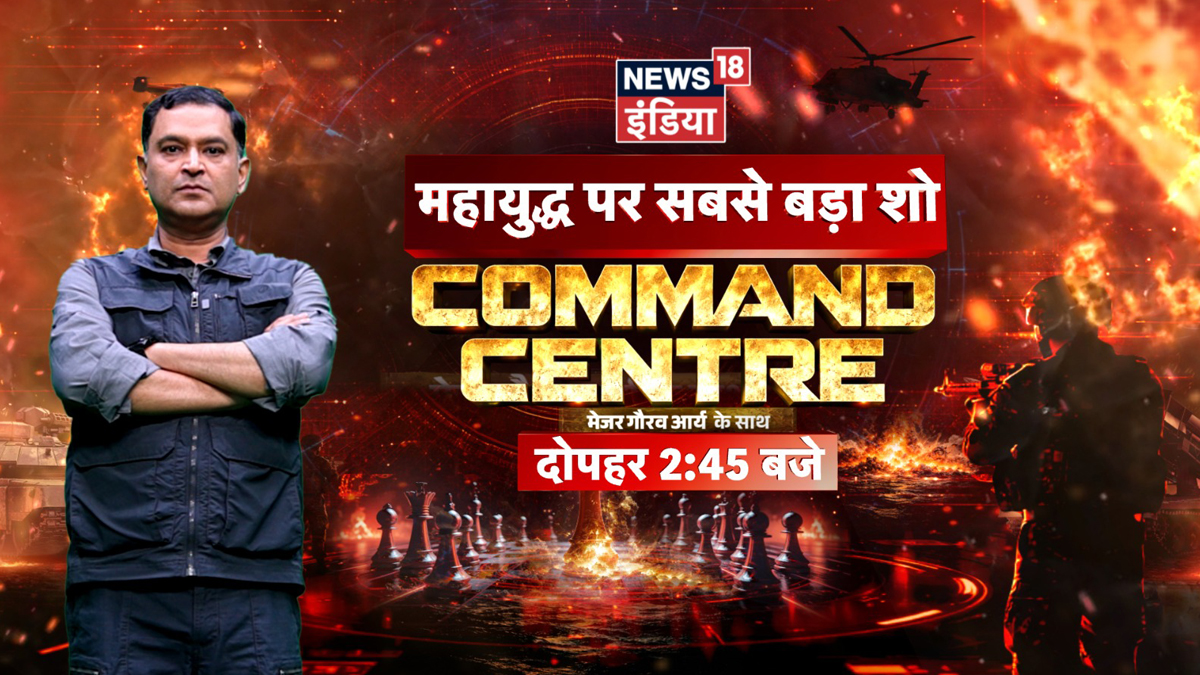
MUMBAI: News18 India has rolled out a new war-focused programme, Command Centre, featuring Gaurav Arya, as it looks to offer viewers a sharper, more grounded take on global conflicts amid rising tensions in West Asia.
Positioned as an “insider war room”, the show moves away from conventional panel debates and instead focuses on explaining military developments, decoding strategy and connecting global events to their everyday impact, from fuel prices to economic shifts.
The format leans heavily on visuals and data. The studio has been designed like a command hub, complete with large LED war maps, real-time graphics and an alert system to track developments as they unfold.
At the centre of it all is Arya, who brings his military background to simplify complex war strategies for viewers. His signature line, “Seedhi baat samjhiye”, anchors the show’s promise of clarity over noise.
News18 India managing editor Jyoti Kamal said, “Command Centre, featuring Major Gaurav Arya is designed to deliver accurate insights and a clear perspective on how evolving conflicts impact everyday life, from household budgets to national security. With expert voices analysing every development in real time, the show goes beyond headlines to decode what’s happening now, what it means, and what could come next.”
Echoing the intent, Gaurav Arya added, “In times of war, confusion is the biggest threat. With News18 India’s Command Centre, we are bringing viewers inside the war room, decoding strategies, tracking every escalation, and explaining, in the simplest terms, what it means for India and for every household. Seedhi baat samjhiye, this is where you understand not just what is happening, but what happens next.”
The weekday show will air in the afternoon slot and will also feature Gaurav Shukla, adding to its editorial depth.
With its mix of analysis, visuals and a clear focus on impact, the show reflects a broader shift in news consumption. Viewers are no longer just watching events unfold, they are looking to understand what those events mean for them.







