Gaming
Balancing act: Exploring the intersection of AI advancements and job security in the gaming sector

Mumbai: The development, playability, and experience of games are all being altered by the advent of AI, which is a disruptive factor in the rapidly changing gaming industry. Game creators are in a difficult position as AI technologies continue to progress quickly. They must strike a careful balance between utilising AI’s potential for innovation and maintaining the stability of jobs and human creativity in the industry.
The gaming industry’s employment security and AI developments create a complicated web of opportunities and obstacles that call for thoughtful analysis and strategic navigation. AI has a huge and varied impact on the gaming industry, potentially upending established positions and revolutionising gameplay experiences.
The main focus is on the complex dynamics at work as developers wrestle with issues of job security, ethical ramifications, and the need to find a healthy balance between human creativity and technical growth as they explore the enormous potential of AI in game production. Through the lenses of innovation, sustainability, and ethical responsibility, we hope to shed light on how the game industry is changing in a world driven by artificial intelligence.

Shifting the Scene for Game Development
Over the next five to ten years, generative AI can completely transform the video game business, and gaming executives anticipate that it will have a major impact on the creation process. But as AI technologies advance in the industry, worries regarding job displacement and its effects on talent models continue to exist.
AI’s impact on gaming goes beyond improving gameplay; it also optimises game monetisation techniques. The use of AI in game production opens up possibilities for process optimisation, including the automation of testing and content creation. This can result in more smoothly launched games and happier players. In addition to improving graphics and realism, AI-driven algorithms are making it possible to create customised storytelling experiences based on the tastes of each player.
Workplace Safety in the AI Age
Artificial intelligence (AI) is a rapidly changing field that creates serious issues and worries regarding job security for people in a variety of industries, including the gaming industry. There’s growing concern about how AI technologies can affect traditional job roles in the game development business as they improve and become more integrated into various sectors of the industry. While automation and artificial intelligence (AI) can improve productivity, optimise workflows, and streamline jobs, there is a chance that these procedures could displace human workers who have historically carried out these duties.
Like many other industries, the gaming sector must strike a balance between the advantages of AI adoption and maintaining worker job security. Concerns about the loss of jobs involving manual labour or repetitive duties are legitimate. Developers and industry stakeholders need to find ways to prioritise human creativity and innovation in game design, reorganise job responsibilities to fit with AI integration, and upskill staff to traverse this delicate balance.
Companies and individuals in the gaming business need to take the initiative to address job security in the AI era. Adopting AI technology and funding staff training and development at the same time can reduce the likelihood of job displacement and promote a more resilient workforce. Game developers can fully utilize AI advancements while preserving job security and fostering a vibrant ecosystem where human creativity remains at the forefront of innovation by fostering a culture of constant learning, adaptability, and collaboration between humans and AI systems.
Why Automating Creativity Is Not Possible
Although artificial intelligence (AI) has numerous benefits for game developers, it cannot take the place of human creativity and emotional intelligence. The human touch is indispensable in world-building, character development, and storytelling. These aspects of game creation include emotional depth, empathy, and cultural awareness—qualities that AI is currently unable to imitate.
To ensure that artificial intelligence (AI) is used to support development but does not take the place of the creative minds that fuel the industry’s innovation and appeal, the gaming industry must acknowledge and reward these distinctively human contributions.
AI and Human Talent Working Together
Gaming is one of the businesses that is changing as a result of human-AI collaboration, which uses each entity’s special skills to produce better outcomes. Human-AI contact is essential since each has unique skills that, when combined, produce better results. When it comes to creativity, empathy, and critical thinking, humans are superior to AI, which is better at processing large volumes of data and handling repetitive jobs quickly. When people and AI collaborate, humans can contribute context and decision-making skills, and AI can bring data-driven insights that improve decision-making.
It’s a popular worry that artificial intelligence (AI) will take the place of people in all jobs, however, this is untrue. Automation may cause some occupations to become obsolete, but AI integration will lead to the creation of new roles. Numerous activities still call for human creativity, empathy, and input, which emphasizes how crucial human-AI collaboration is to cost optimization, enhanced decision-making, and competitiveness in dynamic marketplaces. The trend of human-AI collaboration is becoming more and more popular in a variety of industries as businesses realize how valuable it is to combine human expertise with AI skills to get better outcomes.
Conclusion
The gaming business should prioritize adaptability and balance as it negotiates the confluence of AI developments and job security. Even though AI has the potential to completely transform the game production industry, it is crucial to approach these developments with a knowledge of how they will affect employment and the importance of human creativity, which cannot be replaced. In a future enhanced by AI, the game industry can thrive and evolve by cultivating a mutually beneficial connection between artificial intelligence and human skill.
The author of the article is Mr Laxmikant Thipse, CEO, GameCloud Technologies.


Gaming
MTG gaming chief Benninghoff joins NODWIN board as esports firm primes for IPO
The Gurugram-based esports firm is pursuing a public listing, has returned to profitability and is growing revenues by 42 per cent
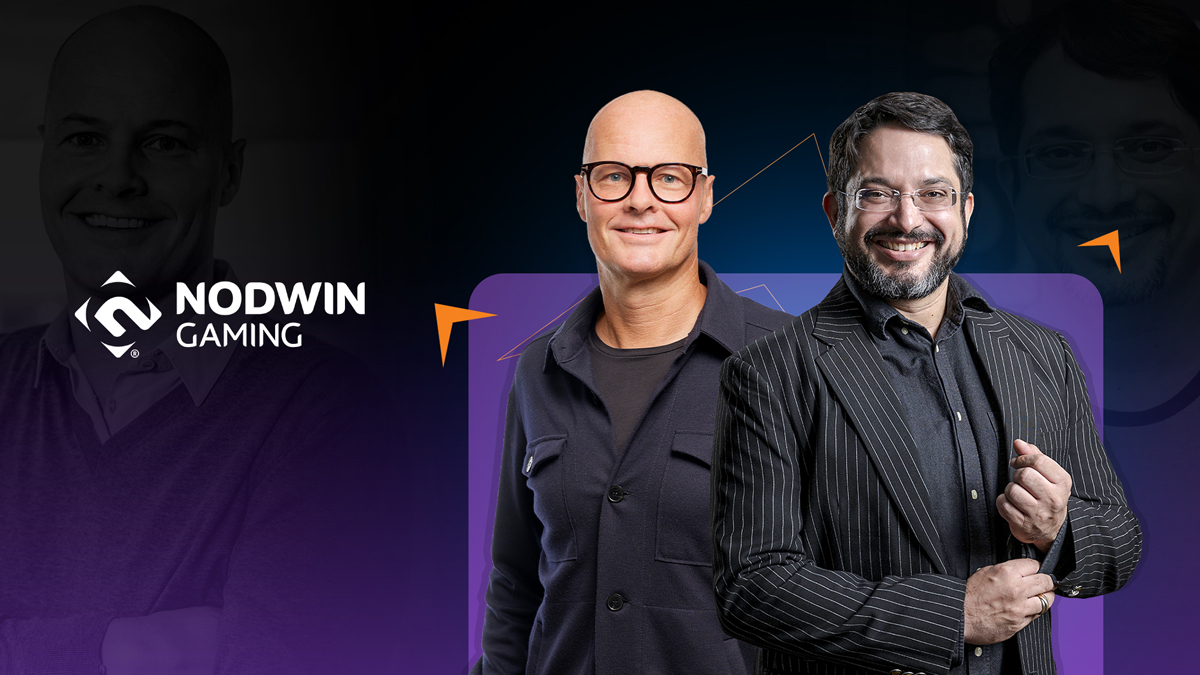
GURUGRAM: NODWIN Gaming is moving fast. The Gurugram-based gaming and esports company has launched a pre-IPO fundraising round, appointed UBS as lead adviser for both the round and a subsequent public listing, and landed a heavyweight board director, all in one go.
The new board member is Arnd Benninghoff, executive vice president of gaming at Stockholm-listed Modern Times Group (MTG), who has overseen the group’s strategic investments and portfolio growth since 2014. He is no stranger to building things: Benninghoff has founded and built fifteen companies, served as chief digital officer at ProSiebenSat.1 Media AG, managing director of SevenVentures, and chief executive of Holtzbrinck eLAB. He began his career as a journalist at Deutsche Presse Agentur and various TV networks, holds a Diplom-Kaufmann in business and administration from the University of Münster, and previously sat on the board of Edgeware AB.
The numbers back the ambition
NODWIN is not pitching a story without substance. The company has returned to EBITDA profitability and posted a 42 per cent year-on-year revenue surge, reaching $58.5m in the first nine months of FY2026. The pre-IPO round will combine a primary issuance to fund global expansion through organic growth and acquisitions, alongside a secondary sale to give existing shareholders some liquidity.
Akshat Rathee, co-founder and managing director of NODWIN Gaming, said Benninghoff understands “the entire lifecycle of the gaming and media ecosystem, from the boots-on-the-ground reality of building startups to the strategic complexity of managing multi-billion dollar global portfolios.”
Benninghoff, for his part, said the company “sits at the intersection of sports, entertainment, and technology, making it one of the most exciting players in the global gaming landscape today.”
A portfolio built for the global south
Founded in 2014 by Rathee and Gautam Virk, NODWIN has quietly assembled one of the more compelling esports portfolios outside the Western hemisphere. Its properties include DreamHack India and Comic Con India, and it recently acquired StarLadder, the Ukraine-based tournament organiser behind premier events in CS:GO and Dota 2. The company also serves as a long-term strategic marketing partner for the Evolution Championship Series (EVO), the world’s most prominent fighting game tournament, helping push it into new geographies.
Its geographic focus spans South Asia, Central Asia, Southeast Asia, the Middle East and Africa. Backers include Nazara Technologies, KRAFTON, Sony Group Corporation, JetSynthesys, and the founders’ investment vehicle Good Game Investments.
What comes next
With UBS running the books, a board freshly reinforced with European media and gaming expertise, and revenue heading in the right direction, NODWIN is laying the groundwork deliberately. The esports industry has burned investors before with big promises and thin margins. NODWIN’s return to profitability, combined with a real portfolio of owned intellectual properties across gaming, music and youth culture, gives it a more credible runway than most. The IPO clock is now ticking.