News Broadcasting
Balance-sheet, impact, fun is the mantra; Raghav Bahl & Ronnie Screwvala


MUMBAI: At the IAA Knowledge Series held at ITC Maratha in Mumbai today were the two successful entrepreneurs Raghav Bahl and Ronnie Screwvala. Bahl is known for pioneering TV news in India – along with NDTV’s Prannoy Roy – whereas Screwvala (a serial entrepreneur ) is known for building a robust TV and film business which was acquired by Disney in India. Both shared the tale of their journey in the media business. The duo shared their business secrets for young budding entrepreneurs. They also opened up about their plans of their new trysts with media.
Bahl began by saying that his new business venture The Quint was not here to reinvent any business models like he did with CNBC TV18 by creating the business news genre. “We have to bring disruption through superior and quality content. We started CNBC TV18 11 and the revenue line was Rs 4-5 crore. Today, the business news market is worth Rs 400 crore. As equity knowledge goes deeper, investors will come in. The USP has to be content. We have to be independent and the editorial issues have to be edgier and bolder. That’s a big thing.”
“We crossed paths and swords during the launch of the UTV-Bloomberg channel and when the UTV ticker went out through CNBC channel,” adds Ronnie Screwvala.

Both known for their gutsy moves of launching several channels, Bahl pointed out that CNN-IBN and Colors are the two things he made big bet son, while Screwvala is of the opinion that Bindass was a risky decision that he took.
With digital booming in India and emergence of several platforms for content consumption, broadcasters, multinationals and Indian non-media start-ups entering the OTT/VOD space. Screwavala was of the opinion that MNC’s like Netflix and Amazon have figured out that India is a local market and expensive series will not be successful.
“At the core of this is whether the consumer is willing to pay? This will again bring back to the advertising economy or the fee economy. It is not a venture capital game but advertising where it’s always going to be cost-minus. So, that’s the real disruption which will again only happen by the people who really want to shake up this market.”
The two of them accepted the fact that payment gateways are essential make-or-break tools for these services.
“There are too many different businesses. What I think is, you cannot mix content business with OTT business. You have to decide whether you want to be in the content game or in the distribution game. Netflix, according to me, is an exception which proves it. It will have to figure out whether it is a content company else they can end up in the same confusion as Yahoo. If you can build a compelling proposition for a consumer, then everything will follow,” explained Bahl.
But, did we not want to know more of the duo’s impatience and gutsy decisions? Certainly, yes. Explaining the exit Bahl said, according to the regulations, a partner needs to have 51 per cent equity in a business which is not something entrepreneurs are open to as it means giving up control. “I was not allowed to not dilute it further. The regulations are very first-generation thing. It was either diluting ourselves or exiting.”
“Exits cannot be timed. You cannot rewind the clock whether in media or in life. I have no regrets. It is as exhilarating now as it was when I started UTV,” added Screwvala.
Witnessing several ups and downs in the business, both of them shared their success mantras for young entrepreneurs, Bahl said, “Just go by your balance-sheet. Do not go beyond it. Young entrepreneurs should not get seduced by the media. You guys have not become superstars until you do not have a strong balance-sheet. Be resistant to changing times because it’s not a sexy, glamorous field to be in but very stressful.”
“You build what you want to build and stay constant about it and your vision. Today’s ecosystem is forcing you to grow a little bit horizontal, but do not go by what investors want. If you are not curious, then this is not the space for you,” concluded Screwvala.






News Broadcasting
CNN-News18 to host Fury in the Gulf conclave on West Asia crisis
Three-hour summit to unpack geopolitical fallout and impact on India
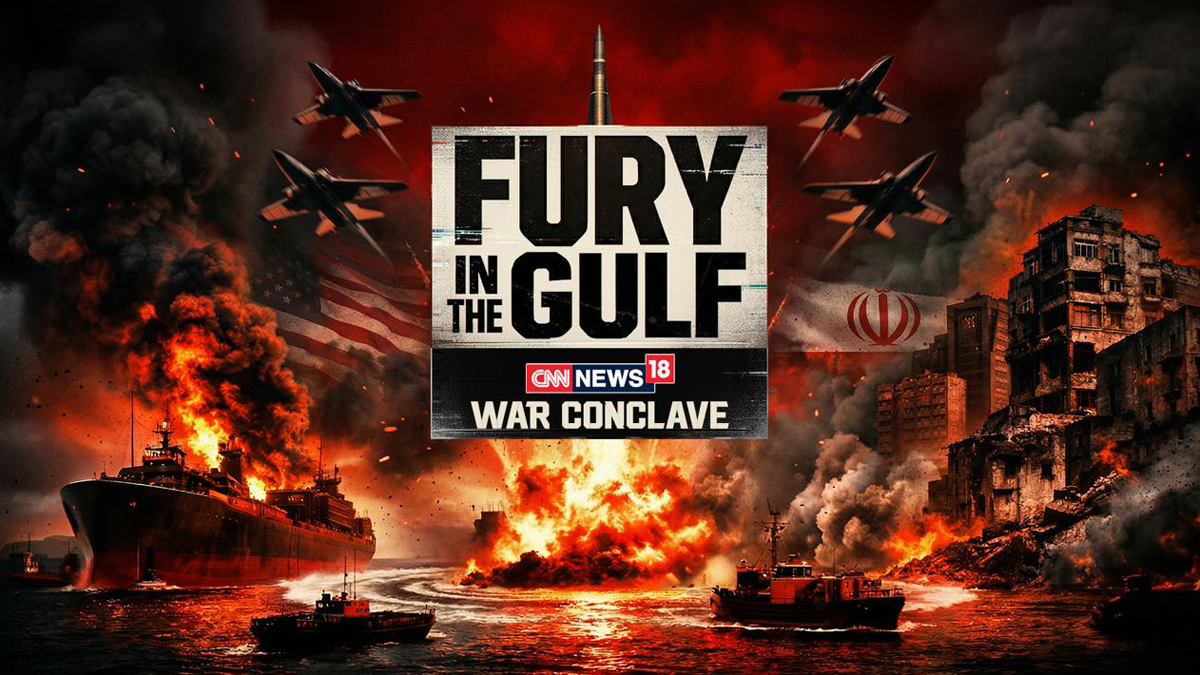
MUMBAI: CNN-News18 is set to host a special three-hour broadcast, Fury in the Gulf – War Conclave, on April 7, aiming to decode the escalating West Asia crisis and its far-reaching implications for India.
Scheduled from 4:00 PM to 7:00 PM, the conclave comes at a time when tensions between Iran and the United States are reshaping global geopolitics and triggering economic uncertainty. With India’s deep energy ties, trade links and large diaspora in the Gulf, the developments carry significant domestic relevance.
Built around the theme ‘Conflict, Consequences, and The Future,’ the programme will feature six curated sessions combining one-on-one interviews and panel discussions. The focus is to cut through the clutter and offer viewers a clearer understanding of the fast-evolving situation.
Key sessions include ‘Diplomacy in Times of War’ featuring Shashi Tharoor, and ‘World After the Iran Conflict’ with voices such as Ram Madhav, Reuven Azar, representatives from the European Union and the Iranian Deputy Envoy. Another session titled ‘Another Dunkirk?’ will bring together K. J. S. Dhillon and Jitin Prasada among others.
CNN-News18 editorial affairs director Rahul Shivshankar said, “In times of war, clarity becomes the most powerful tool. Fury in the Gulf – War Conclave brings together credible voices to address the questions and confusion that arise amid an overwhelming influx of information.”
He added that the initiative is aimed at delivering “facts, perspective, and insight” at a time when misinformation can easily cloud public understanding.
Echoing the sentiment, CNN-News18 CEO– English and business news Smriti Mehra said the conflict marks a defining global moment, with consequences that extend well beyond the region. She noted that the conclave seeks to present the crisis with “depth, nuance and responsibility” so audiences can better grasp its real-world impact.
As geopolitical tensions continue to dominate headlines, the conclave positions itself as an attempt to bring order to the noise, offering viewers a structured, insight-led look at a complex and rapidly shifting global situation.






