GECs
Balaji could touch Rs 1000 million in revenues this year


Balaji Telefilms is poised to rake in a turnover of close to Rs 1000 million at the end of the current financial year, having worked up the family soap into a luxuriant lather in the last few years.
The seven-year-old production house, which specialises in hooking the middle class, middle-aged Indian woman to the small screen, is now eyeing youth and the entire family. Balaji plans to enter the arena of weekend programming shortly, directing house-bound families to even more soaps. According to Sanjay Dosi, CEO of Balaji, the production house is not likely to deviate from its tried and tested formula of the tear-jerking family drama, which has reaped rich harvests for the company owned by the family of former film star Jeetendra Kapoor.
Balaji Telefilms Limited (BTL) is currently riding high on the wave of its successes, with talks doing the rounds of the industry that following the examples of Kyunki Saas Bhi Kabhi Bahu Thi and Kahaani Ghar Ghar Kii on Star Plus, the company would be hiking the rates for Kkusum, being aired on Sony. Relentlessly continuing the superstition of the success of the K factor, Balaji has recently put two serials, Kavyanjali and Kutumbam Oru Kodu on Vijay TV, enthralling southern audiences. On Star Plus, meanwhile, the soap Kasautii Zindagi Kay, touted as a musical love story, is poised to go on air from 29 October.

Although Dosi insists that Balaji maintains a good mix of thrillers as well as ‘character-based’ and ‘family-based’ serials, he avers that the family soap remains a favourite with Indians across the country, an assumption that forms the basis for yet another daily afternoon soap, Kal, which goes on air on Sony in November.
The TRP ratings scandal, the association with cornered bull stock-broker Ketan Parekh and the aborted alliance with channel Nine Gold notwithstanding, Balaji continues to do well on the stock exchange, making it the only media company which has had a successful year after launching its IPO in November 2000.
The secret of its domination may have been the single-minded pursuit of success by creative director Ekta Kapoor, its healthy mix of sponsored and commissioned programmes or its judicious use of several channels, rather than reliance of just a few. But the finger on the audience’s pulse has ensured that Balaji’s reach increased from six channels at the start of 2000-01 to ten towards the close, covering Doordarshan, DD Metro, Star Plus, Sony, Zee, Gemini, Udaya, SABe and Metro Gold. This needless to say, resulting in increased programming hours – from 616.5 hours in 1999-2000 to 1457 hours in 2000-01.
Turnover, consequently, has been jumping by leaps and bounds. From a turnover of RS 200.9 million in 1999-2000, it posted revenues of RS 489 million in the last financial year. And at a time where everyone seems to be revising their growth targets, Dosi doesn’t rule out a growth rate of 100 per cent this year.






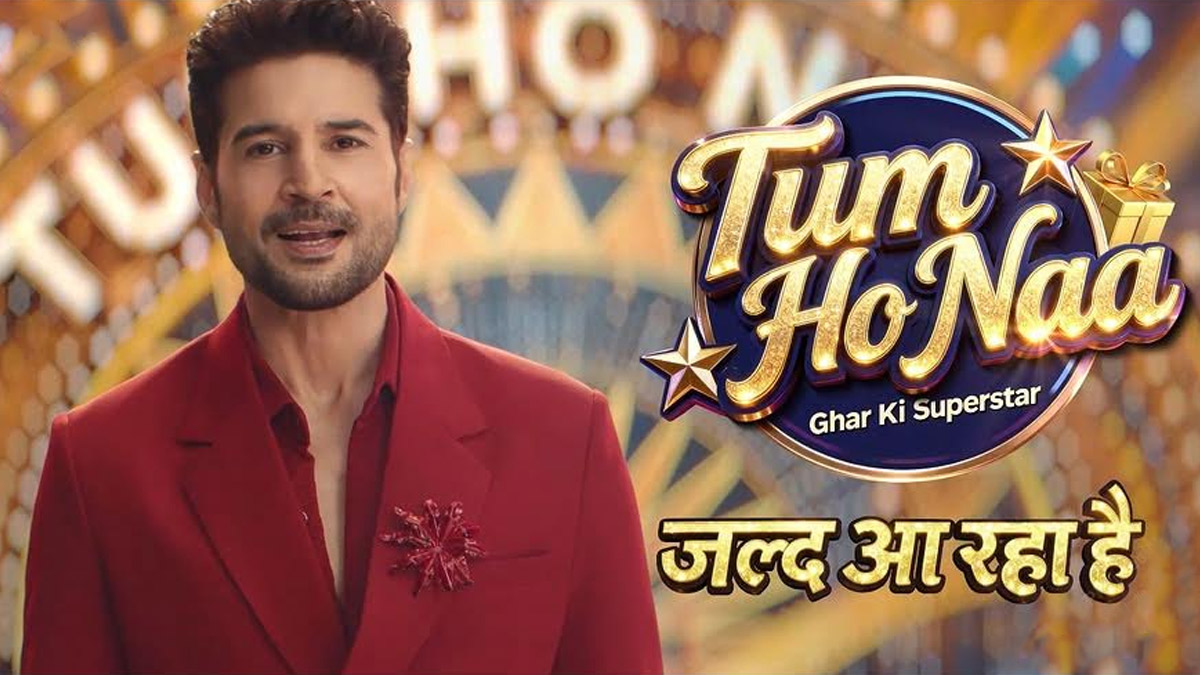
MUMBAI: Lights, camera… connection because this time, the game isn’t just about winning, it’s about who’s with you. Sony Pictures Networks India is gearing up to launch a new reality game show, Tum Ho Naa, expanding its unscripted slate with a format that promises both emotion and engagement.
The show will premiere soon on Sony Entertainment Television and stream on Sony LIV, with Rajeev Khandelwal stepping in as host. Known for his measured screen presence and selective choices, Khandelwal’s return to television adds a layer of familiarity and credibility to the upcoming format.
While specific details of the gameplay remain under wraps, the positioning suggests a reality format that leans as much on emotional resonance as it does on competition, an increasingly popular blend in Indian television, where audiences are gravitating towards content that offers both stakes and storytelling.
Khandelwal, reflecting on his return, noted that his choices have often been guided by instinct rather than convention, describing Tum Ho Naa as a project that feels “close to the heart”. His association also signals Sony’s continued focus on anchoring new formats with recognisable faces who bring both relatability and depth.
The launch comes at a time when broadcasters are doubling down on original non-fiction formats to drive appointment viewing, even as digital platforms expand parallel reach. By placing the show across both linear television and OTT, Sony appears to be aiming for a dual-audience strategy capturing traditional viewers while engaging digital-first consumers.
As the countdown to premiere begins, Tum Ho Naa positions itself not just as another game show, but as a reminder that sometimes, the biggest prize on screen isn’t the jackpot, it’s the journey shared along the way.







