Hindi
Bal Hanuman 4-Attack of the Universe complete

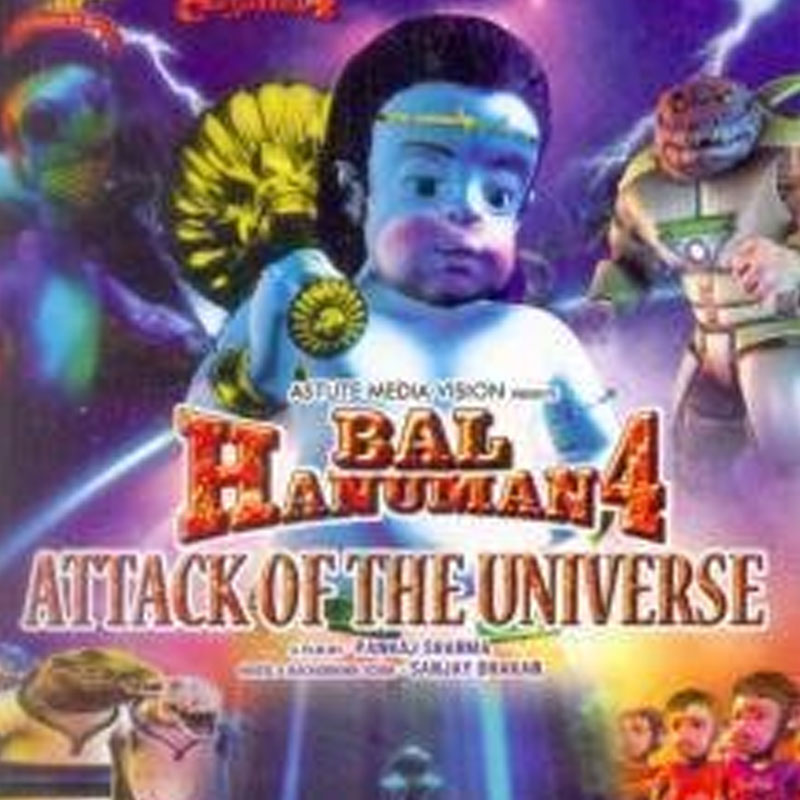
MUMBAI: Astute Media Vision’s latest Animation Film, Bal Hanuman 4-Attack of the Universe, is ready to enthrall the kids all over.
Produced and directed by Pankaj Sharma, Bal Hanuman 4-Attack of the Universe is continuation to Bal Hanuman -Return of the Demon. “Being advised by Bal Hanuman, in one of his secret meeting, monkey head Chhote Maharaj convinces his lieutenants Rocket and Locket to play a Kabbadi match with crocodiles headed by Gutter and Shutter in order to end hostility and make peace in the area.
But there is certainly something dangerously weird cooking in the crocodile’s group as they are conspiring to make dreaded Danavraj alive with the help of their new allies, the Aliens, who attack the Earth in order to destroy plantation and kill the animals to convert them into fuel to fulfill the energy demand of their planet. Bal Hanuman comes to the rescue. Will Bal Hanuman be able to unite Monkeys and Crocodiles to save earth from the attack of aliens forms the crux of the film.

Pankaj Sharma had earlier made animation films like Bal Hanuman, Bal Ganesh, Panga Gang, 3-D stereoscopic features Bal Hanuman-2 and live-cum animation film Chhutanki under the banner of his production company Astute Media Vision.
Said Sharma, “Bal Hanuman -4 is a visual treat, having great backgrounds and animation with lots of entertainment and visual effects, not to forget the excellent kabbadi match sequence. As it is based in modern times, there are many entertaining characters. The film is full of fun, action, sporty moments and, of course, with a strong message from Bal Hanuman. Lengthwise it is approximately 1 hour and 15 minutes only.”
The film is expected to release shortly.



Hindi
Remembering Gyan Sahay, the lens behind film, television and advertising
From a puppet rabbit selling poppadums to Hindi cinema, he framed it all.
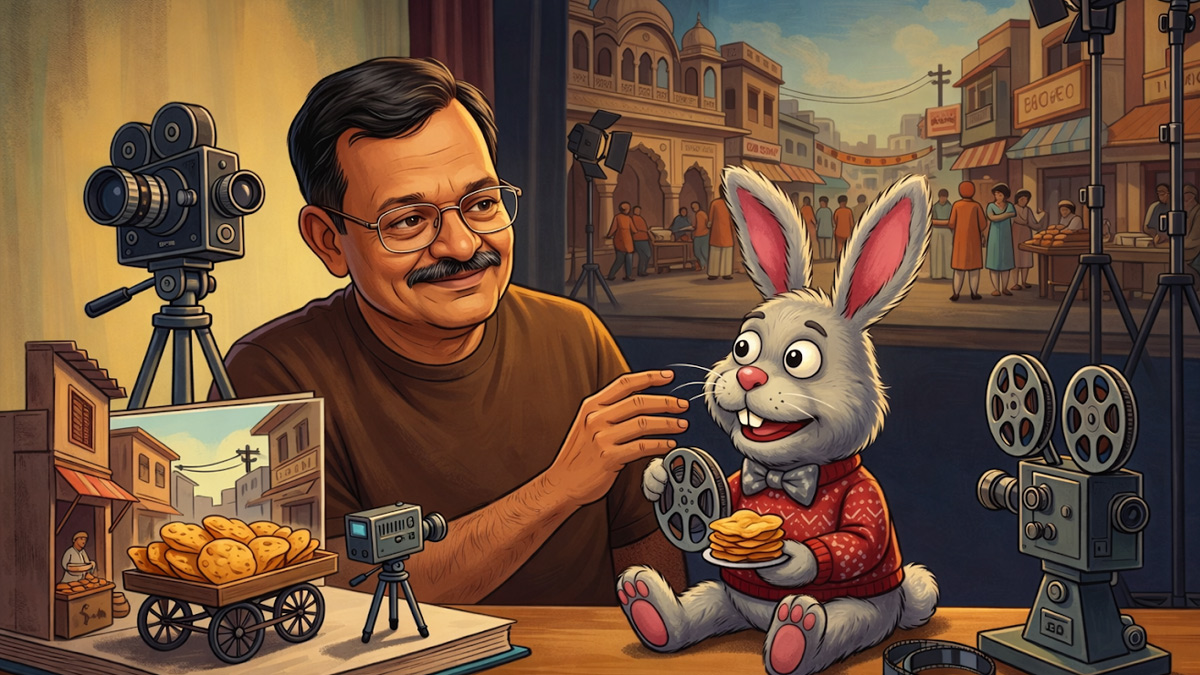
MUMBAI: There are careers, and then there are canvases. Gyan Sahay, the veteran cinematographer, director, and producer who passed away on 10 March 2026 in Mumbai, had one of the latter. Over several decades in the Indian film and television industry, he turned lenses, lights, and the occasional puppet rabbit into something approaching art.
A graduate of the Film and Television Institute of India (FTII) in Pune, Sahay built his reputation as a director of photography across a career that stretched from the early 1970s all the way to the digital age. He was the kind of craftsman who understood that a well-composed shot is not merely a technical achievement but a quiet act of storytelling.
For most Indians of a certain age, however, Sahay will forever be the man behind the rabbit. His direction of the iconic long-running television commercial for Lijjat Papad, featuring its now-legendary puppet bunny, gave the country one of its most cheerfully persistent advertising images. It was the sort of work that sneaks into the national subconscious and takes up permanent residence.
His big-screen credits as cinematographer include Anokhi Pehchan (1972), Pagli (1974), Pas de Deux (1981), and Hum Farishte Nahin (1988). In 1999, he stepped behind a different kind of camera altogether, making his directorial debut with Sar Ankhon Par, a drama that featured Vikas Bhalla and Shruti Ulfat, with a cameo by Shah Rukh Khan for good measure.
On television, Sahay was particularly prized for his command of multi-camera production setups, a skill that made him a go-to technician for large-scale shows and reality programmes. In an industry that has never been especially patient with complexity, he was the calm hand on the rig.
In later life, Sahay turned teacher. He participated regularly in masterclasses and Digi-Talks, often hosted by organisations such as Bharatiya Chitra Sadhna, sharing hard-won wisdom on cinematography, the comedy of timing in a shot, and the sweeping changes brought by the shift from celluloid to digital. He was also said to have been involved in a project concerning a biographical film on Infosys co-founder N.R. Narayana Murthy.
Tributes from the film industry poured in following the news of his passing, with colleagues remembering him as a senior cameraman who served as a rare bridge between two entirely different eras of Indian cinema. That is, perhaps, the finest thing one can say of any craftsman: he kept up, and he brought others along with him.