Hollywood
BAFTA: Redmayne, Moore win top honours; ‘Lunchbox’ loses to Polish film

MUMBAI: Held at the Royal Opera House in London on 8 February, 2015, the 68th edition of the annual British Academy of Film and Arts (BAFTA) awards was hosted by Stephen Fry in the presence of a string of international film celebrities.
Eddie Redmayne and Julianne Moore received the top acting honours for their roles in The Theory Of Everything and Still Alice respectively. The American coming-of-age tale Boyhood won a BAFTA for ‘Best Film’ while the award for the ‘outstanding British Film’ went to The Theory Of Everything.

India’s acclaimed movie, The Lunchbox was nominated for the foreign film category. It was competing with Russian drama, Leviathan, Brazilian-British adventure drama thriller film, Trash and Belgian drama Two Days, One Night but eventually Polish-Danish drama movie Ida, was named the winner in the category.
Actress Nimrat Kaur, the leading lady of The Lunchbox looked lovely on the red carpet in a pink Georges Hobeika dress.
Below is the complete list of BAFTA 2015 winners:
Film: Boyhood, Richard Linklater, Cathleen Sutherland
Director: Boyhood, Richard Linklater
Leading Actor: Eddie Redmayne, The Theory Of Everything
Leading Actress: Julianne Moore, Still Alice
Supporting Actor: J.K. Simmons, Whiplash
Supporting Actress: Patricia Arquette, Boyhood
Adapted Screenplay: The Theory Of Everything, Anthony Mccarten
Animated Film: The Lego Movie, Phil Lord, Christopher Miller
British Short Animation: The Bigger Picture, Chris Hees, Daisy Jacobs, Jennifer Majka
British Short Film: Boogaloo And Graham, Brian J. Falconer, Michael Lennox, Ronan Blaney
Cinematography: Birdman, Emmanuel Lubezki
Costume Design: The Grand Budapest Hotel, Milena Canonero
Documentary: Citizenfour, Laura Poitras
EE Rising Star: Jack O’Connell
Editing:Whiplash, Tom Cross
Film not in the English Language: Ida, Pawel Pawlikowski, Eric Abraham, Piotr Dzieciol, Ewa Puszczynska
Make-Up And Hair: The Grand Budapest Hotel – Frances Hannon
Original Music: The Grand Budapest Hotel, Alexandre Desplat
Original Screenplay: The Grand Budapest Hotel, Wes Anderson
Outstanding British Film: The Theory Of Everything, James Marsh, Tim Bevan, Eric Fellner, Lisa Bruce, Anthony Mccarten
Outstanding Debut By A British Writer, Director or Producer: Stephen Beresford, David Livingstone,Pride
Production Design: The Grand Budapest Hotel, Adam Stockhausen, Anna Pinnock
Sound: Whiplash, Thomas Curley, Ben Wilkins, Craig Mann
Special Visual Effects: Interstellar, Paul Franklin, Scott Fisher, Andrew Lockley





Hollywood
Paramount eyes $24bn Gulf support to fund Warner Bros Discovery merger: Reports
Sovereign funds line up funding as media giants chase streaming scale
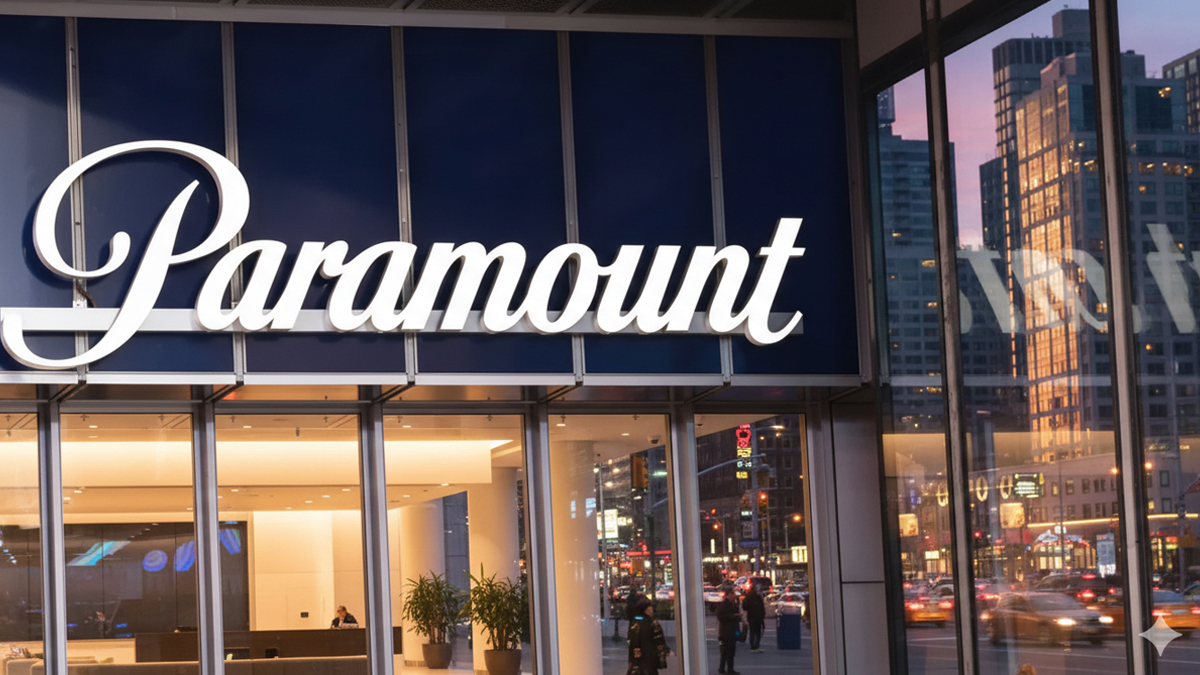
NEW YORK: Paramount Skydance is in talks to secure nearly $24 billion in equity commitments from Gulf sovereign wealth funds to support its planned takeover of Warner Bros. Discovery, according to a WSJ report.
The funding push comes as Paramount Skydance advances its proposed $110 billion deal for Warner Bros. Discovery, which carries an equity valuation of $81 billion and is expected to close in the third quarter of 2026.
At the heart of the financing plan are three major Gulf investors. Saudi Arabia’s Public Investment Fund is expected to contribute roughly $10 billion, while the Qatar Investment Authority and Abu Dhabi-based L’imad Holding are likely to make up the remainder.
Crucially, the proposed investments are structured as non-voting stakes. This means the Gulf backers would not have direct control in the combined entity, a move designed to ease regulatory concerns in the United States. Paramount executives reportedly do not expect the deal to trigger scrutiny from bodies such as the Committee on Foreign Investment in the United States or the Federal Communications Commission.
If completed, the merger would bring together a formidable portfolio of entertainment and news assets, including CNN and CBS. The combined entity aims to better compete in a fast-evolving media landscape where streaming platforms are steadily pulling audiences away from traditional television.
The deal reflects a broader shift in global media, where scale is increasingly seen as essential to survive the streaming wars. By pooling content libraries, technology and distribution, Paramount Skydance and Warner Bros. Discovery are betting on size and synergy to drive future growth.
The involvement of deep-pocketed Gulf investors also underscores the growing role of sovereign wealth in shaping global media consolidation, particularly at a time when high-value deals demand equally large financial backing.
With shareholder votes and regulatory milestones still ahead, the proposed tie-up remains one of the most closely watched media deals of the year. If it clears the final hurdles, it could redraw the competitive map of the global entertainment industry.






