iWorld
Australia forces Netflix and Disney+ to bankroll local content

MUMBAI: Australia has stopped asking nicely. The government will introduce legislation this week forcing streaming platforms to invest in Australian drama, children’s shows, documentaries and educational content—or face the consequences.
Any service with more than a million Australian subscribers—Netflix, Disney+, Amazon Prime and others—must commit at least 10 per cent of their local expenditure, or 7.5 per cent of revenue, to homegrown productions. It’s a quota system that puts streamers on par with free-to-air and pay television, which have long faced similar obligations.
The rules were meant to arrive in July last year but got tangled in trade politics. Concerns about how they would mesh with Australia’s free trade agreement with America led to a pause. The government blamed difficulty negotiating with Washington during an election year. After Donald Trump’s victory, questions swirled about whether the quotas could trigger retaliatory tariffs.

With both elections now behind them and the US-Australia relationship stable, Canberra has pushed ahead. Tony Burke, arts minister, and Anika Wells, communications minister, framed the move as a jobs safeguard for an industry increasingly threatened by artificial intelligence.
“Since their introduction in Australia, streaming services have created some extraordinary shows,” Burke said. “This obligation will ensure that those stories—our stories—continue to be made.”
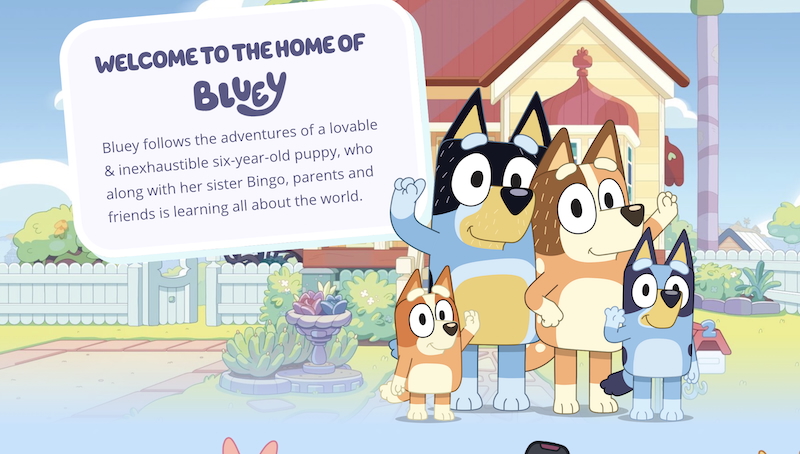
Wells pointed to Bluey, the children’s programme that became a global phenomenon, as proof of concept. Australian content connects people with “who we are” and shares that with the world, she said.
The government hasn’t explained how it will calculate the two quota options—10 per cent of expenditure or 7.5 per cent of revenue—leaving room for future friction with the platforms.
The Australian model raises an obvious question: could India impose similar quotas? While Netflix, Amazon Prime Video and Lionsgate Play are commissioning o9r acquiring local content, it’s unclear whether they’re hitting anything close to a 10 per cent threshold. Indian regulators have repeatedly failed to enforce local quotas on television channels, making it unlikely they’ll succeed with streamers.
But the precedent matters. If Australia can strong-arm global platforms into funding local productions without sparking a trade war, other markets may feel emboldened to try. For now, India’s streaming landscape remains a free-for-all—heavy on local content by choice, light on obligation by design. Whether that changes depends less on regulatory ambition than political will. And in India, that’s always been in short supply.






iWorld
Bill Ackman’s Pershing Square makes $64 billion bid to acquire Universal Music Group
Ackman pitches NYSE relisting plan as UMG board weighs unsolicited offer

The hedge fund has proposed a business combination that values UMG at €30.40 per share, representing a hefty 78 per cent premium to its current trading price. The offer includes €9.4 billion in cash alongside stock in a newly formed entity, with shareholders set to receive €5.05 per share in cash and 0.77 shares in the new company for each UMG share they hold.
Under the proposal, UMG would merge with Pershing Square SPARC Holdings Ltd and re-emerge as a Nevada-based entity listed on the New York Stock Exchange. The move is designed to boost investor visibility and potentially secure inclusion in major indices such as the S&P 500.
Pershing Square Capital Management ceo Bill Ackman argued that while UMG’s operational performance remains strong, its market valuation has lagged due to external factors. “UMG’s stock price has languished due to a combination of issues that are unrelated to the performance of its music business,” Ackman said, pointing to concerns ranging from shareholder overhang to delayed US listing plans.
Ackman also flagged what he sees as untapped potential in UMG’s balance sheet and a lack of clear capital allocation strategy. He added that the market has not fully recognised the value of UMG’s €2.7 billion stake in Spotify, alongside gaps in investor communication.
The proposed transaction would also result in the cancellation of around 17 per cent of UMG’s outstanding shares, while maintaining its investment-grade balance sheet. Pershing Square has said it will fully backstop the equity financing, with debt commitments secured at signing. The deal is targeted for completion by the end of the year.
UMG, however, has struck a measured tone. The company confirmed that its board has received the non-binding proposal and will review it with advisers. It reiterated confidence in its current strategy and leadership under Lucian Grainge, signalling no immediate shift in stance.
The proposal comes at a time when global music companies are navigating evolving investor expectations, streaming economics and capital allocation pressures. For Pershing Square, the bet is clear: sharpen the financial story, relist in the US, and let the music play louder in the markets.
Whether UMG’s board is ready to change the tune remains to be seen, but the spotlight on its valuation just got a lot brighter.






