iWorld
Atul Gawande appointed CEO of Amazon-JP Morgan joint venture


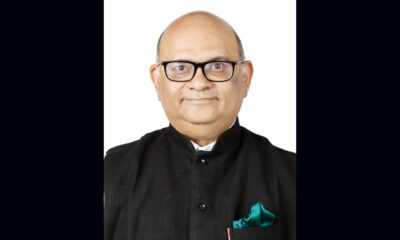
MUMBAI: Indian-American surgeon Atul Gawande has been appointed to lead the health care venture formed by e-commerce giants Amazon, JP Morgan and Berkshine Hathway.
Gawande has taken the role of CEO at the newly formed entity and will officially start working from July. The heath care company headquartered in Boston, US, will be an independent organisation and work as an NGO (free from profit making incentives and constrains).
Thrilled to be working with the company, Gawande said, “I have devoted my public health career to building scalable solutions for better health care delivery that are saving lives, reducing suffering and eliminating wasteful spending both in the US and across the world.”

Gawande mentioned that this work will take time but must be done. “The system is broken, and better is possible.”
The newly appointed CEO practices general and endocrine surgery at Brigham and Women’s Hospital and is a professor at the Harvard TH Chan School of Public Health and Harvard Medical School.
Berkshire Hathaway chairman and CEO Warren Buffett said, “All felt that better care can be delivered and that rising costs can be checked. Jamie, Jeff and I are confident that we have found in Atul the leader who will get this important job done”.
JPMorgan chairman and CEO of Chase Jamie Dimon added, ”Together, we have the talent and resources to make things better, and it is our responsibility to do so. We’re so grateful for the countless statements of support and offers to help and participate, and we’re so fortunate to have attracted such an extraordinary leader and innovator as Atul.”
The companies’ executives Jeff Bezos, Warren Buffett and Jamie Dimon had said in January that their companies would work together to give their combined 8,40,000 employees better health care choices. With this venture, they hope to bring down costs, both for their workers and their companies.
He’s a staff writer for The New Yorker and has written four New York Times bestsellers.
It is possible that MacArthur genius grant recipient and the Rhodes Scholar will try a different approach to make the health care ecosystem . Amazon, after all, is known for upending the markets they enter.





iWorld
Snapchat parent Snap cuts 16 per cent of workforce in AI-driven restructuring
The Snapchat parent is axing around 1,000 jobs and closing 300 open roles to save $500m, as artificial intelligence makes smaller teams the new normal

CALIFORNIA: Snap is snapping. The Snapchat parent has confirmed plans to cut around 1,000 employees, roughly 16 per cent of its full-time workforce, as it bets that artificial intelligence can do what headcount once required. Shares jumped more than 10 per cent in premarket trading on the news, a brisk vote of confidence from a market that has watched the stock shed about 31 per cent this year.
The restructuring, which also closes more than 300 open roles, follows pressure from activist investor Irenic Capital Management, which holds an economic interest of about 2.5 per cent in the company and has been loudly pushing Snap to tighten its portfolio and lift performance. The firm got what it asked for, and then some.
Chief executive Evan Spiegel told employees the cuts would reduce annualised expenses by more than $500m by the second half of the year. The company expects to incur charges of between $95m and $130m related to the layoffs, mostly severance, with the bulk landing in the second quarter. Staff in Snap’s North America team were asked to work from home on the day of the announcement.
The financial backdrop is not without bright spots. Snap expects first-quarter revenue to rise around 12 per cent to approximately $1.53 billion, broadly in line with analyst estimates. Adjusted core profit for the January to March quarter is forecast at about $233m, comfortably ahead of Wall Street’s expectation of $186.8m.
The harder question surrounds Specs, Snap’s augmented reality smart glasses subsidiary, which Irenic has urged the company to spin off or shut down entirely. The unit has absorbed more than $3.5 billion in investment and burns through approximately $500m in cash annually. Snap is pressing ahead regardless, with a consumer product expected later this year, even as Meta leads the market in the segment.
Spiegel is betting that leaner teams, smarter machines and a consumer AR play can restore Snap’s credibility with investors who have run out of patience. The redundancy notices have gone out. The harder restructuring, the one that requires a hit product rather than a headcount reduction, is still very much pending.







