News Broadcasting
AT&T to spin off its interests in WarnerMedia in $43 bn transaction


Mumbai: AT&T has announced that it will spin off 100 per cent of its interest in WarnerMedia to AT&T’s existing shareholders in a pro-rata distribution, following the merger of WarnerMedia with Discovery, which is expected to close in the second quarter of 2022.
Following the closing of the transaction, the Warner Bros Discovery Inc common stock is expected to be listed on the NASDAQ global select market under the ticker ‘WBD.’ The new company’s board of directors will consist of 13 members, seven initially appointed by AT&T, including the chairperson of the board. Discovery has designated six members, including CEO David Zaslav.
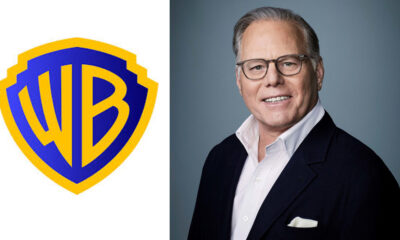
Discovery president and CEO David Zaslav will lead WBD with a best-in-class management team and operational and creative leadership from both companies.

AT&T’s board of directors has approved an expected post-close annual dividend of $1.11 per AT&T share to account for the distribution of WarnerMedia to AT&T shareholders and to size the annual dividend payout at approximately 40 per cent of the projected free cash flow to enable investment in attractive opportunities.
AT&T will receive $43 billion (subject to working capital and other adjustments) in a combination of cash and other consideration and AT&T’s shareholders will receive a stock representing 71 per cent of the new company, Warner Bros. Discovery Inc. on a fully diluted basis. Existing Discovery shareholders will own approximately 29 per cent of the new company on a fully diluted basis.
On the closing date of the transaction, each AT&T shareholder will receive, on a tax-free basis, an estimated 0.24 shares of the new WBD common stock for each share of AT&T common stock held as of the record date for the pro-rata distribution. The exact number of shares of WBD to be received by AT&T shareholders for each AT&T common share will be determined closer to the closing based on the number of shares of AT&T common stock outstanding and the number of shares of Discovery common stock outstanding on an as-converted and as-exercised basis. AT&T has approximately 7.2 billion fully diluted shares outstanding.
AT&T shareholders will continue to hold the same number of shares of AT&T after the transaction closes.
In connection with the transaction, all classes of shares of Discovery capital stock will be converted and reclassified into common shares of WBD with one vote per share.
No action is required by AT&T’s shareholders to receive shares of WBD common stock in the merger when it occurs. The closing of the transaction remains subject to satisfaction of certain conditions, including obtaining all necessary regulatory approvals.
“In evaluating the form of distribution, we were guided by one objective — executing the transaction in the most seamless manner possible to support long-term value generation,” said AT&T CEO John Stankey. “We are confident the spin-off achieves that objective because it’s simple, efficient and results in AT&T shareholders owning shares of both companies, each of which will have the ability to drive better returns in a manner consistent with their respective market opportunities.
“We believe that the remaining AT&T and the new WBD are two equities that the market will want to own and the markets to support those equities will develop,” Stankey said. “Rather than try to account for market volatility in the near-term and decide where to apportion value in the process of doing an exchange of shares, the spin-off distribution will let the market do what markets do best. We are confident both equities will soon be valued on the solid fundamentals and attractive prospects they represent.”
AT&T will continue to trade on the NYSE under the ticker ‘T.’ The company will host a virtual investor conference on 11 March at which it will provide additional insight and expectations for the financial and operational performance of AT&T’s communications segment following the close of the pending WarnerMedia transaction.






News Broadcasting
News18 India launches Command Centre war explainer with Arya
New show shifts from debates to decoding global conflicts and impacts

MUMBAI: News18 India has rolled out a new war-focused programme, Command Centre, featuring Gaurav Arya, as it looks to offer viewers a sharper, more grounded take on global conflicts amid rising tensions in West Asia.
Positioned as an “insider war room”, the show moves away from conventional panel debates and instead focuses on explaining military developments, decoding strategy and connecting global events to their everyday impact, from fuel prices to economic shifts.
The format leans heavily on visuals and data. The studio has been designed like a command hub, complete with large LED war maps, real-time graphics and an alert system to track developments as they unfold.
At the centre of it all is Arya, who brings his military background to simplify complex war strategies for viewers. His signature line, “Seedhi baat samjhiye”, anchors the show’s promise of clarity over noise.
News18 India managing editor Jyoti Kamal said, “Command Centre, featuring Major Gaurav Arya is designed to deliver accurate insights and a clear perspective on how evolving conflicts impact everyday life, from household budgets to national security. With expert voices analysing every development in real time, the show goes beyond headlines to decode what’s happening now, what it means, and what could come next.”
Echoing the intent, Gaurav Arya added, “In times of war, confusion is the biggest threat. With News18 India’s Command Centre, we are bringing viewers inside the war room, decoding strategies, tracking every escalation, and explaining, in the simplest terms, what it means for India and for every household. Seedhi baat samjhiye, this is where you understand not just what is happening, but what happens next.”
The weekday show will air in the afternoon slot and will also feature Gaurav Shukla, adding to its editorial depth.
With its mix of analysis, visuals and a clear focus on impact, the show reflects a broader shift in news consumption. Viewers are no longer just watching events unfold, they are looking to understand what those events mean for them.






