News Headline
AT&T DirecTV’s satellite woes


MUMBAI: What happens when a DTH satellite turns rogue?
Well, it has to be sent to the graveyard or junk orbit, which is 300 km above the geostationary orbit (35,786 km above the earth). That’s exactly what the AT&T-owned direct to home service provider DirecTV is dealing with. One of its satellites Spaceway-1 – located at 138.4 degrees west and built by Boeing – has developed a malfunction in its batteries, which has put it in danger of exploding.
The Boeing 702HP model spacecraft was functional from 2005 and had been providing high-definition TV services to US subscribers of DirecTV. It was later demoted to the status of a backup satellite. (Normally communications satellite have a life span of 14-16 years.)

AT&T has now written to the Federal Communications Commission (FCC) seeking permission to allow it along with Boeing and Intelsat to deorbit and decommission the satellite between now and 25 February when the satellite would go into earth’s shadow or eclipse.
It has told the FCC that “Spaceway-1 suffered a major anomaly in December that resulted in significant thermal damage to its batteries.”
The harm to the batteries is grievous enough to not support the pressure that would come on them were they to be switched on during the eclipse phase (the period when it enters the earth’s shadow and does not receive sunlight to charge its solar panels; currently the satellite is in the sunlight phase). However, AT&T confesses it cannot avoid switching on the batteries when it enters the eclipse phase as the satellite will not have enough power to be totally deorbited and decommissioned then. And if they are turned on there is a possibility of an explosion, which could possibly damage other satellites in the vicinity.
AT&T has also informed the FCC that just raising the satellite to the graveyard orbit will take 21 days leaving it with just 7 days to vent out 73 kg of its propellant fuel which is nigh impossible. (For a satellite to be decommissioned it needs to discharge its fuel and normally, it takes two to three months for the task when the spacecraft reaches the end of its life.) Within the time period available to Spaceway-1 only a nominal portion of the fuel will have been removed. Hence, it has sought the FCC’s permission to waive off the complete propellant fuel venting requirement. “Authorising DirectTV’s emergency de-orbit operations will facilitate disposal of Spaceway-1 as safely as possible,” AT&T has pleaded.
Obviously, AT&T and DirecTV are racing against a deadline. And the clock is ticking away. Hopefully, the Spaceway-1 will find its way to its final resting place in time.




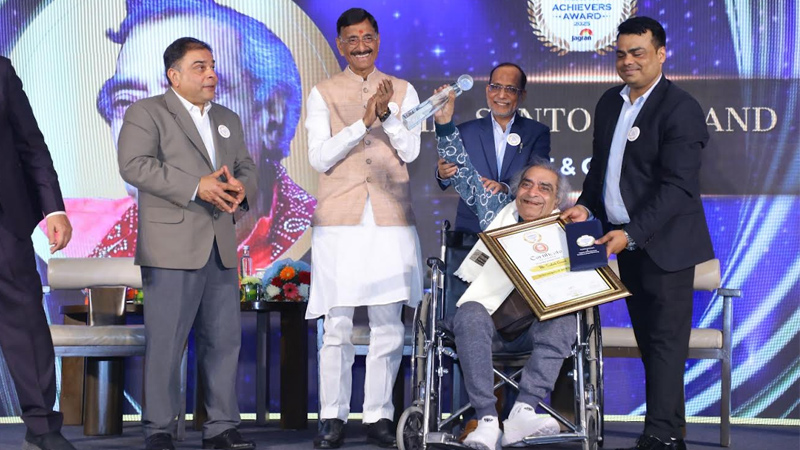
NEW DELHI: Hamdard Laboratories gathered a cross-section of India’s achievers in New Delhi on Friday, handing out the Hakeem Abdul Hameed Excellence Awards to figures who have left their mark across healthcare, education, sport, public service and the arts.
The ceremony, attended by minister of state for defence Sanjay Seth and senior officials from the ministry of Ayush, celebrated individuals whose work blends professional success with a sense of public purpose. It was as much a roll call of achievement as it was a reminder that influence is not measured only in profits or podiums, but in people reached and lives improved.
Among the headline awardees was Alakh Pandey, founder and chief executive of PhysicsWallah, recognised for turning affordable digital learning into a mass movement. On the sporting front, Arjuna Awardee and kabaddi player Sakshi Puniya was honoured for her contribution to the game and for pushing women’s participation onto bigger stages.
The cultural spotlight fell on veteran lyricist and poet Santosh Anand, whose songs have echoed across generations of Hindi cinema. At 97, Anand accepted the honour with characteristic humility, reflecting on a life shaped by perseverance and hope.
Healthcare honours spanned both modern and traditional systems. Manoj N. Nesari was recognised for strengthening Ayurveda’s place in national and global health frameworks. Padma shri Mohammed Abdul Waheed was honoured for his research-backed work in Unani medicine, while padma shri Mohsin Wali received recognition for his long-standing contribution to patient-centred care.
Education and social development also featured prominently. Padma shri Zahir Ishaq Kazi was honoured for decades of work in education, while former Meghalaya superintendent of Police T. C. Chacko was recognised for public service. Goonj founder Anshu Gupta received an award for his dignity-centred rural development initiatives, and the Hunar Shakti Foundation was honoured for empowering women and young girls through skill development.
The Lifetime Achievement Award went to former IAS officer Shailaja Chandra for her long career in public healthcare and governance, particularly in the traditional systems under Ayush.
Speaking at the event, Hamdard chairman Abdul Majeed said the awards were a tribute to those who combine excellence with empathy. “These awardees reflect Hakeem Sahib’s belief that healthcare, education and public service must ultimately serve humanity,” he said.
Minister Seth struck a forward-looking note, saying India’s young population gives the country a unique opportunity to become a global destination for learning, health and wellness by 2047.
The ceremony also featured the trailer launch of Unani Ki Kahaani, an upcoming documentary starring actor Jim Sarbh, set to premiere on Discovery on 11 February.
Instituted in memory of Unani scholar and educationist Hakeem Abdul Hameed, the awards have grown into a national platform that celebrates those building a more inclusive and resilient India. For one evening at least, the spotlight was not just on success, but on service with substance.






