News Broadcasting
Asia-Pac alliance formed for popularizing DVB-H tech


SINAGPORE: Bridge Networks, Indonesia-based MECA , Malaysia’s MiTV, mobile phone giant Nokia and Intel have announced formation of DVB-H Asia Pacific Alliance (DAPA), a mobile TV special interest group.
Formed by potential and key DVB-H (Digital Video Broadcasting, handheld) industry players in the Asia Pacific region with sponsorship from Harris Broadcast and Radio Frequency Systems, DAPA aims to establish a regional forum to promote sharing of best practices and to keep member companies abreast of new business and technological developments in mobile television.
The group will also support regulatory preparations and discussions to facilitate adoption of DVB-H as the standard for Mobile TV in the Asia Pacific region.

“An open and industry-supported standard is expected to foster growth throughout the wireless market with more choices across the value chain. This will expedite the adoption of the service to the mass market at a faster and at lower cost to consumers,” said Darren Kirsop-Frearson, managing director of the Bridge Networks.
Nokia was committed to the deployment of robust, scalable and interoperable DVB-H systems to ensure an exceptional experience with mobile TV and related value-added services, according to Jawahar Kanjilal, director, multimedia experiences, Nokia Asia Pacific.
“We are definitely pleased to be a part of this joint initiative to bring together technology, product and service leaders to ensure a common implementation of DVB-H networks and terminals according to open industry standards, and to spearhead discussions with the relevant parties involved,” he added.
DAPA is open to additional member-companies and aims at cooperating with other similar alliances and forums such as MDTV alliance in US and BMCO.
DVB-H is an open standard and an extension of the widely adopted DVB-terrestrial broadcast technology. It implements recent technical developments to enhance mobile broadcast reception, optimises hand-set power consumption and provides a quality visual display to maximize user experience.
The IP-based platform allows provision of an electronic services guide (ESG), interactive services, and dynamic channel allocation to offer 30-50 mobile TV channels in a single spectrum channel.
This could open up a plethora of business possibilities — advertising on channels, subscription based services, interactivity, games, etc. — in addition to regular television.
The inaugural meeting of DAPA was held in conjunction with BroadcastAsia 2006 being held in Singapore this week.
There has been several successful DVB-H trials throughout Europe, North America, and the Asia-Pacific regions in recent months. In South East Asia, there have been good consumer responses from showcases in Singapore, Malaysia, Indonesia, India and Australia.
The open approach of the DVB-H standard nurtures flexibility of business models, competition and sales opportunities for the value chain. The DVB-H standard incorporates OFDM air interface technology with good spectral efficiency, immunity to multi-path fading and good mobile performance.
Mobile TV enables consumers to watch their favorite TV programmes on handheld devises while on the move. The service works by receiving a special digital TV broadcast signal from the air in much the same way as a stationary TV set at home.
A channel guide will also be broadcast allowing users to keep abreast of the latest programmes on air. However, mobile TV is not the same as streaming video over 3G or GPRS phones.


News Broadcasting
Kamlesh Singh receives Haldi Ghati Award from MMCF
India Today Group editor honoured for three decades of journalism at Udaipur ceremony.
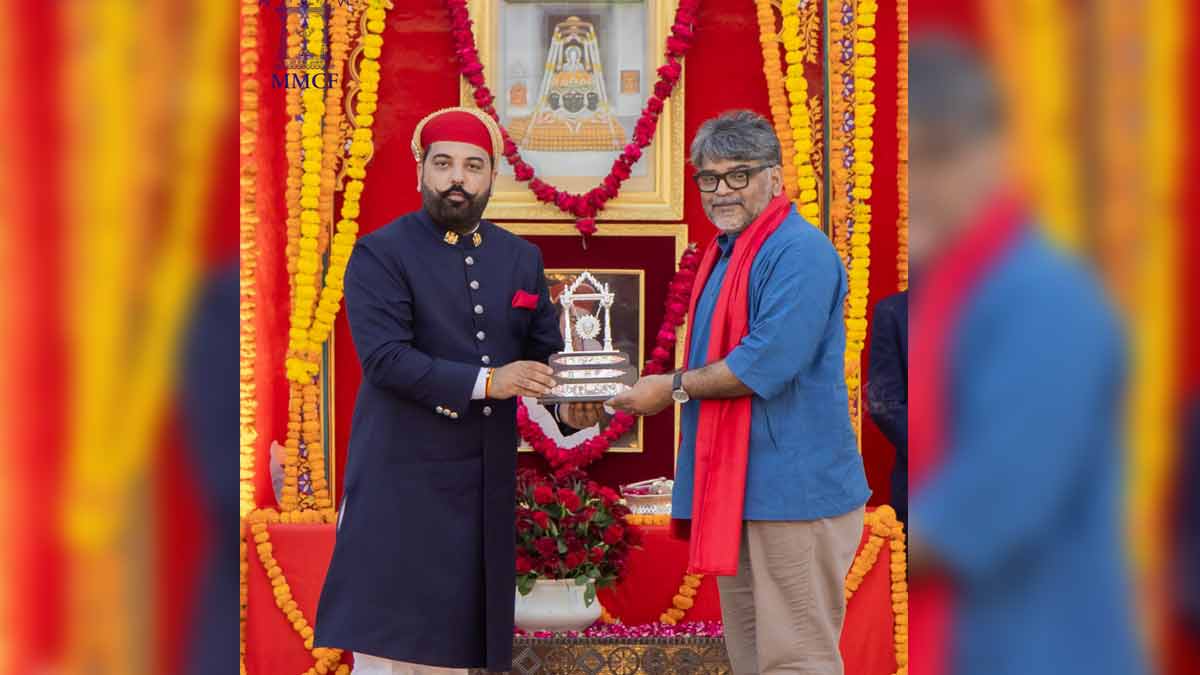
MUMBAI- Kamlesh Singh just turned a lifetime of sharp words into a shiny shield because when journalism wakes up a society, even the Maharana of Mewar wants to pin a medal on it.
The Maharana of Mewar Charitable Foundation (MMCF) conferred its prestigious Haldi Ghati Award on Kamlesh Singh, a senior editor at the India Today Group, during a ceremony in Udaipur on 15 March 2026. The national award, instituted in 1981-82, recognises “work of permanent value that initiates an awakening in society through the medium of journalism.”
Singh, who leads several editorial initiatives including Aaj Tak Radio, the Teen Taal community and The Lallantop, was presented the honour by Lakshyaraj Singh Mewar, Managing Trustee of MMCF. The citation highlighted his three decades of contributions to Indian media, innovations in digital journalism, mentoring young reporters, and his popular podcast persona “Tau” on Teen Taal, which fosters thoughtful public discourse.
The Haldi Ghati Award, named after the historic Battle of Haldighati symbolising valour and resilience, is one of four national awards given annually by MMCF. Past recipients include Tavleen Singh, Piyush Pandey and Raj Chengappa.
Other honourees this year included Padma Vibhushan Pt Hari Prasad Chaurasia, Vedamurti Devvrat Rekhe, Treeman of India Marimuthu Yoganathan, Vir Chakra Capt Rizwan Malik, and US-based researcher Molly Emma Aitken, who received the Colonel James Tod Award for contributions to understanding Mewar’s spirit and values.
In an era where headlines often shout louder than substance, the MMCF quietly reminded everyone that real journalism isn’t about noise, it’s about the quiet, persistent work that stirs society awake, one thoughtful story at a time.