News Broadcasting
As drums of war get louder, Pakistan blacks out Indian channels


As war rhetoric beams ever louder, Pakistan on Saturday issued orders to all cable TV operators in the country to stop relaying broadcasts of Indian satellite television channels.
This is the second time in the last three months that orders to black out Indian TV channels have been issued. However, the last time round mainly news channels were included in the ambit of the ban. Following the 11 September WTC attack the All-Pakistan Cable Operators’ Association had imposed a countrywide ban on airing five Indian channels “propagating against Islam and Pakistan.”
The channels, which were blacked out then were Zee News, Star News, Star Plus, Jain TV and all Doordarshan channels.

Chief of the Pakistan Telecom Authority Maj Gen Shabzada Alam Malik has warned that cable operators defying the ban would be penalised and their licences cancelled.
The Indian government, meanwhile, said it is closely monitoring the contents of Pakistan’s state-owned television – Pakistan Television – on account of its anti-India propaganda. However, information & broadcasting minister Sushma Swaraj said no decision had yet been taken on banning the channel.
Condemning the false propaganda being carried out by the channel, the minister said that any decision would be taken only after consultation with ministry of external affairs. Any decision to ban a foreign channel has to be ratified by a committee of secretaries, Swaraj has been quoted as saying. PTV was banned at the time of war in Kargil.
Though official orders have not gone out, there are reports of a similar ban on PTV in some parts of India. District authorities in Meerut on Thursday night banned telecast of PTV channel through cable operators till January 25, 2002, to check “anti-national publicity”.
Meanwhile, the Central Monitoring Service, under the I&B Ministry, has stepped up the content monitoring exercise of different television and radio channels, especially after the beginning of the war in Afghanistan, ministry officials were quoted as saying.
CMS is involved in monitoring of content in Indian and foreign media on a regular basis and its reports are sent to several ministries including home, defence, external affairs and I&B.






News Broadcasting
CNN-News18 to host Fury in the Gulf conclave on West Asia crisis
Three-hour summit to unpack geopolitical fallout and impact on India
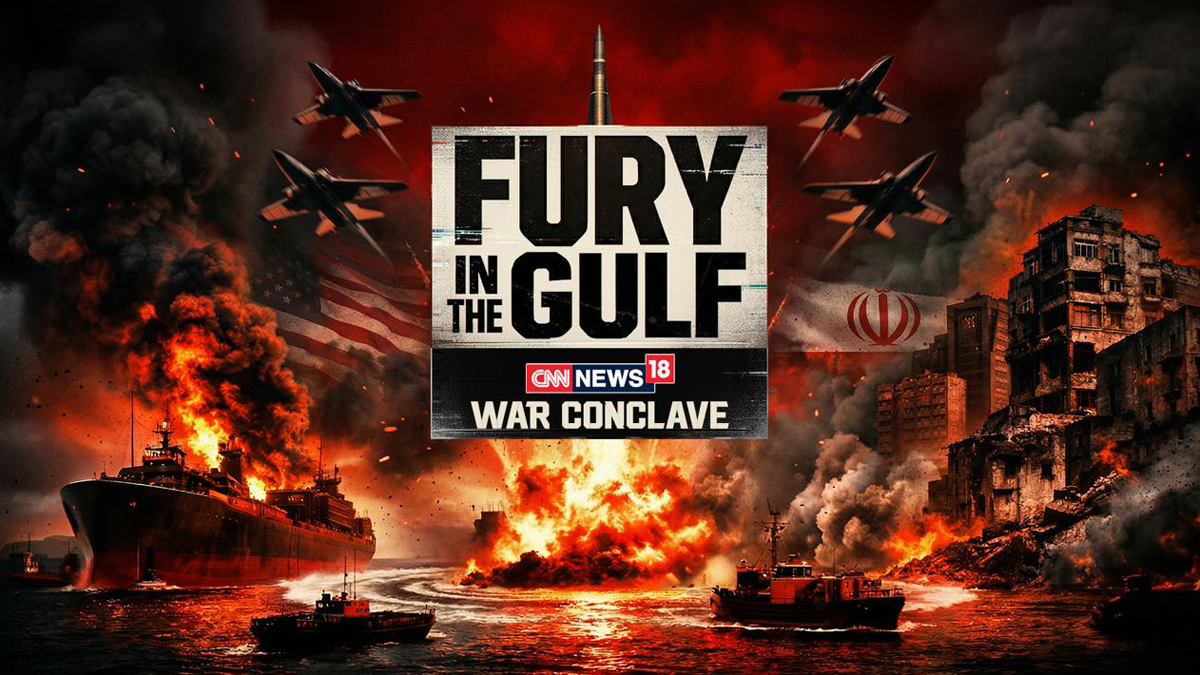
MUMBAI: CNN-News18 is set to host a special three-hour broadcast, Fury in the Gulf – War Conclave, on April 7, aiming to decode the escalating West Asia crisis and its far-reaching implications for India.
Scheduled from 4:00 PM to 7:00 PM, the conclave comes at a time when tensions between Iran and the United States are reshaping global geopolitics and triggering economic uncertainty. With India’s deep energy ties, trade links and large diaspora in the Gulf, the developments carry significant domestic relevance.
Built around the theme ‘Conflict, Consequences, and The Future,’ the programme will feature six curated sessions combining one-on-one interviews and panel discussions. The focus is to cut through the clutter and offer viewers a clearer understanding of the fast-evolving situation.
Key sessions include ‘Diplomacy in Times of War’ featuring Shashi Tharoor, and ‘World After the Iran Conflict’ with voices such as Ram Madhav, Reuven Azar, representatives from the European Union and the Iranian Deputy Envoy. Another session titled ‘Another Dunkirk?’ will bring together K. J. S. Dhillon and Jitin Prasada among others.
CNN-News18 editorial affairs director Rahul Shivshankar said, “In times of war, clarity becomes the most powerful tool. Fury in the Gulf – War Conclave brings together credible voices to address the questions and confusion that arise amid an overwhelming influx of information.”
He added that the initiative is aimed at delivering “facts, perspective, and insight” at a time when misinformation can easily cloud public understanding.
Echoing the sentiment, CNN-News18 CEO– English and business news Smriti Mehra said the conflict marks a defining global moment, with consequences that extend well beyond the region. She noted that the conclave seeks to present the crisis with “depth, nuance and responsibility” so audiences can better grasp its real-world impact.
As geopolitical tensions continue to dominate headlines, the conclave positions itself as an attempt to bring order to the noise, offering viewers a structured, insight-led look at a complex and rapidly shifting global situation.






