I&B Ministry
Arun Jaitley’s portfolio as I&B minister had many gems

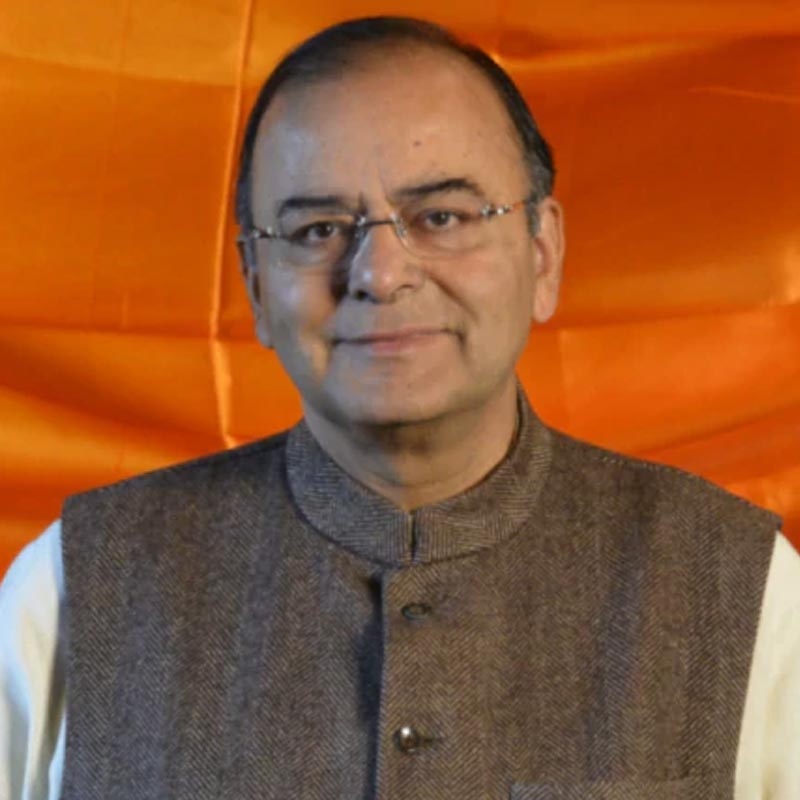
MUMBAI: Former union minister and one of the most senior and popular BJP veterans, Arun Jaitley died earlier this morning. He was undergoing treatment at AIIMS Delhi for the past several weeks.
A lawyer by profession, Jaitley had quite a prolific career as a politician as well. He held several posts in the union ministry under the BJP government, including minister of information and broadcasting, minister of law, justice, and company affairs & shipping, and minister finance.
The veteran will be remembered as a strong politician and policymaker for his contribution to the ministry of finance as well, which he led in the previous Modi government. The stalwart was lauded by the cable television industry when he exempted custom duty in several parts and components of electronic equipment including set-top boxes (STBs) for television or the internet, thus boosting the digitisation process for the TV industry.

In his term as the union minister of information and broadcasting between November 2014 and July 2016, Jaitley was responsible for many important government initiatives, including phase III of FM auctions, new business policy for publications divisions 2016, setting up of Film Facilitation Office (FFO), and introducing revised guidelines for advertisements in print and on websites.
The FFO, which acts as a single-window facilitation and clearance mechanism for filmmakers, was constituted with a view to promote and facilitate film shootings by foreign filmmakers in India. The services rendered by the FFO were later extended to Indian filmmakers as well. The body also gives out ‘Most Film Friendly State’ awards every year with the aim of promoting India as a filmmaking destination.
Under his leadership, a new business policy for Publications Division with the objective to streamline business practices in line with the contemporary trends prevailing in publications industry was also set up. One of the key highlights of the policy included promoting online readership by pricing the digital version of the publication at 75 per cent the price of printed version.
Jaitley also worked on promoting transparency and accountability in advertisement policies. The new print media advertisement policy introduced incentives for the newspapers who have better professional standing and get their circulation verified by ABC/ RNI among other important measures taken to streamline the print advertising paradigm.
He also focussed greatly on the growth of the digital ecosystem within the country during his tenure and revised the web advertising policy as well.




I&B Ministry
CBFC speeds up film certification; average approval time cut to 22 days
Over 71,900 films cleared in five years as digital system shortens approval timelines

MUMBAI: The Central Board of Film Certification (CBFC) has significantly reduced the time taken to certify films, with the average approval timeline now down to 22 working days for feature films and just three days for short films.
Operating under the Ministry of Information and Broadcasting, the statutory body certifies films for public exhibition in line with the Cinematograph Act, 1952 and the Cinematograph (Certification) Rules, 2024. The rules prescribe a maximum certification period of 48 working days, though the adoption of the Online Certification System has sharply accelerated the process.
Over the past five years, from 2020-21 to 2024-25, the board certified a total of 71,963 films across formats. Of these, the majority fell under the U category with 41,817 titles, followed by UA with 28,268 films and A with 1,878 films. No films were certified under the S category during the period.
Film approvals have also steadily risen in recent years. The CBFC cleared 8,299 films in 2020-21, a figure that peaked at 18,070 in 2022-23 before settling at 15,444 films in 2024-25. During the same period, 11,064 films were certified with cuts or modifications.
Despite the high volume of certifications, outright refusals remain rare. Only three films were denied certification over the last five years, with one refusal recorded in 2022-23 and two in 2024-25.
The board may recommend cuts or modifications if a film violates statutory parameters relating to the sovereignty and integrity of India, security of the state, friendly relations with foreign states, public order, decency or morality, defamation, contempt of court or incitement to an offence.
Filmmakers can challenge CBFC decisions in court. Data shows that such disputes remain limited but have seen some fluctuation. Between 2021 and 2025, a total of 21 certification decisions were challenged before High Courts, with the number rising to 10 cases in 2025.
Responding to a question in the Rajya Sabha, minister of state for information and broadcasting L. Murugan shared the data. The question was raised by Mallikarjun Kharge.
With faster timelines and a largely digital workflow, the certification process appears to be moving at a far brisker pace, signalling a shift towards quicker clearances for India’s growing film output.