News Broadcasting
Around Rs 12.5 cr spent on flagship promotional programmes till now for 2013-14

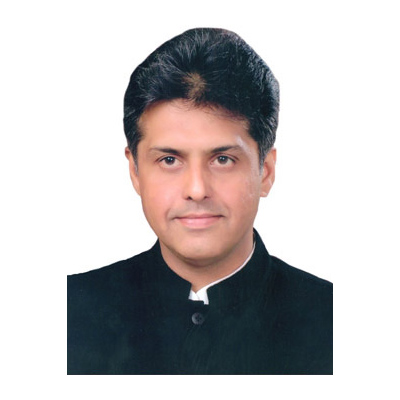
NEW DELHI: The Information and Broadcasting Ministry has spent a sum of Rs 12.48 crore during 2013-14 so far on promotional shorts publicising the flagship programmes of the government.
I&B Minister Manish Tewari said that a sum of Rs 103.203 crore had been spent on similar promotional shorts during 2012-13.

The Minister was answering questions after unveiling a comprehensive multi-media initiative “Glimpses of the India Story” – Phase II intended to capture the journey of India’s development through various programmes and policies launched by the government during the last ten years. The first phase was unveiled in May and was actively run from 14 May to 4 June.
The first phase of the ‘India Story’ informed the people about the initiatives taken by the government during the recent years and the tangible benefits that had accrued in sectors such as education, health, telecom, rural and urban infrastructure. In the second phase, a 360 degree communication model has been adopted across media platforms focusing on the new initiatives of the government and the upcoming reforms aimed at improving the lives of the common people.
Giving figures, the Minister said the figure in 2007-08 was Rs 17.87 crore, Rs 46.92 crore in 2008-09, Rs 35.08 crore in 2009-10, Rs 48.48 crore in 2010-11, and Rs 87.78 crore in 2011-12.
He said that the social media was also being used in a major way and ‘content agnostic platforms would be created’.
He claimed that the second phase comprising around ten shorts was rights-based, and had also referred to certain rights that the government had planned for and which were pending in Parliament. The objective of the current phase of the India story is not only to communicate the benefits of the reforms, but to develop a sense of ownership for these initiatives among the people.
The multimedia initiative would be put across on traditional, print, outdoor publicity, special outreach programmes focusing on new media platforms with the objective of informing and apprising the public of the new policy initiatives undertaken by the government recently. For the print and visual media, the content is being developed in 11 languages.
The Ministry has adopted a 360 degree multi-media approach concentrating on six broad themes. Creatives have been developed highlighting the broad features of each of these initiatives. The print media initiative would be covering 539 newspapers across the country which would include regional papers, small and medium papers as well as the dominant groups at the national level.
The outdoor publicity has been planned in 195 cities/towns with 750 sites. Besides this, 216 private FM Stations and prominent TV channels in the news and general entertainment segment would also be covering the Glimpses of India Story.
In the second phase, the various shorts have used Priya as a key figure communicating the intent of the government, while some creatives on the Right to Information had used a look-alike of cartoonist R K Laxman’s ‘Commonn Man’.
For the first time, a special video for the theme song “Meelon Hum Aa Gaye, Meelon Humien Jana Hai” has been developed. The video highlights the need to continue on the path ahead to ensure that the country has able to achieve high economic growth as well as social equity. A key highlight of the audio visual content will also be the special song on “National Integration” of two minute duration focusing on India’s innate strength in “Unity in Diversity”.
The India Story during the second phase will also be positioned on the New media platforms. The focus of attention would be to reach out the younger audience who use this medium on a 24×7 basis. Within the ambit of social media, content would be loaded on YouTube, Twitter, Facebook and Blog. A dedicated portal highlighting the India story is being developed to provide content/updates on all relevant issues related to the dissemination and outreach programme.
Rural communication would also be one of the corner stones of the current phase of the India Story. Press Information Bureau, through its Public Information Campaigns (PICs) would be taking the message of the new initiatives to the grass roots. PIB is planning 106 Public Information Campaigns (PICs) during the financial year 2013-14. For this initiative, PIB has designed specific content in the form of booklets covering the new initiatives of the government.
The Song and Drama Division and Directorate of Field Publicity would be integrating their efforts for enhancing the outreach to the rural areas through PICs and vertical programmes across the country. The Song and Drama Division would be organizing five Jamunia Programmes concurrently with PICs and 144 other shows based on rural folk culture and theatrical formats within the next two months. Directorate of Field Publicity will be organizing programmes in 195 towns/cities within the next two months.


News Broadcasting
CNN-News18 to host Fury in the Gulf conclave on West Asia crisis
Three-hour summit to unpack geopolitical fallout and impact on India
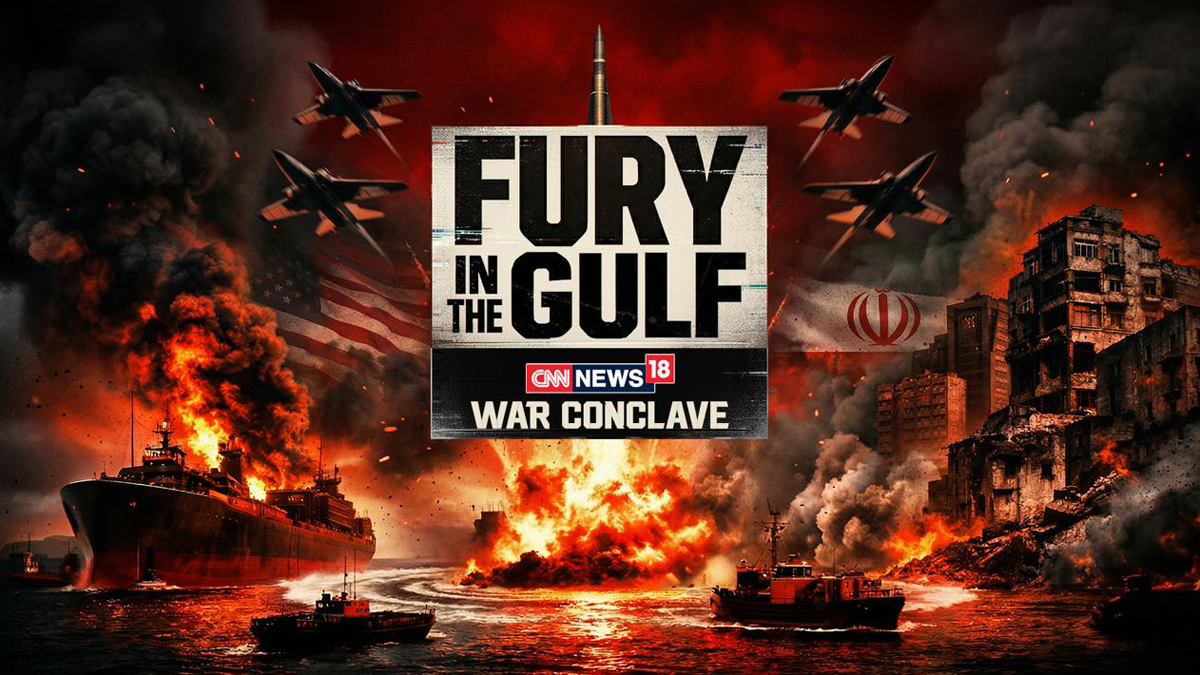
MUMBAI: CNN-News18 is set to host a special three-hour broadcast, Fury in the Gulf – War Conclave, on April 7, aiming to decode the escalating West Asia crisis and its far-reaching implications for India.
Scheduled from 4:00 PM to 7:00 PM, the conclave comes at a time when tensions between Iran and the United States are reshaping global geopolitics and triggering economic uncertainty. With India’s deep energy ties, trade links and large diaspora in the Gulf, the developments carry significant domestic relevance.
Built around the theme ‘Conflict, Consequences, and The Future,’ the programme will feature six curated sessions combining one-on-one interviews and panel discussions. The focus is to cut through the clutter and offer viewers a clearer understanding of the fast-evolving situation.
Key sessions include ‘Diplomacy in Times of War’ featuring Shashi Tharoor, and ‘World After the Iran Conflict’ with voices such as Ram Madhav, Reuven Azar, representatives from the European Union and the Iranian Deputy Envoy. Another session titled ‘Another Dunkirk?’ will bring together K. J. S. Dhillon and Jitin Prasada among others.
CNN-News18 editorial affairs director Rahul Shivshankar said, “In times of war, clarity becomes the most powerful tool. Fury in the Gulf – War Conclave brings together credible voices to address the questions and confusion that arise amid an overwhelming influx of information.”
He added that the initiative is aimed at delivering “facts, perspective, and insight” at a time when misinformation can easily cloud public understanding.
Echoing the sentiment, CNN-News18 CEO– English and business news Smriti Mehra said the conflict marks a defining global moment, with consequences that extend well beyond the region. She noted that the conclave seeks to present the crisis with “depth, nuance and responsibility” so audiences can better grasp its real-world impact.
As geopolitical tensions continue to dominate headlines, the conclave positions itself as an attempt to bring order to the noise, offering viewers a structured, insight-led look at a complex and rapidly shifting global situation.






