News Headline
Architect of autonomy for AIR DD breathes his last

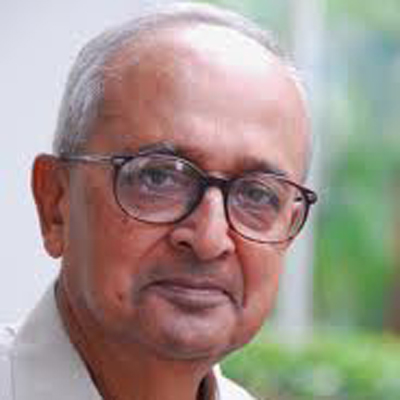
NEW DELHI: Veteran journalist BG Verghese, who in 1975 won the Ramon Magsaysay award for outstanding journalism, died on 30 December, aged 87.
Verghese, a former editor of the Hindustan Times, passed away at 6 p.m. at his son’s residence, a family member said. The former information advisor to Prime Minister Indira Gandhi leaves behind wife Jamila and sons Vijay and Rahul.
Verghese headed the group set up by the then Information and Broadcasting Minister L K Advani during the Janata Party rule in 1977 to work on an autonomous All India Radio and Doordarshan. The Verghese Committee recommended setting up Akash Bharati as an autonomous trust,

Born on 21 June 1927, he was a veteran journalist. He was editor of the leading papers The Hindustan Times (1969–75) and The Indian Express (1982–86).In 1975, he received the Ramon Magsaysay award for outstanding contribution to journalism. Since 1986, he has been associated with the New Delhi think-tank Centre for Policy Research.
Verghese attended The Doon School. He then studied Economics at St. Stephen’s College, Delhi and pursued a Master’s degree from Trinity College, Cambridge. While at Doon, Verghese edited The Doon School Weekly.
Verghese started his journalistic career in The Times of India. He was information adviser to Prime Minister Indira Gandhi in 1966-69 and wrote her speeches. Subsequently, he joined as editor, Hindustan Times, but he lost his post for criticising Indira Gandhi during the dark years of the Emergency. His integrity in those years earned him immense respect and he was awarded the Ramon Magsaysay award that year. Immediately afterwards, he contested Lok Sabha elections in 1977 from Mavelikkara in Kerala but lost.
A crusader for civil rights, Verghese has long worked on problems of development. He was also on the Editors Guild of India Fact Finding Mission after the Gujarat riots, 2002.
He has written extensively on developmental issues. Waters of hope (1990) and ‘Winning the future (1994) discuss managing the Himalayan watershed. Design for tomorrow (1965), India’s North East resurgent and Reorienting India: Rage, reconciliation and security (2008) are other books with a progressive theme. He is also the author of Warrior of the Fourth Estate (2005), an acclaimed biography of Ramnath Goenka, owner of the Indian Express. In October 2010, he published his autobiography First Draft: Witness to Making of Modern India, which discusses the steady degradation of democratic processes during the tenures of Indira Gandhi and her son Rajiv.






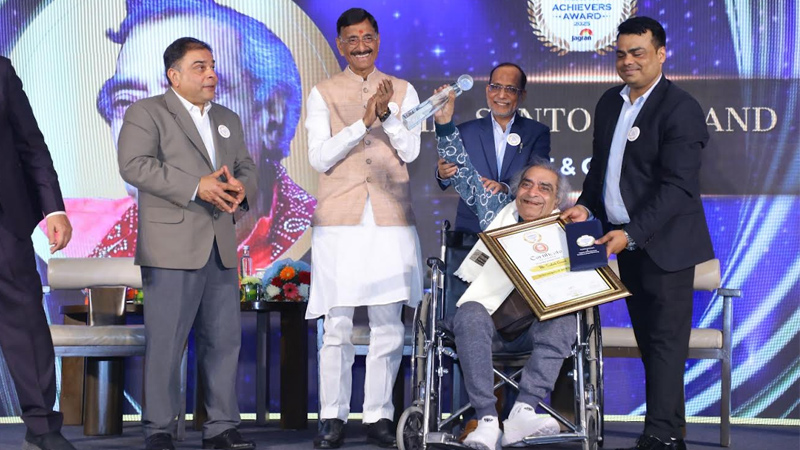
NEW DELHI: Hamdard Laboratories gathered a cross-section of India’s achievers in New Delhi on Friday, handing out the Hakeem Abdul Hameed Excellence Awards to figures who have left their mark across healthcare, education, sport, public service and the arts.
The ceremony, attended by minister of state for defence Sanjay Seth and senior officials from the ministry of Ayush, celebrated individuals whose work blends professional success with a sense of public purpose. It was as much a roll call of achievement as it was a reminder that influence is not measured only in profits or podiums, but in people reached and lives improved.
Among the headline awardees was Alakh Pandey, founder and chief executive of PhysicsWallah, recognised for turning affordable digital learning into a mass movement. On the sporting front, Arjuna Awardee and kabaddi player Sakshi Puniya was honoured for her contribution to the game and for pushing women’s participation onto bigger stages.
The cultural spotlight fell on veteran lyricist and poet Santosh Anand, whose songs have echoed across generations of Hindi cinema. At 97, Anand accepted the honour with characteristic humility, reflecting on a life shaped by perseverance and hope.
Healthcare honours spanned both modern and traditional systems. Manoj N. Nesari was recognised for strengthening Ayurveda’s place in national and global health frameworks. Padma shri Mohammed Abdul Waheed was honoured for his research-backed work in Unani medicine, while padma shri Mohsin Wali received recognition for his long-standing contribution to patient-centred care.
Education and social development also featured prominently. Padma shri Zahir Ishaq Kazi was honoured for decades of work in education, while former Meghalaya superintendent of Police T. C. Chacko was recognised for public service. Goonj founder Anshu Gupta received an award for his dignity-centred rural development initiatives, and the Hunar Shakti Foundation was honoured for empowering women and young girls through skill development.
The Lifetime Achievement Award went to former IAS officer Shailaja Chandra for her long career in public healthcare and governance, particularly in the traditional systems under Ayush.
Speaking at the event, Hamdard chairman Abdul Majeed said the awards were a tribute to those who combine excellence with empathy. “These awardees reflect Hakeem Sahib’s belief that healthcare, education and public service must ultimately serve humanity,” he said.
Minister Seth struck a forward-looking note, saying India’s young population gives the country a unique opportunity to become a global destination for learning, health and wellness by 2047.
The ceremony also featured the trailer launch of Unani Ki Kahaani, an upcoming documentary starring actor Jim Sarbh, set to premiere on Discovery on 11 February.
Instituted in memory of Unani scholar and educationist Hakeem Abdul Hameed, the awards have grown into a national platform that celebrates those building a more inclusive and resilient India. For one evening at least, the spotlight was not just on success, but on service with substance.






