Applications
Anju Chaudhary joins Innominds as VP – artificial intelligence business

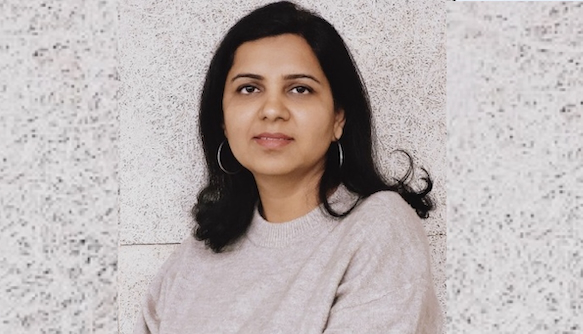
MUMBAI: She is one lady who can’t get enough of all things tech. Anju Chaudhary – a B. Tech in computer science from Kurukshetra university – spent the early part of her career in Dell Computers, before moving on to a banking job at Stanchart and then onto GE Capital. She then tried her hand at a human capital opportunities website as a founding member for three years before moving into cloud platform C-Zentrix Cloud as vice-president cloud in 2016.
Whilst she was there, she had to define the strategy for the global partner ecosystem, build out a cross-functional team, create critical relationships with C-level partner executives, and showcase the company’s innovation and technology solutions to potential customers.
Then she moved on to Builder.ai ( previously known as Engineer.ai ) arguably world’s first AI powered platform trying to solve the massive issue of idea to code. The solution eould build, run and scale almost anything that could be thought of. Her mandate as head of APAC and Mena was to build business as well as manage clients.

The latest move she has made is once again in the area of artificial intelligence. She has joined Innominds as vice-president of AI business, taking charge of markets, leveraging the research and development company into developing cutting-edge capabilities in artificial intelligence, machine learning, and digital transformation.
Said she: “Our focus at Innominds spans critical domains like hitech, healthcare and life sciences, automotive, fintech and manufacturing, where we’re pioneering generative AI, intelligent automation, and cognitive computing technologies. With a commitment to bridging technological innovation and business needs, I’m looking forward to expanding our AI capabilities globally and helping organisations unlock unprecedented value through intelligent digital solutions.”







Applications
With 57 per cent single new users, Ashley Madison rebrands as discreet dating platform
Platform says majority of new members now identify as single

INDIA: Ashley Madison is shedding the “married-dating” label that defined it for two decades, repositioning itself as a platform for discreet dating in what it calls the post-social media age.
The rebrand, unveiled in India on 27 February, 2026, marks a structural shift in business model and identity. Once synonymous with married dating, the company now describes itself as the “premier destination for discreet dating” under a new tagline: Where Desire Meets Discretion.
The pivot is data-driven. Internal figures show that 57 per cent of global sign-ups between 1 January and 31 December, 2025 identified as single: a notable departure from the platform’s married core. The company argues that its community has already evolved beyond its original positioning.
“In an age where our lives have been constantly put on public display, privacy has become the new luxury,” said Ashley Madison chief strategy officer Paul Keable. He framed the platform’s offering as “ethical discretion” for singles, separated, divorced and non-monogamous users seeking private connections.
The shift also taps into wider digital fatigue. A global survey conducted by YouGov for Ashley Madison, covering 13,071 adults across Australia, Brazil, Canada, Germany, India, Italy, Mexico, Spain, Switzerland, the UK and the US, found mounting discomfort with hyper-public online lives.
Among dating app users, 30 per cent cited constant swiping and messaging as a source of fatigue, while 24 per cent pointed to pressure to curate public-facing profiles and early personal disclosure. Some 27 per cent said fears of screenshots or information being shared contributed to exhaustion; an equal share cited unwanted attention.
The retreat from oversharing appears broader. According to the survey, 46 per cent of adults actively try to keep most aspects of their life private online. Only 8 per cent feel comfortable sharing most aspects publicly, while 35 per cent say they are becoming more selective about what they disclose.
Ashley Madison is betting that this cultural recalibration towards controlled visibility can be monetised. By doubling down on privacy infrastructure and reframing itself around discretion rather than infidelity, the company is attempting to convert reputational baggage into a premium proposition.






