Animation
Animation industry gung-ho on proposed mandate on local content


MUMBAI: Some proposals in a draft Broadcast Bill 2006, prepared by the information and broadcasting ministry for the Union Cabinet’s consideration, has evoked mixed reaction from the industry.
The Indian animation industry is excited that the government is mulling mandating a certain percentage of programming on TV channels to be sourced from India.
“We are absolutely delighted. The proposed bill is a surprise and will be a catalyst for growth. I would like to however add that Cartoon Network, Nick and Disney have anyways gotten interested in local content and this regulation is a bit late, “DQ Entertainment CEO & MD Tapas Chakravarti.

He went on to add that 15 per cent is too less and that China and Japan have close to 50 per cent of local programming share on TV channels.
Chakravarti also reveals that the development has inspired DQ to go ahead with its investment plans in Intellectual Property (IP) in India.
“At DQ, we have taken a decision internally almost six months back for creating Intellectual Property (IP) in India. We are planning $10 million investments on our part and our French and American partners will bring in similar numbers. The idea is to create products for global market but with Indian stories. This will be something similar to what Disney did with Jungle Book,” he explained.
As per the draft bill, TV channels on a mandatory basis would have to have 15 per cent of their total weekly programming produced locally. It’s also being proposed the share of public service/socially relevant programme content shall not be less than 10 per cent of the total programme content of a channel broadcast during every week.
This would mean that channels like Cartoon Network, Animax, Discovery, Animal Planet and Discovery Travel and Living would have to have a prescribed percentage of content generated from India, which has been a long-standing demand of Indian animators.
Concurring with Chakravarti is Phoebus Media CEO Rahul Bakshi. “15 per cent is too less, but is a good start and will have a multiplier effect. It gives companies like ours conviction and confidence that we are on the right track having already invested a lot in local content,” he added.
The industry also feels that the move will give it shelter from the rain as well as boost the job scenario.
“Such a government move will help us get more conviction to stick to original content. Thousands of jobs will be created and more animators means more animation outsourcing also,” says Green Gold Animation CEO Rajiv Chilakalapudi.
According to Graphiti Multimedia director Munjal Shroff, the proposed regulation could help content creators look at other markets to compliment the revenues.
“Usually there has always been a block because TV channels find it much more economical to buy animated content from markets like Mipcom at $500 to $1000 per episode rather than commissioning new shows in India. If the bill is passed and local content does become compulsory, then it will give local content creators a space to exist and once there is a minimum local market, then content creators can always look at other markets to compliment the revenues,” says Shroff.
Color Chips CEO Sudhish Rhambotla felt that channels would either commission local content or also have the option of shifting production of some of their shows being produced elsewhere into the country, which again would be “good for the business.”
On their part, the kids channels expressed their readiness to make changes in their programming structure if need be.
The Walt Disney Company India managing director Rajat Jain said, “Whatever changes have to be made, will be made in our programming according to the Broadcast Bill when it is passed. At the end of the day, one has to comply with the laws of the land.”
When queried as to what percentage of programming on Disney Channel and Toon Disney were local presently, Jain said, “It is difficult to calculate at this point in time what the percentage of local content is.”
Hungama TV COO Zarina Mehta says her channel already plays more than 15 per cent of local content.
“I don’t know the exact percentage of local content that we have on the channel but currently it will definitely be more that 15 per cent. If fact, we will be the only kids channel that have that much of local content,” she says.






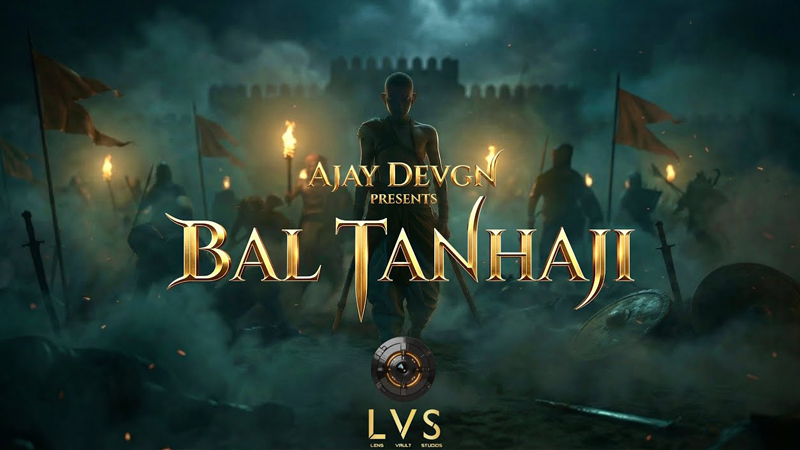
MUMBAI: History is getting a fresh rewrite this time with code, creativity and a longer arc in mind. Lens Vault Studios has announced its first original production, Bal Tanhaji, marking the official entry of the newly launched, tech-driven studio into India’s evolving entertainment landscape.
Arriving six years after the box-office success of Tanhaji: The Unsung Warrior, the new project expands the universe rather than revisiting familiar ground. Bal Tanhaji explores uncharted narrative territory, signalling a clear shift from one-off cinematic spectacles to long-format, world-building storytelling designed for digital-first audiences.
At the heart of this ambition is Prismix Studios, the in-house generative AI and technology arm powering the creative engine behind the show. The studio’s approach blends storytelling with next-generation tools, aiming to reimagine how Indian IPs are created, scaled and sustained beyond theatrical releases.
For Lens Vault Studios chairman Ajay Devgn the new venture represents a deliberate step beyond traditional cinema. The focus is firmly on building long-form intellectual properties across fiction and non-fiction, tailored to changing viewing habits and platform-led consumption. He said the studio intends to explore formats that remain largely untapped, while drawing on the team’s experience with large-scale cinematic storytelling.
Lens Vault Studios founder and CEO Danish Devgn echoed that sentiment, describing Bal Tanhaji as the studio’s first generative-AI-led IP and the starting point of a broader vision. The aim, he noted, is to carry forward the legacy of the Tanhaji universe while connecting with younger audiences through a blend of powerful narratives and emerging technologies.
With Bal Tanhaji, Lens Vault Studios is planting its flag early not just launching a show, but signalling a larger play for cinematic universes that live, grow and evolve across platforms. If this debut is any indication, the future of Indian storytelling may be as much about imagination as it is about innovation.







