Hollywood
‘American Sniper’ becomes highest-grossing film of 2014

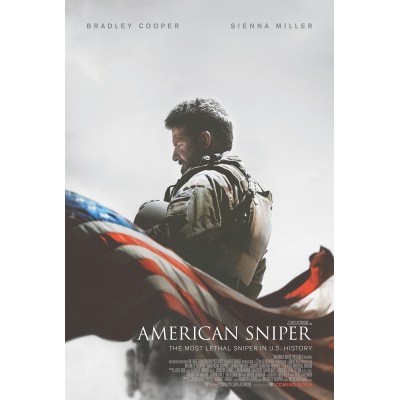
MUMBAI: Warner Bros. Pictures’ and Village Roadshow Pictures’ American Sniper has surpassed two more major milestones, emerging as the top-grossing domestic release of 2014. The film has also surpassed half a billion dollars worldwide, and still climbing.
To date, the film has grossed an estimated $337.2 million at the domestic box office, and still counting, making it the highest-grossing film in director Clint Eastwood’s long and illustrious career. Among its many other records, American Sniper is also the number one war movie of all time and the top-grossing film in the career of Bradley Cooper, who earned his third consecutive Oscar nomination, for his portrayal of the film’s title character, Chris Kyle.

In addition to its North American success, American Sniper is drawing large numbers of moviegoers overseas, where it is currently in release in 57 markets. The film, to date, has earned an estimated $163 million at the international box office, for an extraordinary worldwide total of $500.2 million and rising.
Warner Bros. Pictures president of domestic distribution Dan Fellman said, “From its record-breaking Christmas opening, American Sniper has been a box office phenomenon. The film’s A+ CinemaScore in every category has translated into enthusiastic word-of-mouth that continues to generate both first-time and repeat business. We could not be happier for Clint Eastwood, Bradley Cooper, Sienna Miller and everyone on the incredible filmmaking team on this remarkable achievement.”
Warner Bros. Pictures president of worldwide marketing and international distribution Sue Kroll added, “American Sniper has become a cultural touchstone that people want to share, discuss and remember. We are thrilled that the movie is still filling theatres, not only in the United States but around the globe, as filmgoers everywhere experience the power of the story of Chris and Taya Kyle.”
“We are all so proud of American Sniper. Its box office success is not only a testament to the talents of Clint, Bradley and all those involved in the film, but also a measure of our appreciation for the sacrifices of all veterans and their families. Congratulations to our partners at Village Roadshow and Ratpac-Dune and everyone behind American Sniper on reaching another momentous benchmark,” said Warner Bros. Pictures president, creative development and worldwide production Greg Silverman.
Warner Bros. Pictures president, international distribution Veronika Kwan Vandenberg noted, “Clint Eastwood has delivered a powerful story on the personal cost of conflict, and the response we’re seeing internationally reflects the universal reach of this compelling drama. Along with our partners at Village Roadshow, we couldn’t be more thrilled with these spectacular results.”






Hollywood
Paramount eyes $24bn Gulf support to fund Warner Bros Discovery merger: Reports
Sovereign funds line up funding as media giants chase streaming scale
NEW YORK: Paramount Skydance is in talks to secure nearly $24 billion in equity commitments from Gulf sovereign wealth funds to support its planned takeover of Warner Bros. Discovery, according to a WSJ report.
The funding push comes as Paramount Skydance advances its proposed $110 billion deal for Warner Bros. Discovery, which carries an equity valuation of $81 billion and is expected to close in the third quarter of 2026.
At the heart of the financing plan are three major Gulf investors. Saudi Arabia’s Public Investment Fund is expected to contribute roughly $10 billion, while the Qatar Investment Authority and Abu Dhabi-based L’imad Holding are likely to make up the remainder.
Crucially, the proposed investments are structured as non-voting stakes. This means the Gulf backers would not have direct control in the combined entity, a move designed to ease regulatory concerns in the United States. Paramount executives reportedly do not expect the deal to trigger scrutiny from bodies such as the Committee on Foreign Investment in the United States or the Federal Communications Commission.
If completed, the merger would bring together a formidable portfolio of entertainment and news assets, including CNN and CBS. The combined entity aims to better compete in a fast-evolving media landscape where streaming platforms are steadily pulling audiences away from traditional television.
The deal reflects a broader shift in global media, where scale is increasingly seen as essential to survive the streaming wars. By pooling content libraries, technology and distribution, Paramount Skydance and Warner Bros. Discovery are betting on size and synergy to drive future growth.
The involvement of deep-pocketed Gulf investors also underscores the growing role of sovereign wealth in shaping global media consolidation, particularly at a time when high-value deals demand equally large financial backing.
With shareholder votes and regulatory milestones still ahead, the proposed tie-up remains one of the most closely watched media deals of the year. If it clears the final hurdles, it could redraw the competitive map of the global entertainment industry.






