Cable TV
AMBC targets installation of additional 1.6 lakh STBs by Dec 2016


KOLKATA: The West Bengal based multi-system operator (MSO), Advance Multisystem Broadband Communication (AMBC), is aiming to install 1.6 lakh set top boxes (STBs) by December 2016.
AMBC claims to be the first private limited company in cable industry that is still run by a professional management team built by cable operators only. Launched in 2000, the company has more than 450 LCOs affiliated with it at present. AMBC in the Kolkata municipal area (KMA) claims to have more than 1.83 lakh digital connections.
The company has one digital headend, which caters to the Kolkata municipal area and three analogue headends. The analogue headends at Arambag and Birbhum were to be converted into digital ones with the implementation of DAS in analogue areas. The company had earlier earmarked Rs 5 crore for converting the analogue headends into digital ones, but now the company has ‘withdrawn the signal’ from some non-potential areas.
In the DAS areas, AMBC has seeded STBs in Hooghly, Howrah, Nadia, Salt Lake and North 24 Parganas among others, while in locations like Burdwan, Birbhum and parts of Bankura, it has more than 2.5 lakh analogue cable TV connections.
“We were preparing to seed STBs in phase III and IV, and are encouraging the LCOs to do as much as they can, but RIO arrangement of SIPL is becoming a major drawback,” said AMBC managing director Sujit Das.
Das informed that the company had already accounted for stock and trade interest rate due to postponement of digitisation deadlines when his company had taken loans to procure STBs’.
“We are looking for some loops in KMA,” revealed Das. “Actually we are trying to saturate our core market with topmost priority. A set back after making a new venture in a new market may spoil our name and deflect our target,” he shared.
Speaking about the challenges in cable TV digitisation, Das said, “As the market is still directed mostly by the LCOs, we need to have their confidence first, and then the job will become easier. A confused ground partner can be harmful for the operation. We need to work with cooperation with the LCOs, not with compulsion.”
“Value chain is also a big factor. For the remaining phases we need to start by breaking even,” he said. “Only a la carte channels offer will not be feasible enough as LCOs have to bear high cost to carry the channels.”
Das feels that the experiment of digitisation will be over before the next phase starts and the market will be mature enough to work with. “So we may reduce our capex loss in seeding of STBs and operational cost as well. In phase 1and 2 we all were riding on the tiger’s back.”
When being asked to comment on the phase III and phase IV of DAS, he said the locations where the company has analogue presence are price sensitive market and the monthly subscription fee hovers around Rs 100-Rs 110. “Keeping in mind the price sensitive market, we might do various permutations and combinations while providing the channel package to consumers in DAS 4 areas. A price hike in small towns and rural Bengal will slow down STBs seeding,” he added.
Ground networking and channel placing are major factors for acceptance of a signal to the consumers. AMBC also works with the best channel sequence, which is reviewed from time to time depending upon the feedback from the ground, Das informed.
AMBC says that it gets immense support from its LCOs’ to deliver quality service and technical support to meet consumer demands.








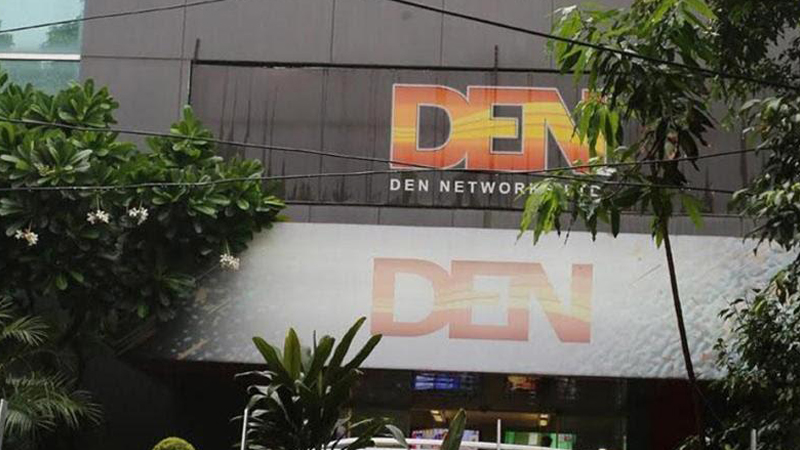
MUMBAI: When margins wobble, liquidity talks and in Q3 FY25-26, cash did most of the talking. Den Networks Limited closed the December quarter with consolidated revenue of Rs.251 crore, marginally higher than the previous quarter but down 4 per cent year-on-year, even as profitability stayed resilient on the back of strong cash reserves and disciplined cost control.
Subscription income softened to Rs.98 crore, slipping 3 per cent sequentially and 14 per cent from last year, while placement and marketing income offered some cheer, rising 15 per cent quarter-on-quarter to Rs.148 crore. Total costs climbed faster than revenue, up 7 per cent QoQ to Rs.238 crore, driven largely by higher content costs and operating expenses. As a result, EBITDA dropped sharply to Rs.13 crore from Rs.19 crore in Q2 and Rs.28 crore a year ago, pulling margins down to 5 per cent.
Yet, the bottom line refused to blink. Profit after tax stood at Rs.40 crore, up 15 per cent sequentially and only marginally lower than last year’s Rs.42 crore. A healthy Rs.57 crore in other income helped cushion operating pressure, keeping profit before tax at Rs.48 crore, broadly stable quarter-on-quarter despite the tougher cost environment.
The real headline-grabber, however, sits on the balance sheet. The company remains debt-free, with cash and cash equivalents swelling to Rs.3,279 crore as of December 31, 2025. Net worth rose to Rs.3,748 crore, while online collections accounted for 97 per cent of total receipts, underscoring strong cash discipline across operations, including subsidiaries.
In short, while Q3 showed signs of operating strain, the financial backbone remains solid. With zero gross debt, steady profits and a formidable cash war chest, the company enters the next quarter with flexibility firmly on its side proving that in uncertain markets, balance sheet strength can be the best growth strategy.






