iWorld
Amazon Prime Video users nearly doubled in March 2020

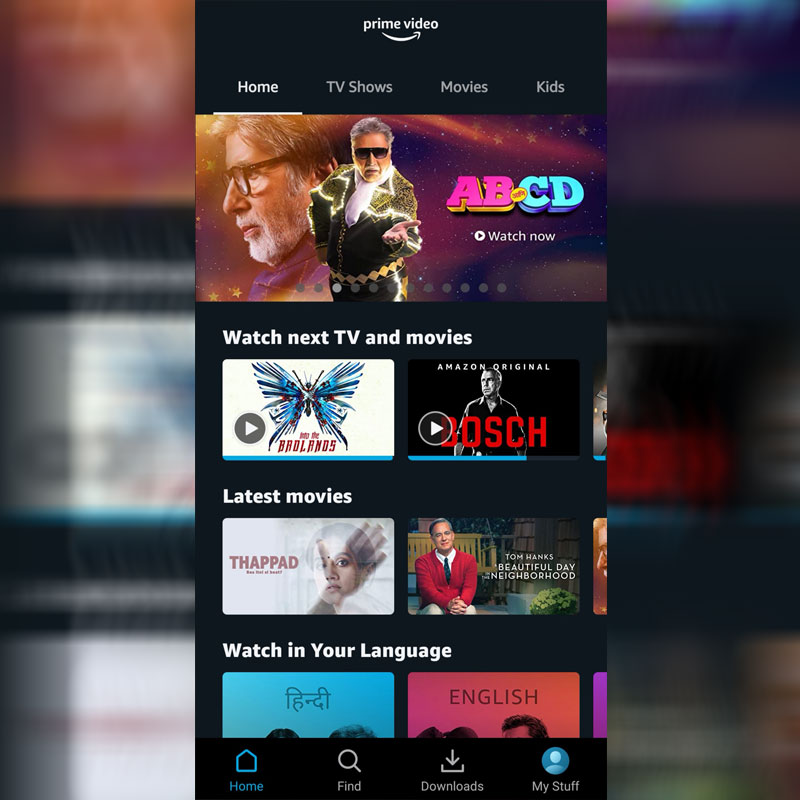
MUMBAI: It's a trend worldwide that over-the-top (OTT) platforms have seen huge uptake in consumption under shelter-in-place directives due to the Covid2019 crisis. Amazon Prime Video is no exception. The streaming service segment of the e-commerce giant is also experiencing a lot more usage from prime subscribers. Moreover, it's the first time that users also nearly doubled in March.
“In March, the first time, viewers nearly doubled, which is I think a good thing for people when they are looking to stay entertained and see our video collection. It's also beyond just Prime Video, our channels and video rentals also went up as I'm sure others in the entertainment business saw that as well,” Amazon senior vice president and chief financial officer Brian T Olsavsky said in an earnings call.
Olsavsky also mentioned that in the US, the UK and Germany movies are going direct to pay-per-view because of the lack of theatres and that was a good move by the team. It has been very well received and they have also made a lot of kids and family content available free to watch on Prime Video. He said that people are getting a better look at what's available with their Prime memberships other than shopping.

Additionally, users are finding more benefit from Alexa as they stay at home. They are listening to more music and asking many questions related to issues around Covid2019. Alexa is also being used for educational purposes for children. Moreover, it is being used a lot more on the communication side as people are using Alexa calling and drop in.
“So I think the Prime story is that shopping is really important for people now, especially when those people can't leave their houses. I think the digital benefits are scaling well. I think they are handling the additional demand and it gives people a good time and reason to use all of their Prime benefits that maybe they hadn't used as much in the past,” he added.






iWorld
Streaming boom crosses 200 million as India shifts to sustainable growth
From content bets to CTV rise, industry leaders map streaming’s next phase

MUMBAI: India’s streaming story has entered a new chapter, and this time it is less about land grab and more about staying power. At a panel on the evolving streaming economy, industry leaders agreed that with subscriptions crossing 200 million and revenues surging, the focus has decisively shifted to sustainable growth, smarter content bets and sharper partnerships.
Moderator EY partner Raghav Anand, set the tone by pointing to the sharp jump in paid subscriptions, driven by a mix of sports, bundling and improved distribution. The result is a fast-maturing ecosystem where subscription revenues are beginning to complement, and in some cases rival, advertising-led growth.
For Amazon Prime Video Svod business India director & head Shilangi Mukherji, the past decade has been about balancing choice with clarity. “It’s not an either-or market anymore,” she noted. “There is space for everything, from television to ad-supported streaming to subscriptions. The real win is when they all grow together.”
At the heart of this growth lies a simple trio: selection, value and convenience. Content remains king, but not in isolation. Platforms are now curating vast libraries that blend originals, rentals, and third-party services, all under one roof. The aim is to create an ecosystem where viewers do not need to hop between apps to find what they want.
Content itself is also evolving. Mukherji highlighted that nearly half of Prime Video’s viewership comes from outside a show’s home region, underlining the collapse of traditional language silos. Stories are no longer “regional” but increasingly pan-Indian, with talent and narratives travelling seamlessly across states.
Franchise-building has become another cornerstone, with a majority of shows designed for multiple seasons. The goal is not just to attract viewers but to keep them coming back, turning series into long-term cultural touchpoints rather than one-off hits.
On the production side, Hungama Digital Media managing director & CEO Neeraj Roy, described an industry that is both resilient and recalibrating. While the pandemic accelerated content consumption and discovery, it also reset market dynamics. Pre-sales have softened, satellite revenues have tightened, and the easy money phase of digital deals has cooled.
“The honeymoon is over,” Roy said candidly. “Now, content has to prove itself. If it works at the box office or with audiences, everything else follows.”
This shift, he argued, is pushing creators towards greater discipline. Fewer projects are being made, but with sharper focus on quality and audience appeal. At the same time, global exposure to diverse content, from Korean dramas to Malayalam cinema, has raised the bar for storytelling across the board.
Another quiet transformation is unfolding in how content is consumed. While mobile remains the primary gateway, especially for payments and discovery, connected TVs are fast becoming the preferred screen for long-form viewing. Mukherji described this not as a battle of devices but as a “force multiplier”, with platforms tailoring plans for mobile-only users, living room viewers and multi-device households alike.
The monetisation playbook is also widening. Beyond subscriptions and ads, platforms are experimenting with rentals, bundled offerings and commerce integrations, building layered revenue streams that cater to different stages of the consumer journey.
Looking ahead, both panellists pointed to global ambition as the next frontier. Mukherji emphasised taking Indian stories to the world through deeper localisation, calling content India’s soft power. Roy, meanwhile, stressed the need for investment in infrastructure, skills and, crucially, transparent data systems to guide creators with better insights.
If the first phase of India’s streaming boom was about scale, the next will be about substance. And as the industry settles into this new rhythm, one thing is clear: the real streaming wars may be over, but the race to win viewers’ time has only just begun.








