News Broadcasting
Amar Singh blasts CAS opponents at New Delhi seminar

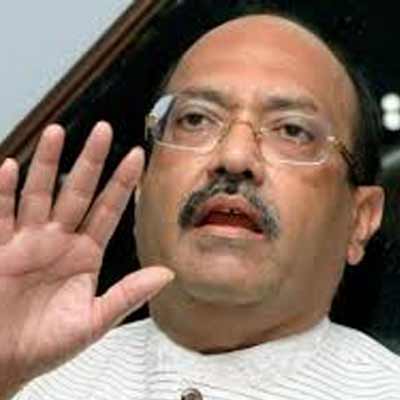
The conditional access system (CAS) issue took another political hue today when Samajwadi Party politician and member of Parliament Amar Singh lashed out at the government and some foreign broadcasters at a seminar organised by Consumer Action Network (CAN) on the technological and economic implications of CAS.
Inaugurating the seminar in Delhi, Singh strongly condemned the actions of some broadcasters who were lobbying for DTH and opposing CAS. He said that there are two lobbies in Parliament, one which is pro-consumer and the other which is “dancing to the tunes of foreign broadcasters and media persons.
” Drawing parallels between the CAS issue and ‘East India Company’, Singh in his inimitable style, said that in our country, foreigners have a history of making an entry and controlling the economy of the country, which in turn would lead to the control of society and politics.

He said that he is certain that the amendments passed by the Lok Sabha, relating to the CATV Act, which will facilitate CAS, will see the light of the day in spite of the efforts of the “vested parties to scuttle the bill.”
Some of the issues brought forth at the seminar, included the lobbying being undertaken by some broadcasters to stall implementation of CAS, the issue of insufficient number of suppliers for set top boxes in the country, the real benefits of CAS, the global scenario and the problems being faced in India.
Col V Khare, member BIS and Technical committee, department of Information Technology while commenting on the technical aspects of CAS said that the issues being raised by the broadcasters and the vested parties were “trivial in nature and that the Indian manufacturing companies were definitely up to the task of delivering cheap and good quality set top boxes in a short period of time.”
Khare said that some foreign broadcasters were trying to confuse and diffuse the issue, so that they could “continue to mislead advertisers and consumers on the basis of fictititious connectivity and TRPs.” He further added that CAS is the answer to most problems being faced by the cable and broadcasting industry.
Vikky Choudhary, president of the National Cable and Telecommunications Association and an active supporter of CAS, lamented the fact that the cable industry does not have the recognition as an industry and added that CAS is a good initiative of the I&B ministry.
“People who oppose CAS are opposing consumer’s interest and making CAS mandatory will be a victory of the consumers as it’ll end the broadcasters’ monopoly,” he added. Supporting the concerns, Ahmed Abdi, national president, CAN said the Indian government has to continue its pro-active consumer stance by taking the following additional measures immediately: firstly, ensuring a three-phase rollout to cover metros in next six months, mini metros in the next 12 months and the entire country in the 18 months. Secondly, to ensure easy acceptability of the set top boxes by consumers and subscriber management systems by cable operators all duties including central/ state and local levies should be waived for a period of three years.
Thirdly, as government has decided to fix a maximum retail price for free-to-air channels, it should also freeze all current pay channels’ rates till deployment of set top boxes is actually in place.
“Thereafter the broadcasters would have to persuade the customers to subscribe to their channels both in terms of attractive content and pricing,” he explained.
Fourthly, as the Convergence Bill is still being scrutinized by the standing committee of Parliament, an interim arrangement to settle all disputes in the TV segment between cable operators/ broadcasters and consumers may be considered by appointment of an ombudsman.
The speakers felt that in recent years while cellular telephone, insurance and banking sectors have seen a fall in subscription rates and upliftment in services offered, cable television charges have gone up by “almost 500 per cent in the last five years.
” CAN proposes to record the findings and suggestions of the seminar and forward it to the information and broadcasting industry, calling for immediate action.
CAN claims to be an organization comprising spirited citizens with special concern for consumer welfare.







News Broadcasting
BBC to cut up to 2,000 jobs in biggest overhaul in 15 years
Cost pressures and leadership change drive major workforce reduction plan
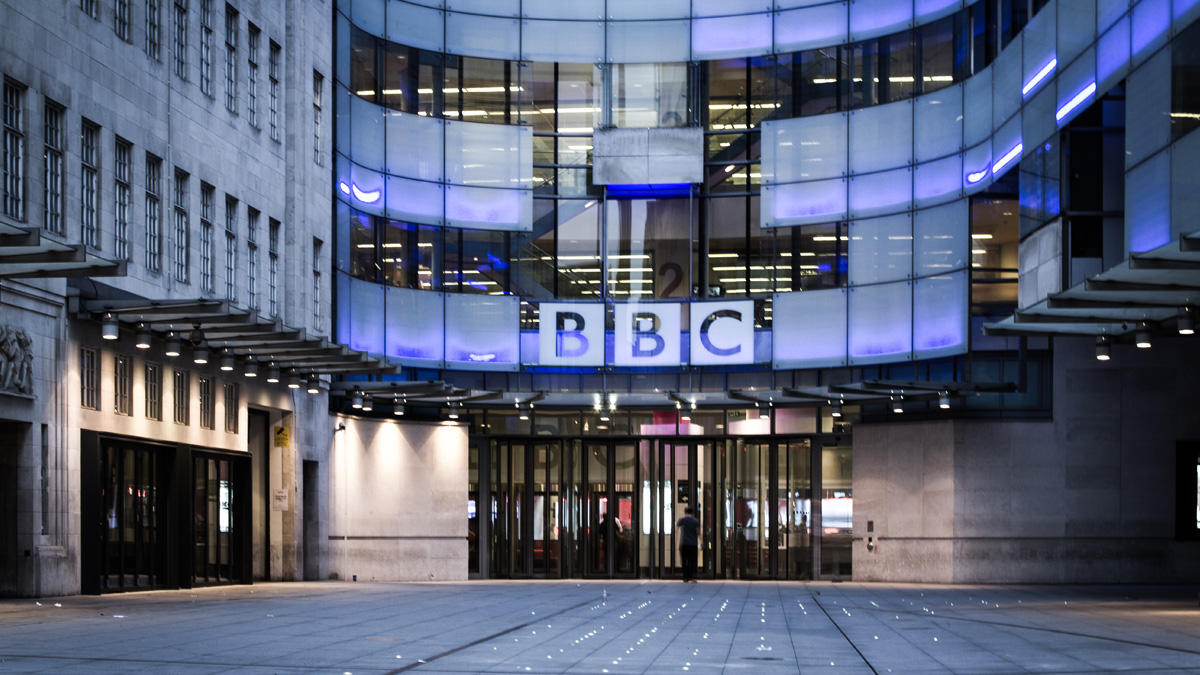
LONDON: BBC has unveiled plans to cut up to 2,000 jobs, roughly 10 per cent of its global workforce, in what marks its biggest downsizing in 15 years.
The announcement was made during an all-staff meeting led by interim director-general Rhodri Talfan Davies, as the broadcaster moves to tackle mounting financial pressures and reshape its operations.
Between 1,800 and 2,000 roles are expected to be eliminated from a workforce of around 21,500. The cuts form part of a broader plan to save £500 million over the next two years, aimed at offsetting rising costs, stagnating licence fee income and weaker commercial revenues.
In a communication to staff, BBC interim director-general Rhodri Talfan Davies said, “I know this creates real uncertainty, but we wanted to be open about the challenge,” acknowledging the impact the move would have across the organisation.
The restructuring comes at a time of leadership transition. Former director-general Tim Davie stepped down earlier this month, with Matt Brittin, a former Google executive, set to take over the role on May 18, 2026.
While some cost-cutting measures are being implemented immediately, the majority of the structural changes are expected to roll out over the next few years, with full savings targeted by the 2027–2028 financial year.
The broadcaster had earlier signalled its intent to reduce its cost base by around 10 per cent over a three-year period, warning of “difficult choices” as it adapts to shifting economic realities and audience expectations.
With operating costs hovering around £6 billion annually, the BBC’s latest move underscores the scale of the financial challenge it faces, as it balances public service commitments with the need for long-term sustainability in an increasingly competitive media landscape.