iWorld
Amagi launches cloud-based live orchestration platform Amagi Live

Mumbai: Cloud-based Software-as-a-service (SaaS) company Amagi has announced the new and enhanced version of its premium live orchestration platform ‘Amagi Live’. The cloud-based platform enables content owners to spin up channels in minutes or orchestrate broadcast-grade live events on the go. It also offers cloud-based master control features for ‘breaking news’ and multi-event live sports orchestration workflows. It can be operated from any remote corner of the world using a simple web dashboard.
Through this service, Amagi is addressing the growing appetite for sports and news on linear OTT. News has seen explosive growth on OTT and free-ad-supported streaming TV (FAST) platforms with 56 per cent of the total content consumed. A study by Amagi indicated that 30 per cent of cable TV viewers have shown strong intent to cut the cord if they can stream their favourite news and sports content on OTT platforms. “The numbers indicate that live video streaming is poised for tremendous growth in the coming months/years,” said the statement.
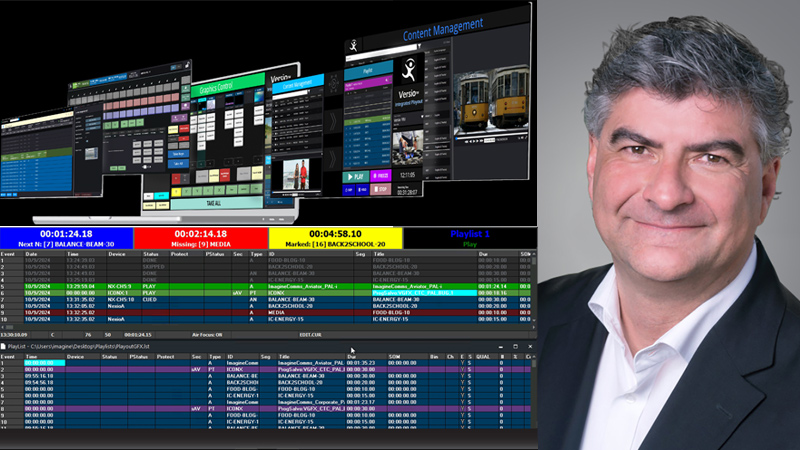
Amagi Live allows users the ability to insert a wide range of advanced graphics, auto-recording of live events that are then delivered as delayed playback, automation of live streams to OTT with machine learning systems, reduced need for multiple live operator personnel, easy scheduling of ad breaks in the live playlist and multi-source, multi-protocol content ingestion.

For 24/7 live linear channel operators, particularly 24/7 news and sports channels, Amagi Live enables the orchestration of various live production-master-control tasks including the ability to switch between up to four feeds in single live event production and advanced 4K UHD delivery including tone mapping.
“Viewers of live content are uncompromising in their demand for the quality viewing experience,” said Amagi co-founder KA Srinivasan. “Amagi Live powers content brands to create a broadcast-grade experience, especially with premium sports live events and news in a scalable, reliable and cost-effective manner.”
“We’ve launched a tremendously successful sports channel on ad-supported platforms with Amagi as our partner,” said Tennis Channel International senior vice president Andy Reif. “The use of advanced automation has made the ad and live break insertions seamless for us, while the superior graphics capabilities have led to stellar content display. The user experience this platform delivers is not only delightful but unparalleled in the industry.”



Gaming
Nodwin Gaming partners with Runestone for esports data and integrity solutions
South Asian esports leader joins forces with Czech tech firm to enhance tournament operations.
MUMBAI: Nodwin Gaming has just levelled up its game by bringing in a specialist to keep the scoreboard honest and the fans fully engaged. The leading South Asian esports and gaming company has announced a strategic partnership with Runestone, a Prague-headquartered esports technology firm specialising in real-time data and engagement solutions for tournament organisers and publishers.
The collaboration aims to strengthen competitive integrity, improve operational oversight, and deliver more interactive viewing experiences across Nodwin’s properties. It will initially focus on the Nodwin Clutch Series for Counter-Strike 2, a Tier 2 tournament that provides emerging teams with consistent competitive opportunities and helps build the talent pipeline.
The latest edition of the series recently concluded with Big defeating ECSTATIC 2–1 in the grand final of the $50,000 online event.
Nodwin Gaming chief business officer at MENA and global head of data monetization Teemu Koski said, “Integrity and transparency are fundamental to sustainable esports ecosystems, especially in Tier 2 competition where the next generation of talent emerges. Runestone’s expertise complements our experience in building scalable esports IPs.”
Runestone head of partnerships Michael Schwartz added, “Nodwin Gaming has built one of the most dynamic esports ecosystems across emerging markets. We’re thrilled to collaborate on supporting tournaments with greater transparency, deeper fan interaction, and scalable tools.”
Both companies are exploring opportunities to extend the partnership across additional titles, including mobile-first competitive ecosystems, and to develop new products for publishers, tournament operators, and event promoters.
In the rapidly growing world of esports, where fair play and fan excitement are equally crucial, Nodwin Gaming and Runestone are teaming up to ensure every match is not only competitive but also transparent and engaging. This alliance could well become a game-changer for Tier 2 tournaments across South Asia and beyond.







