Applications
Almonds Ai releases comprehensive report on India’s evolving channel loyalty landscape


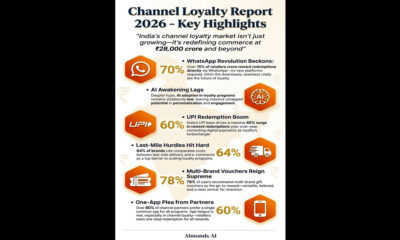
Mumbai: Almonds Ai, a leading provider of AI-powered solutions for b2b channel partner engagement and loyalty, unveils India’s only comprehensive report dedicated to the Indian channel partner loyalty market. Channel Loyalty Report 2024 offers current market analysis and future projections poised to dominate 2024 and beyond, providing actionable insights for businesses to unlock success with their channel partner engagement, experience, loyalty, and rewards market.
The Indian b2b channel partner loyalty is 24,000 crore market and, growing at a CAGR of 15 per cent annually. This presents a significant opportunity for businesses to engage their channel partners and cultivate lasting relationships.
Key Highlights:

. 55.8 per cent of companies recognize that loyalty programs play an essential role in overcoming the challenges posed by the inflation crisis and potential recession.
. 68.6 per cent of respondents plan to increase or significantly increase their investments in channel partner retention programs.
. 90 per cent of channel partners admit that they are more productive and attached to a loyalty program if it includes some gamified elements.
. The government of India has reintroduced IMPS to increase the immediate payment while strengthening the TDS system through section 194R.
. The impact of loyalty programs extends beyond economic uncertainties, responsible for an impressive 18 per cent-30 per cent surge in spending and visit frequency.
. Green Loyalty Programs are considered as the future of GenZ loyalty programs with its environmentally positive approach to loyalty.
Commenting on the report release, Almonds Ai co-founders Abhinav Jain & Apurv Modi jointly said, “Gone are the days of one-size-fits-all loyalty programs. Today’s B2B partners crave personalisation, innovation, and a connection to purpose. Our report reveals the key trends and technologies businesses need to embrace to forge deeper connections and unlock the true potential of this market.”



Applications
With 57 per cent single new users, Ashley Madison rebrands as discreet dating platform
Platform says majority of new members now identify as single
INDIA: Ashley Madison is shedding the “married-dating” label that defined it for two decades, repositioning itself as a platform for discreet dating in what it calls the post-social media age.
The rebrand, unveiled in India on 27 February, 2026, marks a structural shift in business model and identity. Once synonymous with married dating, the company now describes itself as the “premier destination for discreet dating” under a new tagline: Where Desire Meets Discretion.
The pivot is data-driven. Internal figures show that 57 per cent of global sign-ups between 1 January and 31 December, 2025 identified as single: a notable departure from the platform’s married core. The company argues that its community has already evolved beyond its original positioning.
“In an age where our lives have been constantly put on public display, privacy has become the new luxury,” said Ashley Madison chief strategy officer Paul Keable. He framed the platform’s offering as “ethical discretion” for singles, separated, divorced and non-monogamous users seeking private connections.
The shift also taps into wider digital fatigue. A global survey conducted by YouGov for Ashley Madison, covering 13,071 adults across Australia, Brazil, Canada, Germany, India, Italy, Mexico, Spain, Switzerland, the UK and the US, found mounting discomfort with hyper-public online lives.
Among dating app users, 30 per cent cited constant swiping and messaging as a source of fatigue, while 24 per cent pointed to pressure to curate public-facing profiles and early personal disclosure. Some 27 per cent said fears of screenshots or information being shared contributed to exhaustion; an equal share cited unwanted attention.
The retreat from oversharing appears broader. According to the survey, 46 per cent of adults actively try to keep most aspects of their life private online. Only 8 per cent feel comfortable sharing most aspects publicly, while 35 per cent say they are becoming more selective about what they disclose.
Ashley Madison is betting that this cultural recalibration towards controlled visibility can be monetised. By doubling down on privacy infrastructure and reframing itself around discretion rather than infidelity, the company is attempting to convert reputational baggage into a premium proposition.







