I&B Ministry
AIR appoints releaseMyAd as its first virtual agency

MUMBAI: All India Radio (AIR) has joined hands with releaseMyAd as its first ever virtual advertising agency, which is authorised to accept and process radio advertisement bookings for its network of stations.
AIR’s stations include Akashvani, Vividh Bharati, FM Rainbow and FM Gold.

As one of the country’s foremost welfare awareness medium, AIR’s reach surpasses that of any other private FM station.
To reinforce its presence in the virtual world, releaseMyAd.com will meet AIR’s twin objectives of optimum inventory utilisation as well as revenue augmentation.
The facility allows advertisers to book ads online across all channels of AIR with a mouse-click. As an online media option, releaseMyAd makes mass media advertising options accessible to all by effectively matchmaking between media owners and advertisers.
Talking about the initiative, AIR additional director general Amitabh Shukla said, “This initiative, a part of AIR’s ambitious web-enabled services for its patrons will not only assist us in adequate utilisation of last minute inventory that goes wasted if not put to use but will also fetch us valuable extra revenues.”
“AIR is an extensive government owned network that has exclusive rights over communications by every ministry. Be it the Parliamentary talk, World Cup commentary or the Prime Minister’s monthly address, this is the only platform that gives access to these. We want to help advertisers to capitalise on AIR’s monopoly on content that is news, sports or common welfare driven. It has such wonderful properties and scope to offer. We shall now play a significant part in communicating its vision and enabling whatever opportunities it has to offer,” added releaseMyAd founder Sharad Lunia.
AIR has complete national reach from the main urban centres to the tier 3 cities and even the most far flung rural sections of the country with its three tier broadcasting system. With its concept of local radio constituting the third tier of broadcasting, there are stations in all district headquarter towns.
However, accessing businesses in the farthest corners who could utilise the radio for advertisements becomes very difficult for AIR. Moreover, given their location, the business owners too don’t end up reaching out to the relevant sources for the purpose.
“Even seasoned advertisers who want to advertise on AIR are not too sure about how to reach out to them. It is not possible for Prasar Bharati to set up offices in every nook and corner of its broadcast boundaries. ReleaseMyAd will now do the needful to bridge this huge gap between businessmen and their remotely situated target groups,” Lunia added.
At a time when the country is riding a huge startup tide that is slowly transforming the landscape, this move on the AIR’s part will help the new wave of enterprises effectively reach out to audiences in every nook and corner of India.




I&B Ministry
Digital radio, D2M tech set to reshape broadcasting and public messaging
Govt pushes next-gen delivery while TRAI tightens grip on spam ecosystem
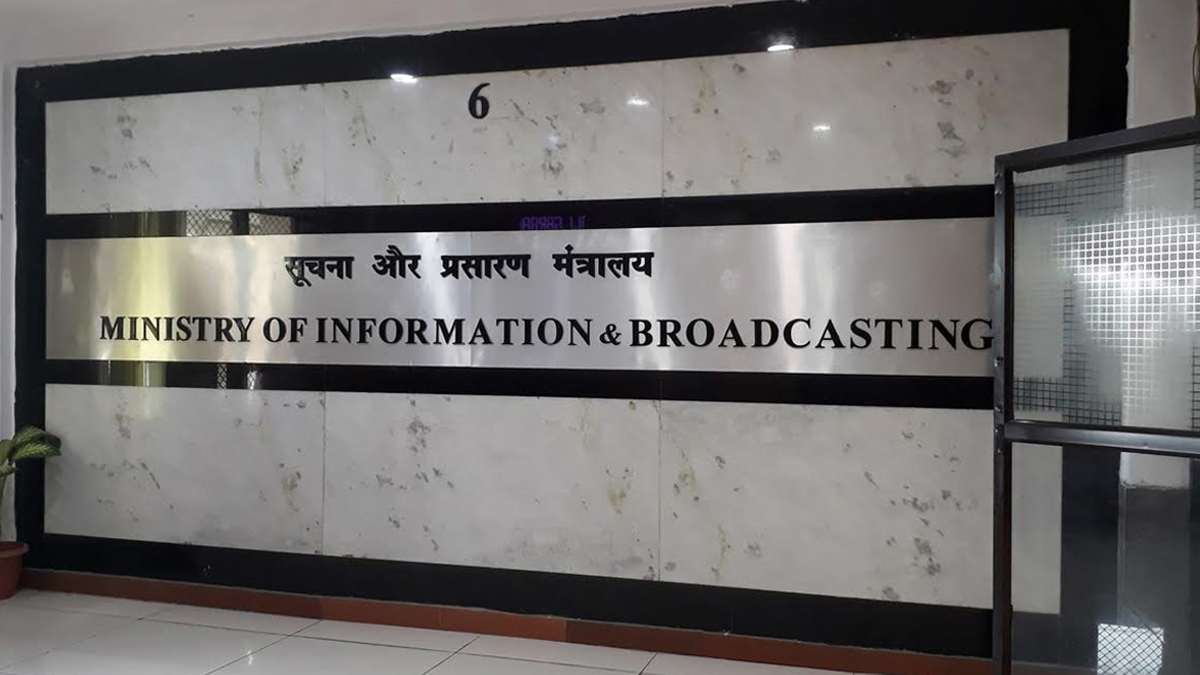
NEW DELHI: India’s broadcasting and telecom landscape is undergoing a quiet but significant upgrade, with digital radio and Direct-to-Mobile (D2M) technologies emerging as powerful tools for mass communication, while regulators step up efforts to tackle spam calls.
According to the Ministry of Information and Broadcasting, digital radio and D2M are poised to transform how content reaches audiences by making more efficient use of spectrum. In simple terms, multiple channels can now be delivered over a single frequency, opening the door to a wider range of free-to-air content.
D2M technology takes this a step further by enabling video, audio and data to be broadcast directly to mobile handsets without relying on SIM cards or mobile data. The result is a resilient and cost-effective data pipe that can deliver everything from entertainment and education to critical emergency alerts, even in low-connectivity scenarios.
At the same time, the Telecom Regulatory Authority of India is tightening its grip on unsolicited commercial communication, better known as spam calls. The regulator has deployed a distributed ledger technology platform to bring transparency and accountability into the system.
Through this blockchain-based setup, consumers can register their preferences on receiving promotional messages, while businesses and telemarketers must also sign up and operate within defined rules. The platform also includes a complaint mechanism that allows users to report spam, with complaints shared across telecom operators for coordinated action.
The government’s broader push is being supported by infrastructure upgrades under the Broadcasting Infrastructure and Network Development scheme. Implemented through Prasar Bharati, the initiative focuses on modernising networks such as Akashvani and Doordarshan, including digitisation and adoption of next-generation broadcast equipment.
In a written reply in the Lok Sabha, Ministry of Information and Broadcasting minister of state for information and broadcasting L. Murugan said these steps are part of a larger effort to promote emerging technologies and strengthen the country’s broadcasting backbone. The response came to a query raised by member of Parliament Rao Rajendra Singh.
Together, these developments point to a dual-track strategy: expanding access to reliable, low-cost content while cleaning up the communication ecosystem. As digital pipes get smarter and spam filters sharper, India’s airwaves may soon feel a lot less noisy and far more useful.






