News Headline
After NTO implementation, Indians ditching TV for OTT: survey


MUMBAI: People are migrating to online media for content after Telecom Regulatory of India (TRAI) came up with the New Tariff Order (NTO), says a survey. According to a research done by YouGov, around half of Indian DTH subscribers (48 per cent) said the amount of time they spend watching original online content (on Netflix, Amazon Prime, Hotstar, etc.) has increased after the implementation of the TRAI tariff order last year. Almost as many (42 per cent) said the same for time spent watching television content digitally.
The latest findings seem to validate its previous survey done in 2019. As per that survey, when the order was first passed, half of the 1020 respondents (49 per cent) indicated their inclination to spend more time online watching original content as a result of this amendment.
TRAI is all set to implement the proposed NTO 2.0 starting 1 March 2020. Though the regulatory body argues that the new tariff order has benefitted the end consumer, the reality seems to be different.

As per the earlier order, users were to choose channels they liked and pay standardised rates for only those they watch. Although this move was meant to enhance the customer’s television viewing experience, people did not seem too happy with its execution.
The TRAI guidelines seem to have adversely impacted the business of television and 43 per cent said their TV-viewing time has decreased in the last year.
Furthermore, one in six (16 per cent) claimed to have unsubscribed from a DTH connection or network because of the TRAI rule, and one in five (21 per cent) have unsubscribed and moved entirely online for content.
Men were more likely than women to disconnect their cable connection (19 per cent vs 13 per cent) while the youngest generation, GenZ, were more likely than the rest to not just unsubscribe but migrate online as well (26 per cent).
NTO 2.0 is likely to make subscriptions affordable by offering consumers 200 channels with the base slab of Rs 130 as opposed to 100 channels offered earlier. The data shows that the majority of respondents (60 per cent) favour the revised order, 14 per cent disapprove of it and 26 per cent have no view in this regard.
Support could be due to the fact that people positively perceive this change and more than half (56 per cent) feel it will empower them to choose the channels they like. Although people largely support it, many (36 per cent) feel the new amendment will confuse consumers by giving them too many options to choose from.
Following the introduction of the TRAI regulatory framework last year, 40 per cent TV-viewers selected channels individually and paid for each, 37 per cent bought a bundle pack and 23 per cent opted for free-to-air channels with few additions.
The ones who bought a bundle pack were more likely to say they paid more than they used to earlier as compared to the ones who selected channels individually or kept all free channels- who instead were more likely to say they paid lesser than before (29 per cent and 30 per cent, respectively).
If the new TRAI rule comes into force, most people (38 per cent) are still likely to individually select channels. The proportion of people wanting to buy a bundle pack as well as keep free channels is similar, at 31 per cent each, suggesting that people are equally receptive to each of the offerings.
YouGov India general manager Deepa Bhatia said: “YouGov’s survey last year rightly predicted the likely impact of the new regulation on consumer viewership. The latest findings validate this prediction. The new order is likely to disrupt the business further and hence it is even more important for advertisers to study the changing consumer needs and behaviour and reallocate their media budgets accordingly.”






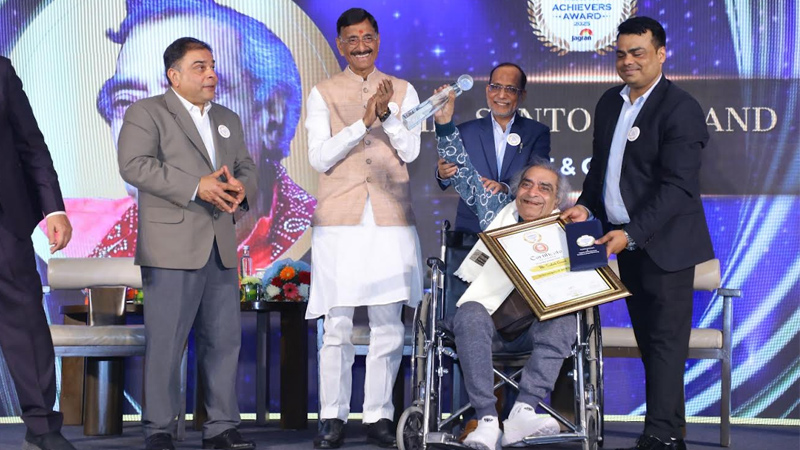
NEW DELHI: Hamdard Laboratories gathered a cross-section of India’s achievers in New Delhi on Friday, handing out the Hakeem Abdul Hameed Excellence Awards to figures who have left their mark across healthcare, education, sport, public service and the arts.
The ceremony, attended by minister of state for defence Sanjay Seth and senior officials from the ministry of Ayush, celebrated individuals whose work blends professional success with a sense of public purpose. It was as much a roll call of achievement as it was a reminder that influence is not measured only in profits or podiums, but in people reached and lives improved.
Among the headline awardees was Alakh Pandey, founder and chief executive of PhysicsWallah, recognised for turning affordable digital learning into a mass movement. On the sporting front, Arjuna Awardee and kabaddi player Sakshi Puniya was honoured for her contribution to the game and for pushing women’s participation onto bigger stages.
The cultural spotlight fell on veteran lyricist and poet Santosh Anand, whose songs have echoed across generations of Hindi cinema. At 97, Anand accepted the honour with characteristic humility, reflecting on a life shaped by perseverance and hope.
Healthcare honours spanned both modern and traditional systems. Manoj N. Nesari was recognised for strengthening Ayurveda’s place in national and global health frameworks. Padma shri Mohammed Abdul Waheed was honoured for his research-backed work in Unani medicine, while padma shri Mohsin Wali received recognition for his long-standing contribution to patient-centred care.
Education and social development also featured prominently. Padma shri Zahir Ishaq Kazi was honoured for decades of work in education, while former Meghalaya superintendent of Police T. C. Chacko was recognised for public service. Goonj founder Anshu Gupta received an award for his dignity-centred rural development initiatives, and the Hunar Shakti Foundation was honoured for empowering women and young girls through skill development.
The Lifetime Achievement Award went to former IAS officer Shailaja Chandra for her long career in public healthcare and governance, particularly in the traditional systems under Ayush.
Speaking at the event, Hamdard chairman Abdul Majeed said the awards were a tribute to those who combine excellence with empathy. “These awardees reflect Hakeem Sahib’s belief that healthcare, education and public service must ultimately serve humanity,” he said.
Minister Seth struck a forward-looking note, saying India’s young population gives the country a unique opportunity to become a global destination for learning, health and wellness by 2047.
The ceremony also featured the trailer launch of Unani Ki Kahaani, an upcoming documentary starring actor Jim Sarbh, set to premiere on Discovery on 11 February.
Instituted in memory of Unani scholar and educationist Hakeem Abdul Hameed, the awards have grown into a national platform that celebrates those building a more inclusive and resilient India. For one evening at least, the spotlight was not just on success, but on service with substance.






