News Broadcasting
After ‘Haqeeqat’, Sahara looks at the other side with ‘Jayate’

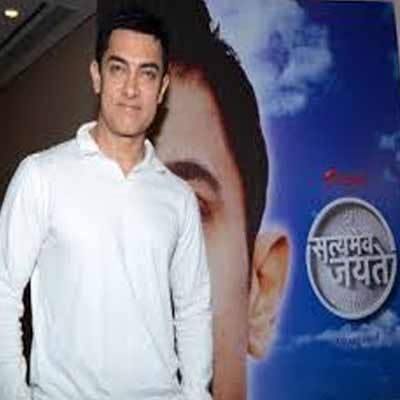
The Hindi entertainment television sweepstakes is hotting up and Sahara TV aims to be very much there on the viewerscope. After November’s launch of four new shows, the new year is going to see more offerings from the Sahara stable. Next month will see the launch of Jayate (winner), a show which is a reversal of its celebrated Haqeeqat (reality) in that it focuses on good cops and the sacrifices they make in the line of duty. Haqeeqat, which was introduced in June, has had quite an impact. Hosted by film director Mahesh Bhatt the programme was a breath of fresh air in an environment dominated by likeminded soap opera’s. It dealt with true incidents of human rights violation by lawmakers. It was produced by Anuradha Prasads BAG Films, for Sahara India Media Communications Ltd (SIMCL) and directed by Sourabh Narang. Jayate will be followed by Fateh (victory) which trains its guns on war heroes.
Next up on the channel’s new offerings list is Har Mode Pe (at every turn), a daily soap. Sahara TV vice-president (publicity, promotions & PR) Priya Raj says there is even more coming from the Sahara cupboard but the shows are still being conceptualised. They run the gamut of genres and should provide telly buffs with plenty of food for thought, Raj promises.
Meanwhile, the channel claims that two serials it launched in November Apnapan and Zindagi Teri Meri Kahani have drawn an excellent response. Both centre on the family and the channel claims that the immense popularity of these two programmes has helped it increase its viewership base. Apnapan shows from Monday to Friday at 1:30 pm and 11 PM Produced by SIMCL, Apnapan is directed by Chander Behl & V Menon. Veteran film actors like Kiran Kumar, Pramod Mautho, Shagufta Ali star.

Zindagi Teri Meri Kahani airs every Friday at 10:30 PM It shows how today’s society is more individualistic in nature. So the need for self identity is important. The story deals with marital discord. Produced by AV Telefilms, Zindagi Teri Meri Kahani stars veteran actor Arun Govil who played Ram in Ramanand Sagar’s Ramayana. Other stars include Rohini Hattangadi, Priya Tendulkar, Savita Prahune, Parmeet Sethi and Raju Samtani.




News Broadcasting
UDF poised to return to power in Kerala, says Manorama-CVoter survey
Massive opinion poll projects shift in Kerala politics ahead of 2026 Assembly elections.
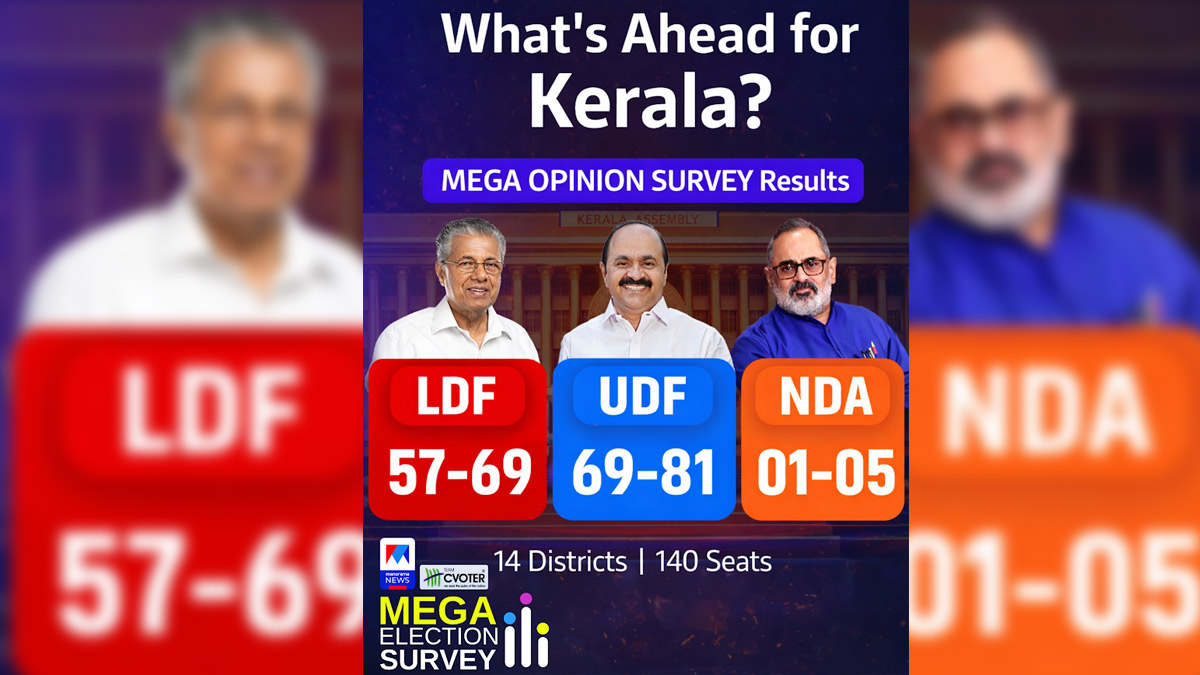
MUMBAI: The winds of change appear to be blowing through Kerala’s political landscape and this time, they seem to favour the United Democratic Front. A comprehensive mega opinion survey conducted by Manorama News in partnership with CVoter projects a potential comeback for the UDF in the upcoming Kerala Legislative Assembly Elections 2026. The survey, covering all 140 constituencies with a massive sample size of nearly 90,000 respondents, predicts the UDF could win between 69 and 81 seats.
The ruling Left Democratic Front (LDF) is expected to secure 57 to 69 seats, a significant drop from the 99 seats it won in the 2021 elections. This would mean the LDF losing 30 to 42 of its sitting seats. Meanwhile, the National Democratic Alliance (NDA), which drew a blank in 2021, is projected to open its account with 1 to 5 seats.
Region-wise, the UDF is expected to make strong gains in Malabar, winning 25 to 34 out of 48 seats, and in Central Kerala, where it could bag 29 to 33 out of 53 seats. In South Kerala, the LDF is likely to retain an edge with 21 to 25 seats, while the UDF may improve to 12 to 16 seats. The NDA could pick up 1 to 3 seats in the southern region.
The survey was conducted between 14 and 26 March 2026, with additional tracker and snap polls carried out from December 2025 to March 2026. A total of 89,693 respondents participated, ensuring representation across all demographics and social segments.
Manorama News has a strong track record of accuracy, with its previous projections closely matching the actual results of the 2019 and 2024 Lok Sabha elections as well as the 2021 Kerala Assembly polls.
In Kerala’s famously fierce political battles, this survey suggests the pendulum may be swinging back. Whether the final verdict matches these numbers or throws up another surprise, one thing is clear, the 2026 Assembly elections are shaping up to be one of the most keenly watched contests in the state’s history.






