News Broadcasting
After Europe, India where Time Warner focus is: Parsons

MUMBAI: So-called restrictive legislations or not, India is a market that no mass product company can ignore. World’s biggest media company Time Warner is no exception.
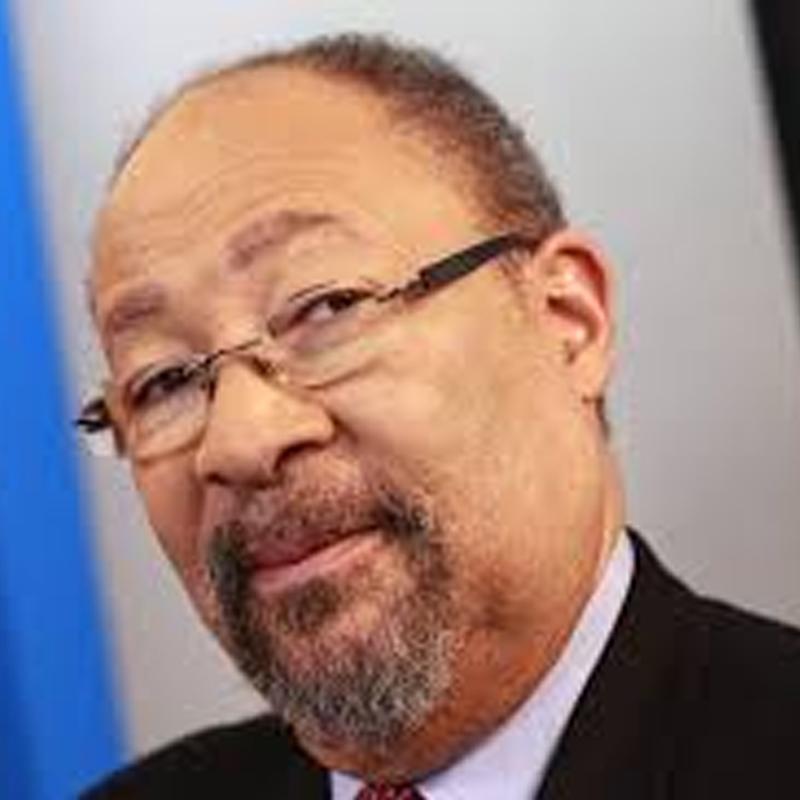
This is evident from the fact that chairman and CEO of Time Warner,Richard Parson, sees India as a priority international market after Europe for his organisation.
At a time when Asia’s biggest market China has stringent media regulations making it difficult for non-Chinese companies to operate there, liberal India is the next haven for Western business houses.

“Time Warner in the US is such a large player. Where are we going to get growth from?” Parson was quoted by worldscreen.com as saying at an interaction with journalists at Mipcom in France on Wednesday.
According to Parson, “The first place we are going to look at is Europe. They are developed economies, established platforms, and there’s an orientation towards Western content. We are focused on Europe and the emerging markets of India and China, in that order.”
Though media has speculated on investments in India by Time Warner, but the company has preferred to keep a low profile.
At present, Time Warner’s biggest exposure to India is through a 26:74 joint venture with Zee Telefilms, called Zee Turner Ltd, for distribution of TV channels in India.
With over 30 channels in its bouquet, in certain markets within India Zee Turner has beaten Star and Discovery-Sony TV One Alliance in terms of subscription.
Zee Turner is targeting a turnover of Rs 4 billion by March 2007, signifying a revenue growth of 30-35 per cent compared to last financial year.
Through some of its group companies – Turner’s three satellite TV channels CNN, Cartoon Network and Pogo, Warner Bros. Movies based in Mumbai, Zee Turner and also a small outfit of AOL in Bangalore – Time Warner has an
adequate presence in India.
But it would be nowhere near as lucrative or penetrative as competitor Rupert Murdoch’s Star.
In 2004 when Parson came on a flying visit to India, he did indicate at a party thrown for India’s business elites that Time Warner would like to set up a business process outsourcing unit (reason not known) here also.
Presently, Time Warner is slightly worried over the fate of a court mandated ban on airing ‘A’ certified movies by movie channels in the Mumbai market.
The ban affects Indian and foreign film channels, including HBO in which Time Warner has interest.
Meanwhile, speaking at length about his company’s plans in Europe at Mipcom, Parson did not rule out a cable acquisition in Europe.
“We all believe cable is the winner over time,” Parsons was quoted in media reports as saying.
“We look at everything. It’s a big issue. Cable will win in the US but maybe not outside the US since the infrastructure is not there. We look, we evaluate on price, you never know,” he added.






News Broadcasting
News TV viewership jumps 33 per cent as West Asia war draws audiences
BARC Week 8 data shows news share rising to 8 per cent despite T20 World Cup
NEW DELHI: Even as individual television news channel ratings remain under a temporary pause, the genre itself is seeing a clear surge in audience attention.
According to the latest data from Broadcast Audience Research Council India, television news recorded a 33 per cent jump in genre share in Week 8 of 2026, covering February 28 to March 6.
The news genre accounted for 8 per cent of total television viewership during the week, up from 6 per cent the previous week. The spike in attention coincided with escalating geopolitical tensions involving the United States, Israel and Iran, which have kept global headlines firmly fixed on West Asia.
The rise is notable because it came at a time when cricket was dominating television screens. The high-stakes stages of the ICC Men’s T20 World Cup, including the Super 8 fixtures and semi-finals, were being broadcast during the same period.
Despite the cricket frenzy, viewers appeared to be toggling between sport and global affairs, boosting the overall share of news programming.
The surge in genre share comes even as the government has enforced a one-month pause on publishing ratings for individual news channels. The move followed regulatory scrutiny of the television ratings ecosystem.
While channel-level rankings remain temporarily out of sight, the genre-level data suggests that when global tensions escalate, audiences continue to turn to television news for real-time updates.







