News Broadcasting
After edtech & fintech, now is time for media-tech: Anuj Gandhi at VBS 2022

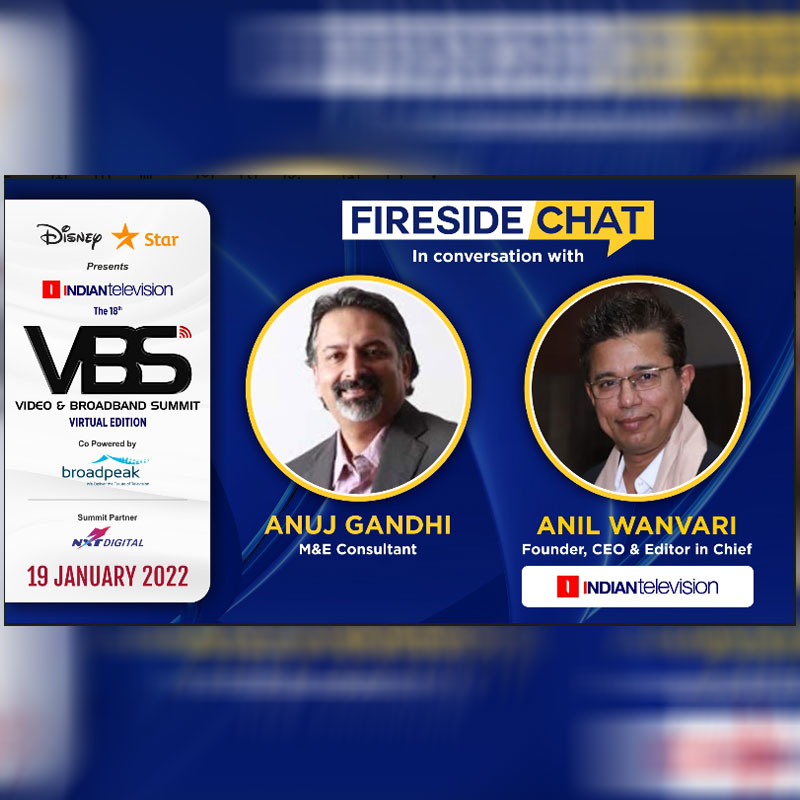
Mumbai: After the edtech and fintech, it’s time for India to now witness the rise of media-tech, said M&E consultant and industry veteran Anuj Gandhi while decoding the post-pandemic future of the industry at the 18th edition of the Video & Broadband Summit 2022 (VBS) organised by Indiantelevision.com on Wednesday.
The day-long virtual summit was co-powered by broadpeak, with Disney Star as the presenting partner, and NxtDigital as the summit partner.
In a fireside chat with Indiantelevision.com founder CEO and editor-in-chief Anil Wanvari, the media distribution veteran discussed the six major trends which, according to him, will determine the course of the media and entertainment industry over the next couple of years.

Video Trends: Unlike the days of DD and bundled offerings, the modern consumer wants more freedom to choose. With the burgeoning delivery platforms, it’s no longer that case where everyone has to be on PayTV. Moreover, in the present scenario where people are spending hours on social media, even Instagram Reels are ‘content’. Clearly, going forward, the definition of video, as well as trends in the space, will depend on the demand-supply equation. The rise of Free Dish and OTTs during the pandemic is a classic example, and even as their growth accelerates, PayTV will also continue to exist in some form or the other.
Broadband Growth: Broadband has evolved into becoming a utility today; it is no longer limited to video. Considering the amount of consumption that’s happening over work-from-home, education, and other services, video is just a small fraction of it. The Trai’s figure for wired broadband that was stagnant at around 10-12 mn for many years, suddenly shot up to 25 mn, and this does not even include the huge undeclared market run by cable companies. The hybrid ecosystem fostered by the pandemic will continue to push this number further in the coming days.
The fate of linear TV: It is a cause for worry and excitement at the same time. Both in India and globally there’s no denying the trend of people consuming less pay/linear TV as a result of the availability of alternatives as well as the failure of linear TV to innovate in terms of content. The Free Dish market has largely been insulated so far, but it will also experience disruption in the near future as broadband penetration in the hinterland grows.
B2C focus and consolidation: The changes that were effected and necessitated by the growth in digital, especially in the last decade or so, have shifted the focus of the entire M&E industry from B2B to B2C. As the ecosystem opens up more and more to consumers directly, the need for consolidation will also increase, whether it is to meet the entertainment demands of viewers or to simplify content discovery for them.
Rise of FAST: The popularity of Free Ad-Supported TV (FAST) services in the US and Europe, clearly shows that the west is moving towards AVOD. In the case of Asian markets including India, even though SVOD is picking up, the growth of Free Dish, YouTube, and OTT players like MX, is a strong indication of the potential for FAST.
Crumbling walls: Changes in windowing norms that existed thus far will have a far-reaching impact on pricing, quality, and consumption of content as well as the actual segmentation of consumers in a multi-screen environment.
The former group CEO of IndiaCast Media Distribution, who was also instrumental in setting up IndiaCast in March 2012 said he is hopeful about a future where all forms of video delivery – Free Dish, PayTV, VOD -will coexist. However, considering the current regulatory environment, competition, and the pace at which viewers are evolving, he recommended that the industry players must adopt an approach that gives more freedom and power to consumers rather than trying to resist the inevitable change in order to survive in the long run.




News Broadcasting
CNN-News18 to host Fury in the Gulf conclave on West Asia crisis
Three-hour summit to unpack geopolitical fallout and impact on India
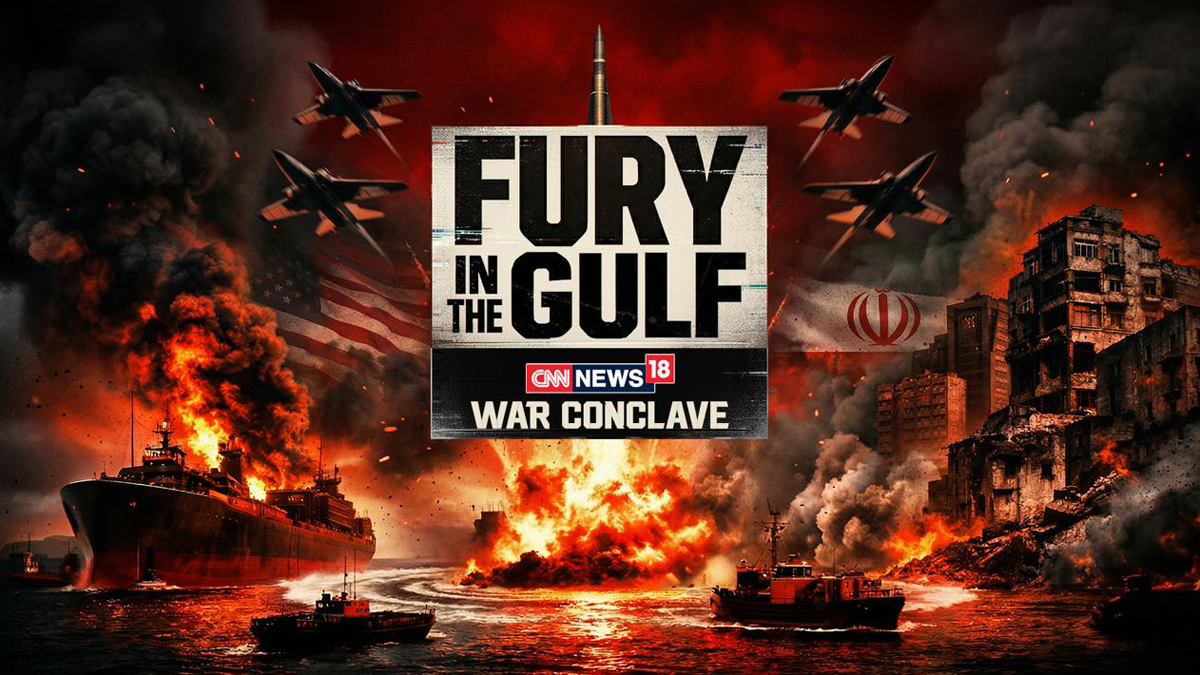
MUMBAI: CNN-News18 is set to host a special three-hour broadcast, Fury in the Gulf – War Conclave, on April 7, aiming to decode the escalating West Asia crisis and its far-reaching implications for India.
Scheduled from 4:00 PM to 7:00 PM, the conclave comes at a time when tensions between Iran and the United States are reshaping global geopolitics and triggering economic uncertainty. With India’s deep energy ties, trade links and large diaspora in the Gulf, the developments carry significant domestic relevance.
Built around the theme ‘Conflict, Consequences, and The Future,’ the programme will feature six curated sessions combining one-on-one interviews and panel discussions. The focus is to cut through the clutter and offer viewers a clearer understanding of the fast-evolving situation.
Key sessions include ‘Diplomacy in Times of War’ featuring Shashi Tharoor, and ‘World After the Iran Conflict’ with voices such as Ram Madhav, Reuven Azar, representatives from the European Union and the Iranian Deputy Envoy. Another session titled ‘Another Dunkirk?’ will bring together K. J. S. Dhillon and Jitin Prasada among others.
CNN-News18 editorial affairs director Rahul Shivshankar said, “In times of war, clarity becomes the most powerful tool. Fury in the Gulf – War Conclave brings together credible voices to address the questions and confusion that arise amid an overwhelming influx of information.”
He added that the initiative is aimed at delivering “facts, perspective, and insight” at a time when misinformation can easily cloud public understanding.
Echoing the sentiment, CNN-News18 CEO– English and business news Smriti Mehra said the conflict marks a defining global moment, with consequences that extend well beyond the region. She noted that the conclave seeks to present the crisis with “depth, nuance and responsibility” so audiences can better grasp its real-world impact.
As geopolitical tensions continue to dominate headlines, the conclave positions itself as an attempt to bring order to the noise, offering viewers a structured, insight-led look at a complex and rapidly shifting global situation.






