News Broadcasting
Advertorial edges out editorial: State intervention crucial in public interest, says Veep

NEW DELHI: Vice President M Hamid Ansari has stressed the need for a responsible press in an open society to hold power to account.
This is why freedom of press under Article 19 (1)(A) of the Constitution, is subject only to reasonable restrictions in the interest of the sovereignty and integrity of India, the security of the state, public order, decency, contempt of court, defamation and incitement to an offence.
The Supreme Court has held that ‘freedom of speech and of the press is the Ark of the Covenant of Democracy’ because public criticism is essential to the working of its institutions.

He was addressing an event to launch the commemorative edition of National Herald, in Bengaluru, Karnataka today. Karnataka Governor Vajubhai Rudabhai Vala, Chief Minister K Siddaramaiah, Congress Vice President Rahul Gandhi and other dignitaries were present on the occasion.
The Vice President said the history of journalism in India is closely linked to the history of our freedom struggle. The Press played an important role in educating, convincing and mobilizing people, he added.
The Vice President said that Jawaharlal Nehru – who conceived National Herald – envisioned a free, unfettered and honest press and he watched over the interests of media persons in independent India. The Working Journalists Act, which tried to give a degree of protection to journalists, to ensure freedom of press, was largely his doing, he added.
Ansari said in this age of ‘post-truths’, and ‘alternative facts’, where ‘advertorials’ and ‘response features’ edge-out editorials, there was need to recall Nehru’s vision of the press playing its role of a watchdog in democracy and looking at the ethos and principles that powered his journalism.
He added that while the Constitutional framework provides for required intervention by the State to ensure smooth working of the press and the society, it provides that such intervention should only be in the interest of the public at large.
Referring to the role of the media in the freedom movement, he said the Press emerged as a tool for national awakening. It became a medium of nationalist political participation for the masses. The Press was a medium for propagation of modern ideas of democracy, freedom and equality. The English Press emerged as a medium of communication between nationalists across the country and played a role in welding India into a single nation and in giving the Indians a sense of national identity. This was crucial in mobilising the masses for various nationalist and social causes.
A free media is not only beneficial but necessary in a free society. If press freedom is attacked, it will result in the jeopardising of citizen’s rights. When faced with unjust restrictions and the threat of attack, self-censorship in the media can have the opposite effect, aiding the covering up of abuses and fostering frustration in marginalized communities.


News Broadcasting
CNN-News18 to host Fury in the Gulf conclave on West Asia crisis
Three-hour summit to unpack geopolitical fallout and impact on India
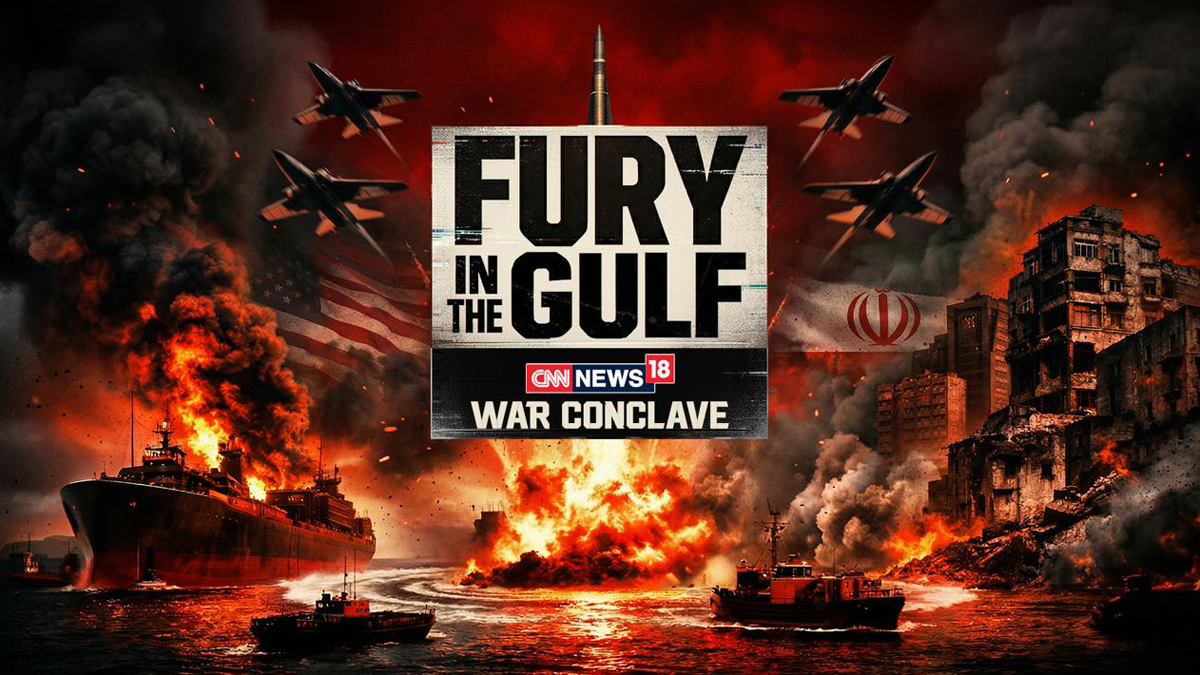
MUMBAI: CNN-News18 is set to host a special three-hour broadcast, Fury in the Gulf – War Conclave, on April 7, aiming to decode the escalating West Asia crisis and its far-reaching implications for India.
Scheduled from 4:00 PM to 7:00 PM, the conclave comes at a time when tensions between Iran and the United States are reshaping global geopolitics and triggering economic uncertainty. With India’s deep energy ties, trade links and large diaspora in the Gulf, the developments carry significant domestic relevance.
Built around the theme ‘Conflict, Consequences, and The Future,’ the programme will feature six curated sessions combining one-on-one interviews and panel discussions. The focus is to cut through the clutter and offer viewers a clearer understanding of the fast-evolving situation.
Key sessions include ‘Diplomacy in Times of War’ featuring Shashi Tharoor, and ‘World After the Iran Conflict’ with voices such as Ram Madhav, Reuven Azar, representatives from the European Union and the Iranian Deputy Envoy. Another session titled ‘Another Dunkirk?’ will bring together K. J. S. Dhillon and Jitin Prasada among others.
CNN-News18 editorial affairs director Rahul Shivshankar said, “In times of war, clarity becomes the most powerful tool. Fury in the Gulf – War Conclave brings together credible voices to address the questions and confusion that arise amid an overwhelming influx of information.”
He added that the initiative is aimed at delivering “facts, perspective, and insight” at a time when misinformation can easily cloud public understanding.
Echoing the sentiment, CNN-News18 CEO– English and business news Smriti Mehra said the conflict marks a defining global moment, with consequences that extend well beyond the region. She noted that the conclave seeks to present the crisis with “depth, nuance and responsibility” so audiences can better grasp its real-world impact.
As geopolitical tensions continue to dominate headlines, the conclave positions itself as an attempt to bring order to the noise, offering viewers a structured, insight-led look at a complex and rapidly shifting global situation.






