Budget
Advertising agencies keenly await Budget 2014

MUMBAI: Thanks to elections, the year started with a bang for the media and entertainment (M&E) industry.
The political parties didn’t hesitate to spend on the various mediums – print, TV, digital, OOH – to woo the voters. Various studies by media agencies also estimated that advertising by political parties will boost the AdEx by up to +2.5 per cent.
This apart, the year is estimated to be good for the industry. With ad spends of most FMCG companies on the rise to ride on the back of higher disposable income due to election spending and recent RBI policies leading to a more favourable business environment, the industry is hoping for healthy year even with various issues (digitisation, ad cap, service tax, FDI etc) gripping it.

Indiantelevision.com spoke to various advertising agencies heads to know what they are expecting from the budget.
 |
Dentsu Aegis Network chairman & CEO South Asia Ashish Bhasin
Service tax should be rationalised, the surcharge on it should be removed and also the quantum of it should be reduced a bit. It can be noted that the process and procedure of collecting service tax is cumbersome. What we as an industry want is transparency in this process. I am also keen to watch some FDI in media in the coming days.
Perfect Relations founding partner Dilip Cherian
 |
Undoubtedly, there are high expectations from the Budget and it remains to be seen how Finance Minister Arun Jaitley goes about restoring growth while reining in the deficit. We need something that in the next six months will start generating revenue for the long run. A push in the infrastructure sector is vital because that will help growth of the core sectors — steel, cement, construction etc and create jobs. I would like to see Jaitley spell out his plans for this vital sector, which will also have a long lasting impact on the economy. The introduction of the goods and services tax (GST) has been delayed for far too long. Though this is a point of contention between the Centre and the states, I would be happy to see some positive movement on this front.
FCB Ulka Group chairman Nagesh Alai
 |
The days of seeking specific tax sops or concessions are really over, more so when over the years a fair amount of tax rationalisation has already happened. How do you expect the government to run the country? However I do expect the government to stick to its promise of withdrawing the one time surcharge of 10 per cent which was imposed for the FY 2013-14, but there has been no notice of that withdrawal yet. Secondly, the authorities should also honour their commitment of timely refunds to assesses rather than putting counter pressures in the months running up to March every year by arbitrary add-backs and demands, which is just a ruse to keep refunds on hold. In the interest of avoiding short termism and addressing the macro-economic issues effectively so that the fiscal and revenue deficits can be plugged, we should seriously consider having a fixed budget for say three or five years. This will bring about a stability of tax regime and also help all constituents plan better, including the government. The annual budget exercise has perhaps become a lobbying exercise for political and power brokers. Lastly, agriculture income should be brought into the tax net. It is an anachronism – and is perpetuated for the benefit of the few rich politically powerful people.
Madison World chairman and MD Sam Balsara
 |
I don’t think my expectations from the budget are unique or different from what the nation expects. I expect the budget to do more than its bit to grow the economy which is the major need of the hour. Whatever is required to give a shot in the arm to the economy, the budget must do. This year’s budget is going to be specially important because it is the first budget that the BJP will present after its landslide victory and all Indians, as well as global businesses are going to evaluate it and form an impression about the future of India. The Finance Minister is keenly aware of this and being an intelligent and practical man, I am sure he will not miss this opportunity, nor will he try to pull wool over our eyes. Whatever it takes to spearhead growth, he should do, be it GST, divestment, roping in more tax payers especially at the top end or abolishing retrospective tax loss, etc. What is good for the economy is good for the advertising industry.
Global Advertisers MD Sanjeev Gupta
 |
After achieving a historic victory in General Elections 2014, we have high expectations from the newly-elected Modi-led government. From an outdoor advertising industry perspective, we believe that our growth is the reflection of development in our country. Better infrastructure, improved road connectivity, advance transport mediums, enhanced public spaces give us opportunities to connect with end consumer. India is likely to emerge as the world’s largest middle class consumer market with aggregated consumer spends of $ 13 trillion by 2030. With increasing population and their demand, it has become essential for MNCs / SMEs to be visible on different advertising mediums to promote their services / products. Therefore, outdoor advertising industry needs government support to grow in the future. We would like the center government to focus on creating new opportunities for us, allow FDIs, develop transparent policies and reforms, and address tax issues and licensing procedure of public structures. We wish to see changing India, growing India.







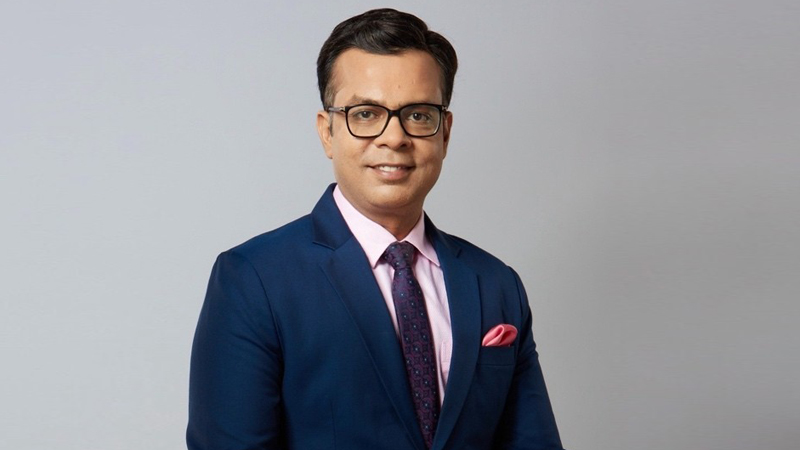
MUMBAI: Anuj Singhal, managing editor at CNBC- AWAAZ and CNBC BAJAR, operates at the sharp end of India’s business news ecosystem. With over two decades in business journalism, he has earned credibility for decoding policy, markets and macro trends for millions of Hindi-speaking investors. Equal parts newsroom leader and market analyst, he shapes editorial direction while anchoring flagship shows that break down the economy, politics and corporate India in real time.
Known for cutting through jargon and hype, Singhal blends data, discipline and clarity — a mix that has made him one of the most trusted voices in Hindi business news.
In this interaction, he discusses the Union Budget, trade deals, newsroom strategy and what truly moves markets and ratings.
• What was the single most market-moving announcement in this Budget, and why?
The most market-moving element was the clear commitment to fiscal consolidation without compromising capex. The glide path on fiscal deficit reassured bond markets and foreign investors, while sustained public investment kept growth expectations intact. That balance removed a big overhang for both equities and debt.
• Do you see this Budget as growth-oriented, fiscally cautious, or politically calibrated?
This Budget is growth-led but fiscally disciplined. It avoids overt populism, stays within macro guardrails, and prioritises medium-term competitiveness over short-term optics. Politically, it is restrained; economically, it is deliberate. The message is clear: stability over spectacle.
• How is CNBC-AWAAZ programming different, especially in decoding trade deal impact?
CNBC-AWAAZ goes beyond headline reaction. We translate policy into portfolio impact — sector by sector, stock by stock.
On trade agreements, our focus is on:
-Earnings visibility
-Export competitiveness
-Currency implications
-Margin sustainability
We don’t treat trade deals as political milestones. We decode them as profit-and-loss events for corporate India and map them to FY earnings trajectories.
• Which sectors look like clear winners and laggards over the next 12–18 months?
The next 12–18 months favour sectors aligned with structural spending and supply-side strengthening.
– Clear beneficiaries:
Capital goods and infrastructure
Manufacturing linked to export chains and PLI ecosystems
Power, defence, and logistics
– Relative laggards:
Consumption segments dependent on immediate demand revival
Businesses facing margin pressure from global volatility or pricing power erosion
This is not a momentum-driven market environment. It is execution-driven. Balance-sheet strength and order visibility will matter more than narrative.
• One headline to sum up this Budget 2026 for India Inc?
“Steady Hands, Long-Term Vision: A Budget That Rewards Discipline Over Drama”.
• What editorial filters do you apply before calling something ‘market-positive’ or ‘negative’?
We apply three structured filters:
– First: Earnings translation — does this materially change earnings visibility or cash flow outlook?
– Second: Time horizon — is the impact immediate, cyclical, or structural?
– Third: Valuation context — good news priced in or not.
If a policy doesn’t move earnings or risk perception, we don’t oversell it.
• How has business news consumption changed around big policy events?**
There has been a clear behavioural shift. They’re less interested in what was said, more in what it means for their money. There’s also a clear shift toward second-screen consumption, with digital platforms complementing live TV. The audience seeks sharper accountability. Viewers no longer accept broad optimism or pessimism — they want frameworks, numbers, and sector mapping.
• CNBC-AWAAZ decisively outperformed on Budget Day. What editorial and distribution choices mattered most?
Three deliberate strategic choices:
– Preparation depth:
We build scenarios months in advance — deficit ranges, sectoral incentives, tax calibrations — so we’re ready with analysis the moment numbers are announced.
– Language of impact:
We translate macro policy into investor-friendly Hindi without diluting complexity. That bridges accessibility and sophistication.
– Integrated distribution:
Television, YouTube, and digital platforms operate as one editorial grid, not parallel silos. This ensures continuity of narrative.We stayed analytical while others stayed reactive.
• How different is your YouTube audience from your TV audience?
The behavioural differences are subtle but important. TV audiences prioritise authority, structured debate, and context. YouTube audiences want speed, clarity, and actionable insights — often sharper, sometimes more opinionated. However, both share one expectation: accuracy. The format evolves; the trust benchmark does not.
• How do you retain viewers after the budget speech ends?
By shifting from announcements to implications.Retention comes from shifting the narrative from announcement to implication. We break down sectoral breakouts, stock-level impact, and what to do next. The speech is just the trigger; analysis is the destination.
• Is Budget Day your biggest traffic day?
It is one of the biggest — but more importantly, it is among the deepest in engagement. Viewers spend longer durations, revisit segments, and seek follow-up programming. That indicates behavioural trust, not just traffic.
• What’s the first thing you personally track on Budget Day — the speech or the markets?
The markets. They’re the fastest truth-teller. The speech explains intent; markets reveal interpretation.
• Your personal Budget-day ritual?
Early morning prep, minimal distractions, and once the speech begins, complete immersion. For me, Budget Day is less about reaction and more about reading between the lines.
• What drove your Budget-day ratings dominance, and how are Budget and trade deals shaping markets now?
Our dominance came from credibility, consistency, and clarity.
As for markets, both the Budget and recent trade deals are reinforcing a narrative of policy stability and global integration, which supports valuations even amid global volatility.
For Singhal, the market is the final judge. Policies can promise and speeches can persuade, but prices reveal what investors truly believe. As India’s investor class grows more informed and more demanding, business journalism is shifting from commentary to calibration. The premium is on clarity, context and credibility. In a landscape flooded with noise, the real edge lies in interpretation. In the end, the markets listen to numbers, not narratives , and Singhal’s craft is helping viewers tell the difference.







