News Headline
Advertisement on regional channels grew by 13 per cent in 2019

MUMBAI: Regional channels are witnessing an astounding growth rate in recent times. In 2019, regional channels received 13 per cent more advertising compared to national channels. As per the recently-released FICCI-EY report 2019, regional channels saw 615 hours of advertisement per year whereas national channels witnessed 542 hours of advertisement during the same period. The ad volumes on regional channels grew by four per cent while national channels saw six per cent fall.
Consumption of regional content grew across all media. It comprised over 50 per cent of television viewership, 44 per cent of films released in theatres, 43 per cent of newspaper circulation and around 30 per cent of OTT consumption.
Ad volume share of regional GECs increased in most cases because of better content, formatted shows and new products that entered the market. In 2019, Bengali GECs' ad volume grew to four per cent from two per cent in 2018. The ad volume of Malayalam GEC also grew to three per cent in 2019 from two per cent in 2018.

The New Tariff Order (NTO) implemented in February 2019 increased end-customer prices for television content, reduced the reach of certain genres of channels and resulted in a 6 per cent reduction in time spent watching television during the second half of calendar 2019. But it was a big gain for the regional channels as it benefited regional languages like Urdu, Punjabi, Bhojpuri, Marathi and Gujarati whose consumption increased over 20 per cent.
Channel genres most positively impacted by the NTO included DTH home channels (+16 per cent), Bhojpuri movies (+60 per cent), Kannada movies (+58 per cent), Punjabi music (+33 per cent) and sports (+26 per cent).
Hindi and Tamil, the two largest languages by viewership, saw a fall in their total minutes of viewing. In 2019, the Hindi language witnessed a fall of eight per cent in total minutes of viewing and Tamil saw a fall of 10 per cent. English and dubbed Hindi were amongst the most impacted with a fall of over 20 per cent in total minutes of viewing. But several regional languages like Punjabi witnessed a growth of 48 per cent in total minutes of viewing, Marathi’s total viewing minutes grew by 28 per cent, Bhojpuri saw a growth of 34 per cent while Gujarati gained 12 per cent in total minutes of viewing.
According to the FICCI report, it is expected that the trend of consuming content in regional languages will keep growing over the next few years, particularly on digital media as growth in internet users continue to be led by non-metro audiences.
The report also estimates that viewership of regional language channels will continue to grow and reach 55 per cent of total viewership in India as their content quality improves further.
Even global media companies are investing in the Indian regional content through co-producing, distributing or marketing. The report says: “India’s many regional and local language markets offer exciting growth fundamentals for global and domestic media companies alike. However, to succeed in these regional markets, customisation is critical. Global media companies recognise this imperative and many are already producing their programming in multiple Indian languages to increase reach.”
It further says, “Along with localising content, international streaming service providers are also exploring various pricing options for price-sensitive consumers. Foreign studios are collaborating with Indian companies to co-produce, distribute and market content geared to appeal to distinct Indian audiences. They are releasing trailers in a variety of languages, hiring Bollywood stars to dub local versions as well as to promote content on social media. We expect localisation and the focus on regional markets to be a significant priority for global media companies in the coming years.”






NEW DELHI: Hamdard Laboratories gathered a cross-section of India’s achievers in New Delhi on Friday, handing out the Hakeem Abdul Hameed Excellence Awards to figures who have left their mark across healthcare, education, sport, public service and the arts.
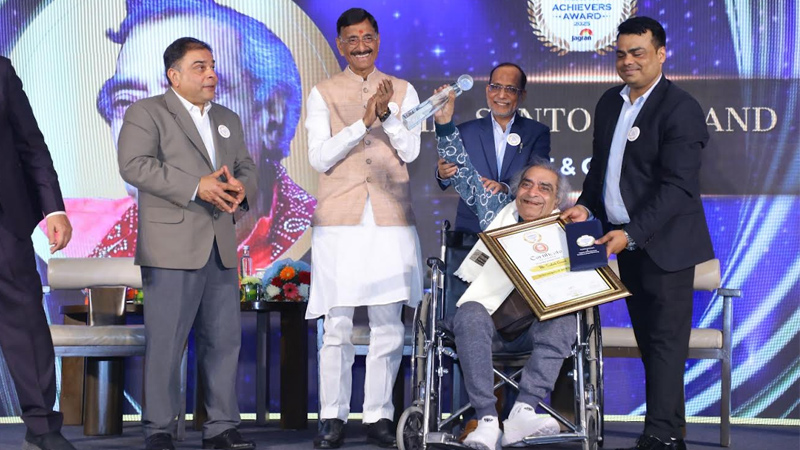
The ceremony, attended by minister of state for defence Sanjay Seth and senior officials from the ministry of Ayush, celebrated individuals whose work blends professional success with a sense of public purpose. It was as much a roll call of achievement as it was a reminder that influence is not measured only in profits or podiums, but in people reached and lives improved.
Among the headline awardees was Alakh Pandey, founder and chief executive of PhysicsWallah, recognised for turning affordable digital learning into a mass movement. On the sporting front, Arjuna Awardee and kabaddi player Sakshi Puniya was honoured for her contribution to the game and for pushing women’s participation onto bigger stages.
The cultural spotlight fell on veteran lyricist and poet Santosh Anand, whose songs have echoed across generations of Hindi cinema. At 97, Anand accepted the honour with characteristic humility, reflecting on a life shaped by perseverance and hope.
Healthcare honours spanned both modern and traditional systems. Manoj N. Nesari was recognised for strengthening Ayurveda’s place in national and global health frameworks. Padma shri Mohammed Abdul Waheed was honoured for his research-backed work in Unani medicine, while padma shri Mohsin Wali received recognition for his long-standing contribution to patient-centred care.
Education and social development also featured prominently. Padma shri Zahir Ishaq Kazi was honoured for decades of work in education, while former Meghalaya superintendent of Police T. C. Chacko was recognised for public service. Goonj founder Anshu Gupta received an award for his dignity-centred rural development initiatives, and the Hunar Shakti Foundation was honoured for empowering women and young girls through skill development.
The Lifetime Achievement Award went to former IAS officer Shailaja Chandra for her long career in public healthcare and governance, particularly in the traditional systems under Ayush.
Speaking at the event, Hamdard chairman Abdul Majeed said the awards were a tribute to those who combine excellence with empathy. “These awardees reflect Hakeem Sahib’s belief that healthcare, education and public service must ultimately serve humanity,” he said.
Minister Seth struck a forward-looking note, saying India’s young population gives the country a unique opportunity to become a global destination for learning, health and wellness by 2047.
The ceremony also featured the trailer launch of Unani Ki Kahaani, an upcoming documentary starring actor Jim Sarbh, set to premiere on Discovery on 11 February.
Instituted in memory of Unani scholar and educationist Hakeem Abdul Hameed, the awards have grown into a national platform that celebrates those building a more inclusive and resilient India. For one evening at least, the spotlight was not just on success, but on service with substance.








