Applications
AdSocial.ai bets on personalisation to turn relevance into real results

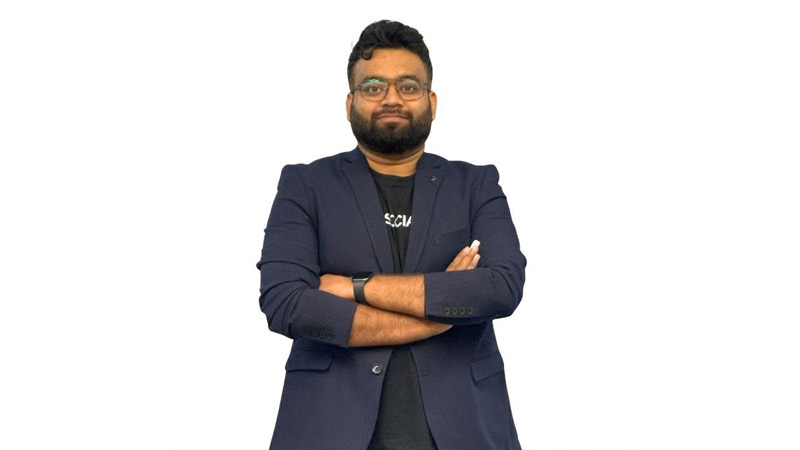
MUMBAI: In an era where generic digital experiences are fast losing relevance, AdSocial.ai is positioning itself at the centre of the personalisation-first shift reshaping modern marketing. As brands grapple with increasingly diverse audiences, fragmented journeys and rising performance pressure, the company is building what it calls an execution-first Personalisation OS, one that goes beyond recommendations to actively create, deploy and optimise experiences across ads, storefronts and communication channels. With production validation across more than 40 brands, Adsocial is now moving from experimentation to scale, focusing on making high-impact personalisation deployable in days rather than quarters.
Speaking to Indian Television Dot Com, Man Mohit, Co-Founder and CEO of Adsocial.ai, The conversation outlines why relevance has overtaken reach, how cultural localisation is becoming non-negotiable in markets like India, and why execution not intelligence is the biggest bottleneck brands face today. In this email interview, he breaks down Adsocial’s agentic mesh architecture, its approach to AI safety and data security, and how real-time, data-informed experience creation is helping enterprises drive measurable gains in engagement, conversion and operational efficiency. Read more as Adsocial.ai, co-founder and CEO Man Mohit speaks to Indian Television Dot Com.
Onwhy personalisation is critical to modern websites and its impact on engagement and conversions.

Personalisation is critical because the baseline of digital experience has shifted, just as 30-minute delivery gave way to 10-minute expectations, generic storefront experiences now feel outdated. With deeper internet penetration and a surge of brands, businesses serve diverse users with different intents, trust levels, and decision triggers on the same storefront.
A single, static experience no longer works. Personalisation adapts product discovery, messaging, and triggers to each user’s context, reducing friction and cognitive load. When users see relevant products and cues, engagement rises immediately, leading to higher conversion rates and stronger retention.
On how Adsocial helps brands culturally localise campaigns and why relevance now matters more than scale.
Adsocial has delivered measurable impact by enabling brands to culturally localise campaigns at scale, driving higher CTRs, stronger engagement, and conversion uplift across regions. In a diverse market like India, localisation is not optional, it is core to personalisation. A customer from Kerala and one from Rajasthan respond to different visuals, languages, and cultural cues.
Adsocial adapts creatives, imagery, and messaging based on regional context, making ads feel familiar rather than generic. This cultural relevance builds trust faster, reduces friction, and improves purchase intent. As audiences become more aware and choice expands, relevance, not reach, has become the biggest driver of performance for Adsocial.ai.
About the strategic and operational benefits Adsocial delivers beyond driving higher conversion rates.
Strategically, Adsocial runs on a feedback-learning loop. Every change in the user lifecycle, how users respond to experience, messages, and journeys, feeds back into the system, continuously refining future decisions. This turns personalisation from one-time optimization into a self-improving capability.
Operationally, Adsocial goes beyond decisioning. It creates collections, assets, messages, and links, and automatically configures them across channels to deliver a consistent personalised experience. As a result, brands can scale personalisation without scaling teams, reducing execution overhead while increasing speed, consistency, and impact across the entire platform.
On key successes from the production validation phase and priorities while scaling the platform.
First, with one of India’s leading retail e-commerce players, we validated Adsocial in a low-risk, component-level rollout rather than full-site personalisation. This built internal confidence while avoiding business disruption and resulted in a 1.7× revenue uplift on the personalised components. In parallel, across 40+ brands, we deployed 1:1 personalised WhatsApp communication mapped to individual consumer journeys, driving 2× to 6× performance improvement.
The key learning was that personalisation has two layers: intelligence and execution. While intelligence compounds over time, execution is the immediate bottleneck for brands. As we scale, we are prioritising execution-first adoption for faster value, while simultaneously deepening the intelligence layer in the background.
About the core advantages of Adsocial’s agentic mesh architecture for integrated platforms and ecosystems.
The core benefit of Adsocial’s agentic mesh architecture is that it fits into existing platforms and ecosystems without forcing disruption, while continuously improving outcomes.
At the platform level, Adsocial.ai deploys multiple specialised agents, each responsible for decisioning, creative generation, execution, and learning, working in parallel rather than as a monolithic system. This allows Adsocial to integrate cleanly with Data warehouse, commerce platforms, ad channels, and messaging tools, without replacing them.
For ecosystems, this architecture enables continuous feedback flow. Signals from user interactions, creatives, and journeys are shared across agents, improving decisions everywhere the brand operates. The result is faster iteration, lower integration risk, and a system that scales intelligence and execution together, without adding operational complexity for partner platforms or internal teams.
On what fundamentally differentiates Adsocial from other AI-driven marketing solutions.
In a crowded AI marketing landscape, Adsocial.ai is fundamentally differentiated by where it applies intelligence and what it controls.
Most AI marketing tools optimise within a single function, copy, images, bidding, or campaigns, working in silos. Adsocial operates at the experience layer, unifying decision-making and execution across ads, storefronts, and communications.
Adsocial doesn’t just recommend actions; it creates and configures assets, collections, visuals, messages, and links, and deploys them across channels. Every user interaction feeds back into a learning loop, improving future decisions across the entire journey.
In short, Adsocial is not a feature-level AI tool. It is a personalisation OS that compounds intelligence over time while removing the operational burden of scaling personalised experiences.
About the safeguards ensuring data security, AI safety and transparent decision-making within Adsocial.
The platform offers two modes of operation to meet different enterprise security needs.
In its Software-as-a-Service (SaaS) offering, the platform is built on a secure, tenant-isolated architecture with enterprise-grade identity and access controls using OAuth2 and OpenID Connect. Each customer operates within a dedicated, sandboxed data environment with fine-grained access controls. AI agents run under strict access control and policy-constrained reasoning, ensuring safe, predictable outcomes and preventing misuse. Deterministic replay provides full transparency and auditability of AI-driven actions.
For highly regulated industries, including finance and banking, the platform is also offered as an Infrastructure-as-a-Service (IaaS) deployment. In this model, the entire operating system is deployed within the customer’s own infrastructure, ensuring all data remains on-premise and under the organization’s direct control.
On Adsocial’s next phase of growth and the types of brands or partners it aims to work with.
The next phase of growth for Adsocial.ai is focused on full-scale enterprise deployments within commerce categories. The goal is to make personalised experiences deployable in days, not quarters, without requiring brands to scale their teams.
We are scaling Adsocial as an execution-first Personalisation OS, deepening integrations across ads, storefronts, and messaging channels while simultaneously strengthening the intelligence layer through continuous feedback learning. This allows enterprises to operationalise personalisation quickly, prove impact early, and compound intelligence over time, turning personalisation from a slow, resource-heavy initiative into a repeatable, scalable system.
About why reaching production validation with over 40 brands is a critical milestone for Adsocial.
Reaching production validation with 40+ brands is a significant milestone because it confirms that Adsocial.ai solves a real, repeatable problem at scale, not just in pilots.
Any successful product must clear a few core pillars: it must deliver clear value, that value must be quantifiable, the impact must be large enough to matter, the cost of execution must be justified, and the market opportunity must be meaningful. Adsocial has validated all of these in real production environments, across different brands and use cases.
This level of adoption signals early product–market fit, brands are not just testing the idea, they are deploying it because it moves core metrics. The focus now shifts from validation to full-scale productisation, making the system more robust, repeatable, and enterprise-ready.
On how real-time data–informed content creation through Adsocial AI improves efficiency and agility.
It’s important for Adsocial.ai to enable experience creation informed by real-time data because modern marketing is no longer about producing isolated content, it’s about stitching a coherent experience across platforms.
Adsocial uses real-time signals to decide which collections to surface, which banners and placements to activate, and how offers and bundles should evolve within and across sessions. If a user shows intent during a session, the system can carry that context forward and execute a more relevant experience the next time they return, dramatically improving conversion likelihood.
For businesses, doing this manually, extracting user-level intelligence and orchestrating experiences in real time, is practically impossible. Adsocial automates this loop, unlocking significant marketing uplift while improving operational efficiency and agility without increasing team complexity.

Applications
With 57 per cent single new users, Ashley Madison rebrands as discreet dating platform
Platform says majority of new members now identify as single

INDIA: Ashley Madison is shedding the “married-dating” label that defined it for two decades, repositioning itself as a platform for discreet dating in what it calls the post-social media age.
The rebrand, unveiled in India on 27 February, 2026, marks a structural shift in business model and identity. Once synonymous with married dating, the company now describes itself as the “premier destination for discreet dating” under a new tagline: Where Desire Meets Discretion.
The pivot is data-driven. Internal figures show that 57 per cent of global sign-ups between 1 January and 31 December, 2025 identified as single: a notable departure from the platform’s married core. The company argues that its community has already evolved beyond its original positioning.
“In an age where our lives have been constantly put on public display, privacy has become the new luxury,” said Ashley Madison chief strategy officer Paul Keable. He framed the platform’s offering as “ethical discretion” for singles, separated, divorced and non-monogamous users seeking private connections.
The shift also taps into wider digital fatigue. A global survey conducted by YouGov for Ashley Madison, covering 13,071 adults across Australia, Brazil, Canada, Germany, India, Italy, Mexico, Spain, Switzerland, the UK and the US, found mounting discomfort with hyper-public online lives.
Among dating app users, 30 per cent cited constant swiping and messaging as a source of fatigue, while 24 per cent pointed to pressure to curate public-facing profiles and early personal disclosure. Some 27 per cent said fears of screenshots or information being shared contributed to exhaustion; an equal share cited unwanted attention.
The retreat from oversharing appears broader. According to the survey, 46 per cent of adults actively try to keep most aspects of their life private online. Only 8 per cent feel comfortable sharing most aspects publicly, while 35 per cent say they are becoming more selective about what they disclose.
Ashley Madison is betting that this cultural recalibration towards controlled visibility can be monetised. By doubling down on privacy infrastructure and reframing itself around discretion rather than infidelity, the company is attempting to convert reputational baggage into a premium proposition.






