GECs
Adding an Islamic shade to the Colors’ canvas

MUMBAI: It was in the early nineties that a show like Gul Gulshan Gulfaam on Doordarshan captured the life of the Muslim community. It was probably for the first time in India that a show gave the masses at large an opportunity to take a sneak peek in to the life of the Islamic households in the country. Set in Kashmir, it was about the tribulations of the Kashmiris surviving on the business of houseboats in the Dal Lake.
Much later, at the end of the same decade, Heena and Shaheen, both of which aired on Sony Entertainment Television, captured the life Muslim women, their struggles and a lot more, giving the audience another chance to look at the life of a Muslim household closely. Around the same time, came Tanha – a show with the collaboration between India and Pakistan. It was not just set in a Muslim milieu but also became popular for its insightful portrayal of the community and the characters, not just in India and Pakistan but also in the entire subcontinent. Zaaraaired on Sahara One in 2006 was another show capturing the essence of the culture.
More recently, a serial on Star Plus – Sajda Tere Pyaar Mein that ran for few months in 2012 featured the life of a Muslim woman whose patriotic credentials were questioned; and Qubool Hai on Zee TV captures the contemporary Muslim household with the unfolding of an interesting love story. Interestingly, Qubool Hai has become one of the most popular shows in the Hindi GEC space. Its ratings are almost close to 5862TVTs (as per Tam ratings for week 49).

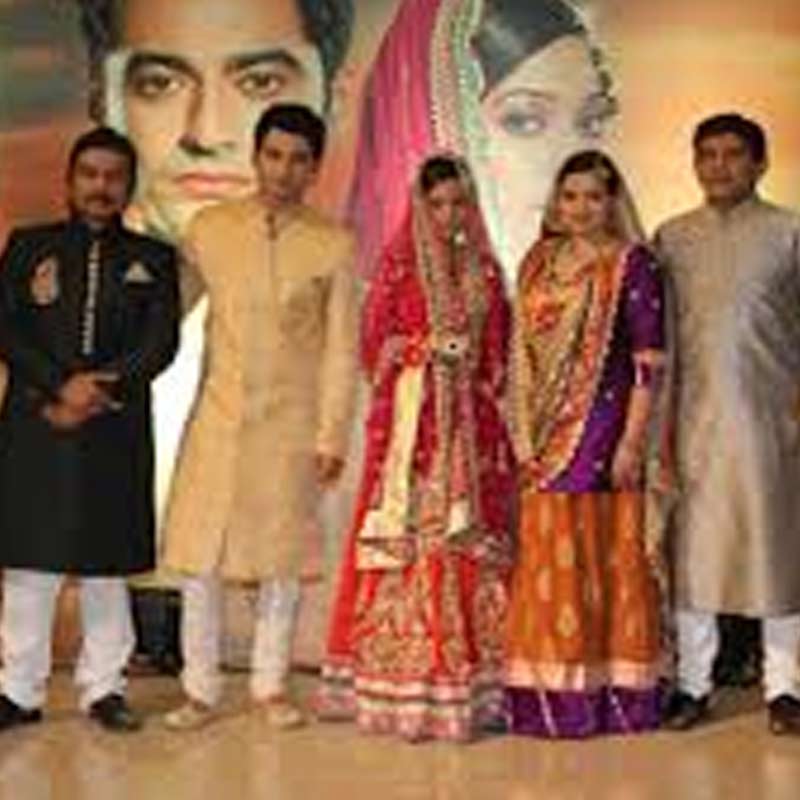
And when a concept has become so popular, it isn’t a surprise to see something very similar (as far as the set up is concerned) inspiring others. Close on the heels of Zee TV, now, Colors is set to air its new show Beintehaa – a first for the channel focusing on the pan-Muslim milieu with a story of two similar and headstrong individuals Aaliya and Zain, who are tied in a volatile relationship.
The show would be aired at the prime-time slot – 9 pm every Monday to Friday from 30 December. A replacement for Bigg Boss, the show is being promoted heavily across platforms as the channel is keeping its hopes high on this one. Colors weekday fiction head Prashant Bhatt says that the narrative style of the show and its backdrop is going to be its USP, which would not just pull the regular TV viewers but will also draw the younger audience from the age group of 14 above.
“The story telling has a simple, yet intriguing style with a contemporary set up and that’s going to be the pull,” says Bhatt.
If we look at all the shows made with a Muslim backdrop in the past, we would realise that each of them have been really popular during the time they were aired. Yet, unlike other Indian cultures, from Punjabi and Gujarati to Bihari, Harayanvi, Rajasthani and Marathi, on which many shows have been made till date, there have been very few with a Muslim milieu. An avid TV viewer can easily summon up the number of TV serials based in an Islamic household.During the launch of Beintehaa in Mumbai recently, when asked what has kept TV away from exploring this community, Bhatt revealed that Colors has been looking for such a concept since almost two years now. “We have been waiting for almost two years to get this colour onto the Colors canvas,” he remarks and adds, “We were not getting a story suitable enough to do justice to the culture. Finally the story that Farhan Salaruddin (the producer and writer of the show) brought to us felt as if it was tailormade to display the Muslim culture,” he says.
And the channel didn’t wait for so long because the competitor channel came up with Qubool Hai, neither was it ever in a hurry to start with something similar. “We were not in a race. We wanted to come up with something that does complete justice as well as is developed well,” he says.
And if we go by the expert views the idea of featuring this Islamic culture is on its way to becoming a trend. Veteran TV writer Gajra Kottary credited for pathbreaking shows like Balika Vadhu says that many people haven’t tried their hand at capturing this backdrop because of the stigma associated with it. “Another thing that may have kept many away is the fear of not pulling the masses. But it may become a trend as it would give the makers as well as viewers an opportunity to explore something really new,” she says.
Even Salaruddin, who has earlier co-produced the show Bind Banunga Ghodi Chadunga thinks the same. According to him, since his show is very contemporary and resonates with the present day’s lifestyle of youngsters it is going to be liked by masses across religion. “It isn’t isolated to showing the Islamic culture. It explores the overall life of two Muslim youngsters, from their difficulties to their dilemmas,” he says and adds that the show will work for its content.
Media veteran Divya Radhakrishnan reflects the same views. “The Muslim backdrop is just a creative setting. It will give the creatives a chance to explore new avenues. But any show doesn’t work because of the backdrop, rather it works because of the content,” she says.
Salaruddin is also happy to get the primetime slot which will give his story more visibility. The presence of other strong shows doesn’t bother him much. “The other shows were new at one point of time too. With time, we will make our place,” he says.
While the entire Colors team is betting big on the content, we also hope that like earlier TV shows in the same backdrop, this one will work well too.





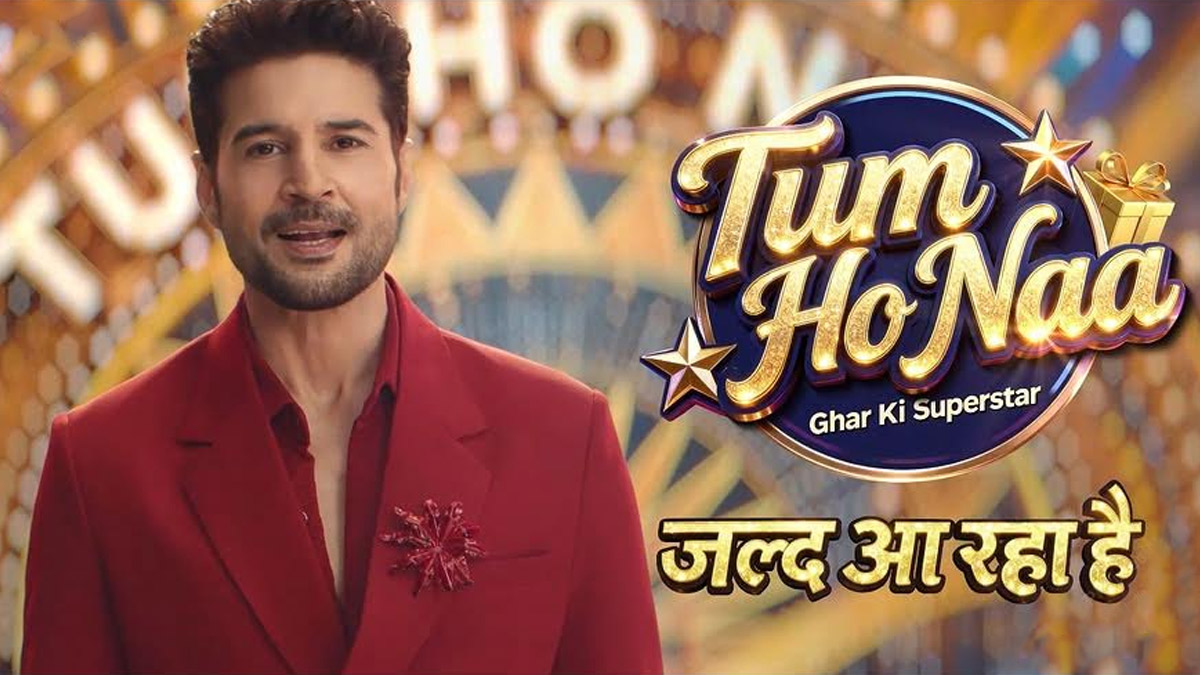
MUMBAI: Lights, camera… connection because this time, the game isn’t just about winning, it’s about who’s with you. Sony Pictures Networks India is gearing up to launch a new reality game show, Tum Ho Naa, expanding its unscripted slate with a format that promises both emotion and engagement.
The show will premiere soon on Sony Entertainment Television and stream on Sony LIV, with Rajeev Khandelwal stepping in as host. Known for his measured screen presence and selective choices, Khandelwal’s return to television adds a layer of familiarity and credibility to the upcoming format.
While specific details of the gameplay remain under wraps, the positioning suggests a reality format that leans as much on emotional resonance as it does on competition, an increasingly popular blend in Indian television, where audiences are gravitating towards content that offers both stakes and storytelling.
Khandelwal, reflecting on his return, noted that his choices have often been guided by instinct rather than convention, describing Tum Ho Naa as a project that feels “close to the heart”. His association also signals Sony’s continued focus on anchoring new formats with recognisable faces who bring both relatability and depth.
The launch comes at a time when broadcasters are doubling down on original non-fiction formats to drive appointment viewing, even as digital platforms expand parallel reach. By placing the show across both linear television and OTT, Sony appears to be aiming for a dual-audience strategy capturing traditional viewers while engaging digital-first consumers.
As the countdown to premiere begins, Tum Ho Naa positions itself not just as another game show, but as a reminder that sometimes, the biggest prize on screen isn’t the jackpot, it’s the journey shared along the way.






